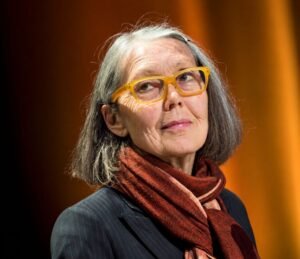
Han Kang es la voz poética de la literatura contemporánea

Han Kang, escritora surcoreana nacida en 1970 en Gwangju, es reconocida mundialmente por sus obras profundas y conmovedoras. Autora de novelas como La Vegetariana y Actos Humanos, Han explora temas complejos como la violencia, el trauma y la identidad, utilizando una prosa poética y poderosa. Su estilo único y sus temas desafiantes la han convertido en una figura destacada de la literatura contemporánea, ganando premios como el Man Booker International Prize. Además de su carrera literaria, Han enseña escritura creativa en Seúl, consolidando su influencia en la literatura global.
Trayectoria literaria de Han Kang
Han Kang, nacida en 1970 en Gwangju, Corea del Sur, es una de las voces más influyentes de la literatura contemporánea surcoreana. Su carrera literaria comenzó en 1993 cuando publicó su primera novela corta “El corazón es extraño” en una revista literaria local, lo que la posicionó rápidamente como una escritora prometedora en la escena surcoreana. Sin embargo, fue con la publicación de su novela “La Vegetariana” en 2007 que alcanzó reconocimiento internacional, especialmente después de que la traducción al inglés de Deborah Smith ganó el prestigioso Premio Booker Internacional en 2016.
Desde temprana edad, Han estuvo rodeada por un ambiente literario, ya que su padre, Han Seung-won, es un renombrado escritor en Corea del Sur. Esto influyó en su temprana fascinación por la literatura, desarrollando un estilo propio que se caracteriza por una prosa cuidadosa y poética que explora temas profundos como el cuerpo, la naturaleza humana y las cicatrices emocionales de la violencia.
Obras notables
Aunque su obra más conocida es La Vegetariana, Han Kang ha escrito varias otras novelas que también han sido aclamadas por la crítica. Entre ellas se incluyen Actos Humanos (2014), una conmovedora y devastadora exploración de las secuelas de la masacre de Gwangju en 1980, un evento histórico particularmente sensible en Corea del Sur, y El Libro Blanco (2016), una meditación sobre la vida, la muerte y el duelo, estructurada a través de objetos y experiencias cotidianas.
Cada una de sus obras tiene una característica distintiva que, sin perder su capacidad de conectar emocionalmente con el lector, se sumerge en temas oscuros y difíciles. La violencia, tanto física como psicológica, es un tema recurrente en su trabajo, pero lo trata de una manera que invita a la reflexión, desafiando al lector a reconsiderar el significado de la empatía y la condición humana.
Estilo y temáticas
El estilo de Han Kang se distingue por su sencillez aparente que oculta una complejidad emocional y filosófica profunda. Utiliza metáforas poderosas y un tono lírico que contrasta con las imágenes crudas y, a veces, perturbadoras que describe en sus narraciones. A lo largo de su carrera, Han ha explorado consistentemente la relación entre el cuerpo y el espíritu, la alienación y el sufrimiento.
En La Vegetariana, por ejemplo, utiliza el rechazo de la protagonista hacia la carne como una alegoría de la resistencia ante la opresión social y familiar, así como una búsqueda de pureza espiritual a través del control de su cuerpo. Esta novela no solo aborda cuestiones de identidad personal, sino también temas más amplios sobre la libertad y el control, el feminismo y la deshumanización.
En Actos Humanos, Han examina el trauma colectivo e individual, mostrando las profundas heridas que los eventos violentos dejan en las personas y las comunidades. La novela también plantea preguntas sobre el poder de la memoria y el olvido, sugiriendo que, aunque el dolor puede parecer insuperable, la narración y la recordación son formas de resistir la aniquilación del yo.
Logros y reconocimientos
El impacto internacional de Han Kang fue consolidado con el Premio Booker Internacional que recibió en 2016 por la traducción al inglés de La Vegetariana. Este premio no solo la catapultó al estrellato literario global, sino que también destacó la riqueza y la singularidad de la literatura coreana en el ámbito internacional.
Además de su éxito con La Vegetariana, Actos Humanos también fue elogiada mundialmente y traducida a numerosos idiomas, lo que cimentó aún más su reputación como una de las escritoras más significativas de su generación. A lo largo de su carrera, Han ha recibido otros premios importantes, incluidos el Premio Literario Yi Sang, uno de los más prestigiosos en Corea del Sur, y el Premio Literario Hankook Ilbo.
Controversias y críticas
A lo largo de su carrera, Han Kang ha sido objeto de algunas controversias, principalmente relacionadas con las representaciones explícitas de violencia en sus novelas. En particular, La Vegetariana fue criticada en ciertos círculos por sus escenas gráficas y su representación del sufrimiento físico y mental. No obstante, la autora ha defendido constantemente su enfoque, argumentando que estas representaciones son esenciales para comprender las luchas internas de sus personajes y las dinámicas sociales y culturales que aborda.
Han ha respondido a las críticas con dignidad, señalando que el propósito de su obra no es chocar, sino más bien invitar a la reflexión sobre las formas en que el dolor, la violencia y la alienación afectan a los seres humanos en diferentes contextos. En lugar de suavizar las imágenes crudas, utiliza estos elementos como vehículos para una exploración más profunda de la naturaleza humana.
Han Kang hoy
Hoy en día, Han Kang continúa siendo una figura central en la literatura global. Aunque sigue escribiendo y publicando, también ha ampliado su influencia a través de su trabajo como profesora en el Instituto de las Artes de Seúl, donde enseña escritura creativa. Su influencia en la literatura contemporánea no solo reside en sus historias, sino también en su habilidad para enfrentar los temas más incómodos de manera honesta y artística.
Han Kang es una escritora que, a través de sus textos, ofrece una ventana única hacia las complejidades de la experiencia humana, destacándose por su habilidad de transformar el sufrimiento y la alienación en narraciones poderosas y conmovedoras.