Paul Mescal, the actor who chose discomfort
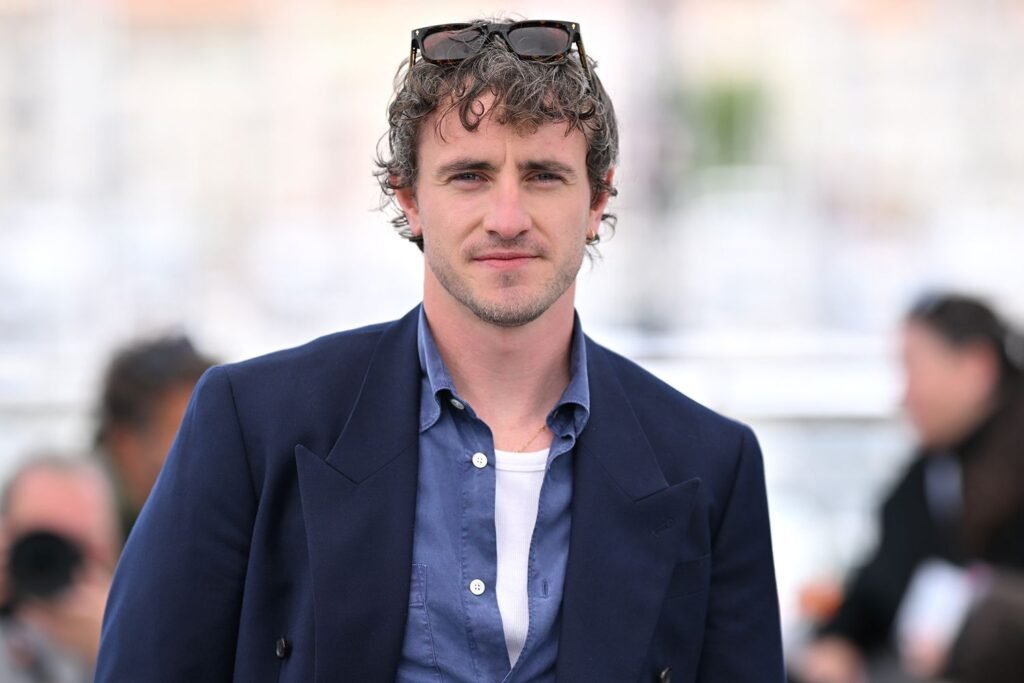
El actor irlandés consolidó su carrera con interpretaciones de alta densidad emocional y elección selectiva de proyectos.
Paul Mescal emerged on the international audiovisual scene without a prior celebrity trajectory or an accelerated exposure strategy. His rise is grounded in an uncommon combination of rigorous academic training, careful project selection, and a deep understanding of acting as a craft. Far from the logic of immediate impact, his career reveals sustained dedication to complex characters and narratives that demand emotional precision.
Training and the theatrical stage
Before widespread recognition, Mescal developed a close relationship with theater. He trained at The Lir Academy, one of Ireland’s most demanding institutions for the performing arts, where he built a technical foundation centered on voice, physicality, and textual analysis. During this period, he took part in stage productions that required detailed engagement with dramatic material and ensemble work—an experience that shaped his view of acting as a disciplined, collective process.
Television breakthrough and international recognition
The turning point came with Normal People (2020), adapted from the novel by Sally Rooney. His portrayal of Connell Waldron drew unusual critical attention for a television debut. Built on restraint and emotional ambiguity, the performance showcased a rare ability to sustain silence and internal tension. The acclaim included awards and nominations, and it solidified his association with introspection and psychological realism.
Transition to film and authorial consolidation
Following the television impact, Mescal avoided repetition. In Aftersun (2022), directed by Charlotte Wells, he delivered a performance defined by gestural economy and a fragmented construction of character. The independent-scale film became a milestone in his career and earned him an Academy Award nomination for Best Actor. Choosing this project confirmed a clear orientation toward intimate storytelling, where acting relies more on suggestion than explicit exposition.
Diversifying registers and settings
Mescal’s versatility became evident in subsequent projects such as God’s Creatures (2022) and All of Us Strangers (2023), where he explored moral conflict, family bonds, and identity tensions. In parallel, he returned to theater with high-profile productions, reaffirming a career logic that does not rank mediums, but rather interpretive challenges.
Visibility, controversy, and a measured public stance
With increased visibility came debates about his public image and rapid association with cultural-figure status. Some media narratives attempted to frame him as a generational symbol—an interpretation Mescal has managed with distance. Rather than capitalizing on controversy, he has maintained a restrained public presence, keeping the focus on work and avoiding shifts toward private-life spectacle. This stance reinforces a perception of professional coherence over personal branding.
Working method and professional ethics
Collaborators often point to Mescal’s meticulous approach: extensive preparation, close study of narrative context, and openness to dialogue with directors and fellow actors. His performances avoid showy devices, instead resting on a structural understanding of character within the story. That ethic translates into consistency, even in scenes of high emotional intensity.
Outlook and career meaning
Paul Mescal’s career is in a phase of controlled expansion. Each project strengthens an acting identity grounded in narrative risk and psychological depth. His dedication is not framed as romantic sacrifice, but as conscious, sustained practice aimed at building a solid filmography rather than immediate celebrity. In the balance between training, choice, and steady work lies the explanation for his current position in contemporary cinema.