Bad Bunny and the construction of a global phenomenon
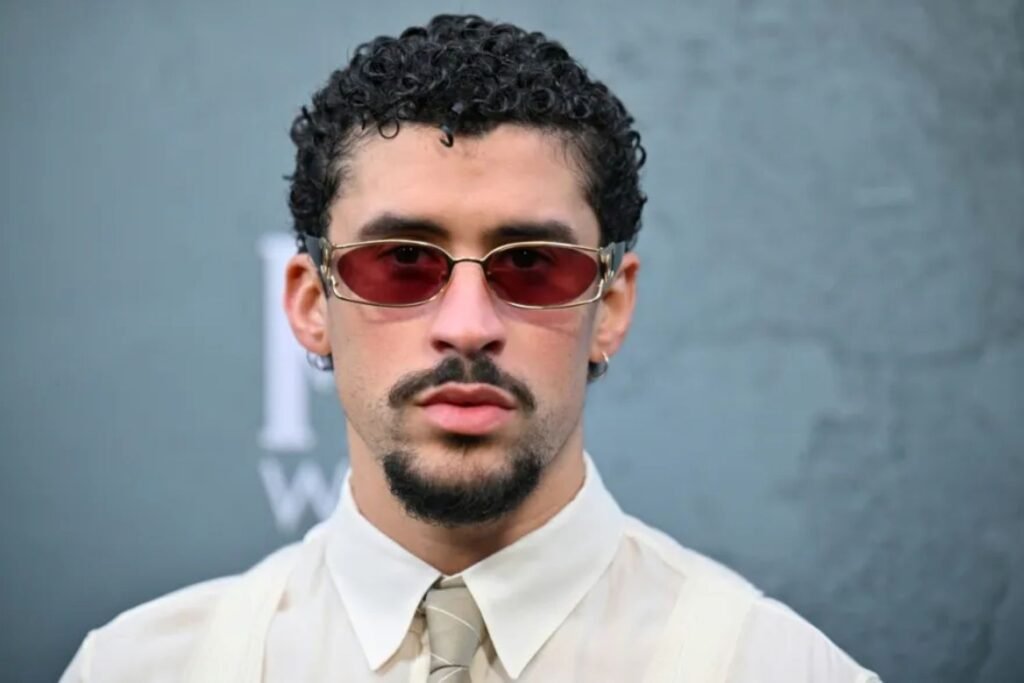
El artista puertorriqueño redefinió la relación entre identidad local y mercado global.
Bad Bunny established himself as one of the central figures in contemporary popular music by combining mass appeal with creative control. His trajectory does not follow a traditional rise-to-fame model, but rather a sustained process of symbolic accumulation, where identity, social context, and cultural strategy were articulated without diluting origin. The result is an artist who operates simultaneously on musical and cultural planes.
Origins and identity formation
Benito Antonio Martínez Ocasio was born in 1994 and grew up in Vega Baja, Puerto Rico, within an environment shaped by labor and cultural dynamics typical of the urban Caribbean. This context was not decorative but structural to his artistic narrative. The use of local language, everyday references, and an unmediated aesthetic built a recognizable identity that avoided cultural neutralization as it reached global audiences.
Early steps and digital expansion
His career began through digital platforms that enabled direct circulation without institutional mediation. Rather than adapting his proposal to facilitate export, he maintained a raw sonic register and direct expressiveness. This decision consolidated a community prior to industry recognition. Growth was driven more by organic repetition and digital word of mouth than by formal campaigns, anticipating a shift in musical validation logic.
Discographic consolidation and catalog control
From 2018 onward, Bad Bunny developed a discography conceived as a system rather than a sequence of singles. Long albums, rhythmic diversity, and aesthetic coherence produced works designed for prolonged consumption. Un Verano Sin Ti marked a turning point by sustaining leadership in international charts for months, demonstrating that permanence could replace ephemeral impact as the primary metric of success.
Aesthetics, gender, and cultural positioning
His visual and performative construction challenged traditional notions of masculinity within the urban genre. Wardrobe, gesture, and staging functioned as meaning-making devices rather than superficial provocation. This choice expanded his base of identification without sacrificing commercial centrality. The intersection of pop sensitivity and an implicit discourse on identity turned his figure into a cultural vector that exceeds the strictly musical sphere.
Expansion into other industries
His involvement in film, fashion, and entertainment followed a logic of personal brand diversification. These participations did not function as detours but as coherent extensions of his public identity. By distributing his presence across multiple symbolic fields, he reduced dependence on the album cycle and reinforced his value as a transversal figure capable of maintaining relevance beyond musical release periods.
Controversies and strategic interpretation
The controversies surrounding Bad Bunny are mainly linked to his visibility and his occupation of spaces historically reserved for dominant English-speaking narratives. Read structurally, these disputes did not damage his positioning but confirmed his centrality. Public debate around language, representation, and cultural belonging emerged precisely because his influence reached a level that could not be ignored.
Impact and legacy within the industry
Bad Bunny’s contribution can be summarized through three key shifts: the validation of Spanish as a central language in global pop, the recovery of the album as a conceptual unit, and the integration of music, image, and social context. His trajectory offers a replicable model for artists seeking international scale without surrendering identity, showing that cultural coherence can function as a strategic asset rather than a commercial constraint.