Paul Thomas Anderson and the Cinema of Emotional Precision
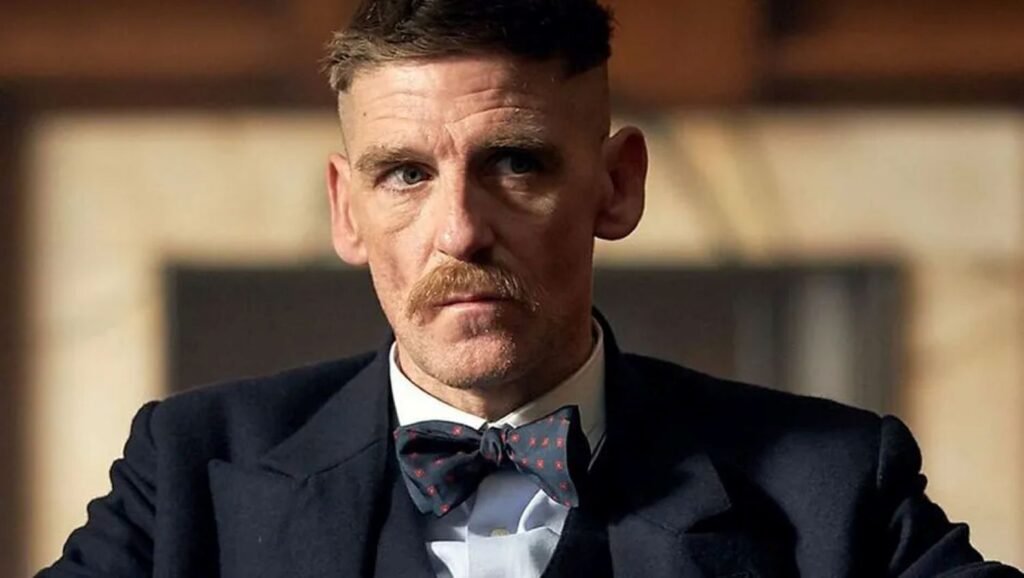
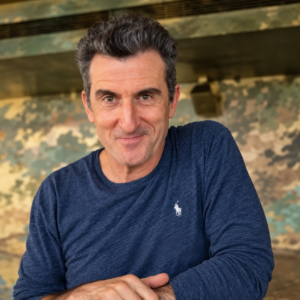
El actor británico Paul Anderson en su papel de Arthur Shelby en la serie Peaky Blinders.
Paul Thomas Anderson built a distinctive trajectory within contemporary cinema by combining complex narrative structures with rigorous technical control. His work articulates human conflicts from a perspective that prioritizes ambiguity and psychological density. Throughout his career, he consolidated a personal language in which actor direction, the use of the long take, and sound design function as central tools to shape high-intensity narrative experiences.
Education and Early Steps
Paul Thomas Anderson was born in 1970 in California and grew up in an environment linked to audiovisual production. His learning process did not rely on an extended academic path, but rather on direct experimentation with cameras and storytelling from an early age. After brief periods at institutions such as Emerson College and New York University, he oriented his development toward practice, observing film sets and building a technical perspective grounded in the analysis of classical cinema.
Consolidation in the 1990s
His debut with Hard Eight introduced an approach centered on marginal characters and complex relationships. However, Boogie Nights marked a phase of expansion by incorporating multiple narrative lines within an ensemble structure. Magnolia deepened this device through parallel stories that converge in a symbolic resolution. During this period, Anderson consolidated the use of the long take as a tool to integrate space, action, and time without fragmentation.
Artistic Maturity and Thematic Exploration
With There Will Be Blood, Anderson developed a narrative focused on the accumulation of economic power and the transformation of the individual under that logic. The construction of the main character reflects a detailed approach to actor direction. In The Master, the relationship between leadership and dependency is presented without explicit definitions, using ambiguity as a structural mechanism to sustain multiple interpretations within the narrative.
Aesthetic and Working Method
Anderson’s cinema is structured through precise formal decisions. The long take enables spatial continuity, while sound design, developed in collaboration with Jonny Greenwood, builds an emotional layer independent from dialogue. Production design reconstructs historical contexts with material accuracy. The narrative rhythm alternates tension and pause, favoring progressive psychological development rather than a linear accumulation of events.
Relationship with the Industry
Anderson operates within a hybrid model that combines studio financing with creative control. This position allows him to work with significant budgets without losing autonomy over key decisions such as screenplay, editing, and staging. The recurrence of technical collaborators and actors generates aesthetic continuity across projects, reinforcing a consistent authorial identity within a complex industrial system.
Controversies and Critical Reception
Some of his films have generated debate due to their resistance to offering closed interpretations. The Master, in particular, has been subject to diverse readings regarding its ideological background. These tensions do not stem from narrative flaws, but from a deliberate strategy that shifts meaning toward the viewer. Ambiguity functions as a structure, enabling multiple layers of interpretation without imposing a single conclusion.
Relevance and Recent Evolution
In Phantom Thread and Licorice Pizza, Anderson reduces narrative scale and focuses on more contained interpersonal dynamics. However, he maintains the emotional complexity and formal control characteristic of his work. His evolution does not present abrupt ruptures, but rather variations on a set of persistent themes, reinforcing his position as a director with a defined identity in constant exploration.