Marcelo Blanco, the Argentine pinball restorer the United States is taking note of
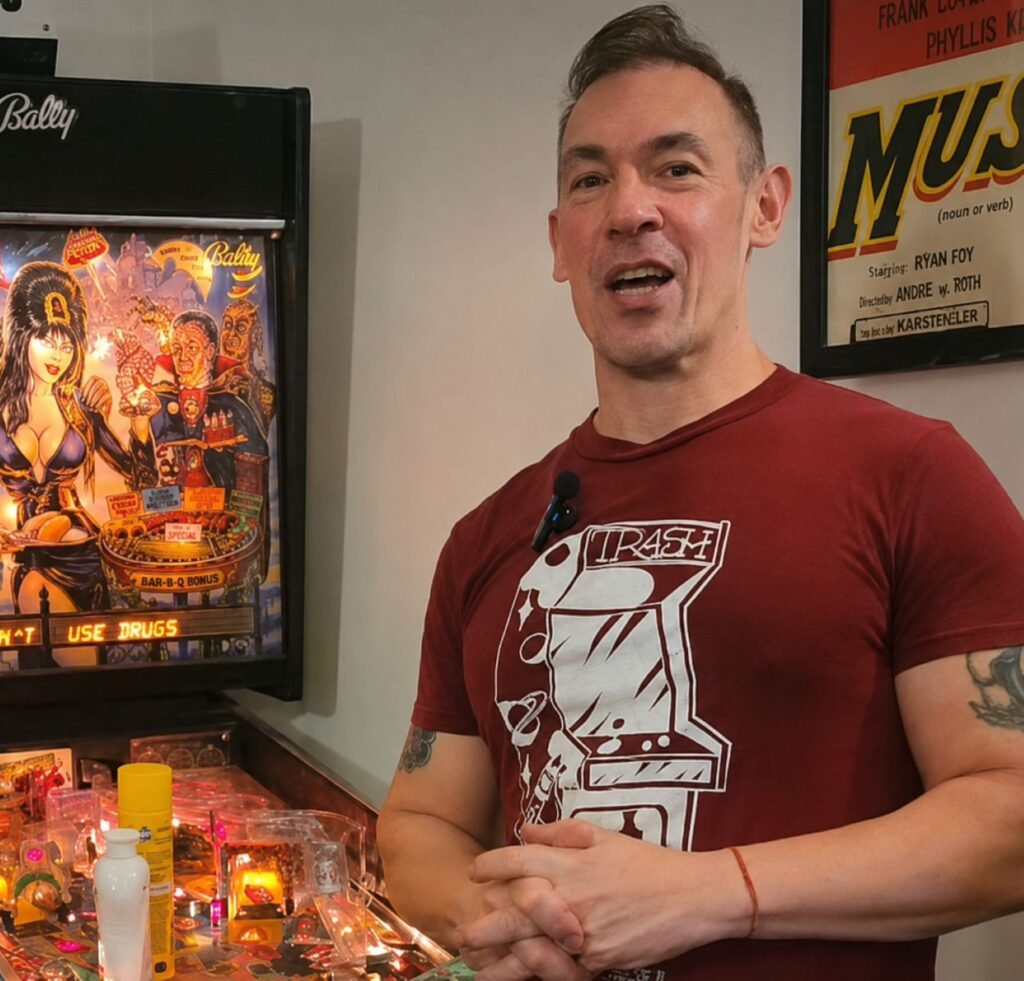
Marcelo Blanco trabaja sobre la mecánica de un pinball. El restaurador porteño conserva las piezas originales para no perder el valor histórico de cada máquina.
In a café in San Telmo, two blocks from his workshop, a man with grease-stained hands quietly explains why his pulse still trembles when he finishes a machine. His name is Marcelo Adrián Blanco, he was born in Buenos Aires in 1971 and today he is one of the names spoken with respect when the subject is restoring pinball machines at a global level. His story brings together Buenos Aires antique dealers, a ban that lasted for decades and a global community of collectors who travel thousands of kilometers to watch him work.
From the family antique shop to the hands that repair the past
Blanco grew up surrounded by old objects. His father, Roberto, was an antique dealer and specialized in mechanical pieces: toys, movie projectors, phonographs. The shop operated at the front of the house, on the corner of Chacabuco and Bolívar, and there the boy learned to observe how time is taken apart and put back together. The fine technique and artistic sensitivity were passed on to him by Roberto MacKintosh, his father’s partner and a visual artist, someone who taught him that restoring is not only about fixing, but about giving dignity back to an object.
As a child he played with Meccano, the game of screws and metal strips that probably explains much of his vocation. Pinball came later and through the window: at ten years old he could only play it in the arcades of the Atlantic coast, because in Buenos Aires it was banned and treated as a game of chance.
The pinball machine he got at 14
The turning point has a date and a price. When he was fourteen, his father bought a lot of antiques and inside it came an old pinball machine. Blanco claimed it as his own and paid for it: 300 dollars he had saved by restoring Japanese toys. When he opened the backbox and saw the tangle of relays, coils and wires that made everything work, he was trapped forever. He describes that mechanism as a “crazy brain,” a mysterious machine that counts points and makes decisions without anyone fully knowing how.
Electronics, patience and a golden rule
That fascination had a concrete foundation. In Argentina at the time, after primary school came six years that combined secondary education and technical training, and Blanco came out of that with a degree in electronics. That knowledge allowed him to understand what happens inside a sixty-year-old machine and repair it without guessing.
His work philosophy resembles that of classic car restorers: preserving as many original parts as possible so as not to destroy either the historical or collectible value. He learned through trial and error, with intuition and common sense, and perfected a level of detail that many consider obsessive. Pinball machines belonging to almost every player in the country have passed through his hands; he recently repaired Mario Pergolini’s.
Rob Berk’s call and the key to Girard
International recognition came through a video. Rob Berk — American collector, owner of the Past Times arcade in Girard, Ohio, founder of the Pinball Expo in Illinois and holder of the Guinness record for the largest pinball collection, with more than a thousand machines — saw Blanco rescue a piece destined for the trash and could not believe it. “This man has to come,” he said. Since then, the Argentine travels every year, settles for several months in Ohio and works on that monumental collection.
The bond turned into affection. Berk gave him a symbolic adoption certificate and the key to the city of Girard for his contribution to the community. Blanco tells it with modesty, as someone who does not quite understand why his craft moves people so much.
Seminars, fairs and the fight for memory
In Ohio and Chicago, he gives intensive seminars before hundreds of enthusiasts who take note of his methods. In 2024, his talk focused on how to plan a restoration without sacrificing the machine’s historical and economic value. He also runs a program on YouTube, shares his work on Instagram (@marceloadrianblanco) and, since June of that year, has been part of the Recreativas.org team, a Spanish project dedicated to preserving and digitizing the art of pinball machines and arcade games.
A blacklist that speaks well of him
Blanco receives more requests than he accepts, and he does not hide it. He prefers to reserve his time for passionate collectors — large or small — who make a genuine effort to have their machine, and he avoids those who buy cheap, ask him for a restoration and resell for three times the price. That “blacklist” is not a whim: it is the way he found to protect a craft that requires months of work and that almost no one has the patience to learn.
Pinball returns to the conversation
The recent interest in these machines received an unexpected push from politics, when it emerged that a former official had paid a high figure for a The Addams Family machine. For Blanco, that enthusiasm is pure nostalgia: pinball does not give status, he says, and there are people who live in a studio apartment and keep their machine like a treasure. He, who painted more than one hundred of those Addams machines — the best-selling model in history, with 20,270 units — admits with humor that it is not his favorite. The scene, meanwhile, remains alive: clubs and museums are being born, factories are releasing new titles, and there is always someone willing to indulge in the pleasure of having a mysterious machine at home.