James Brolin: Craft, awards, and on-screen longevity

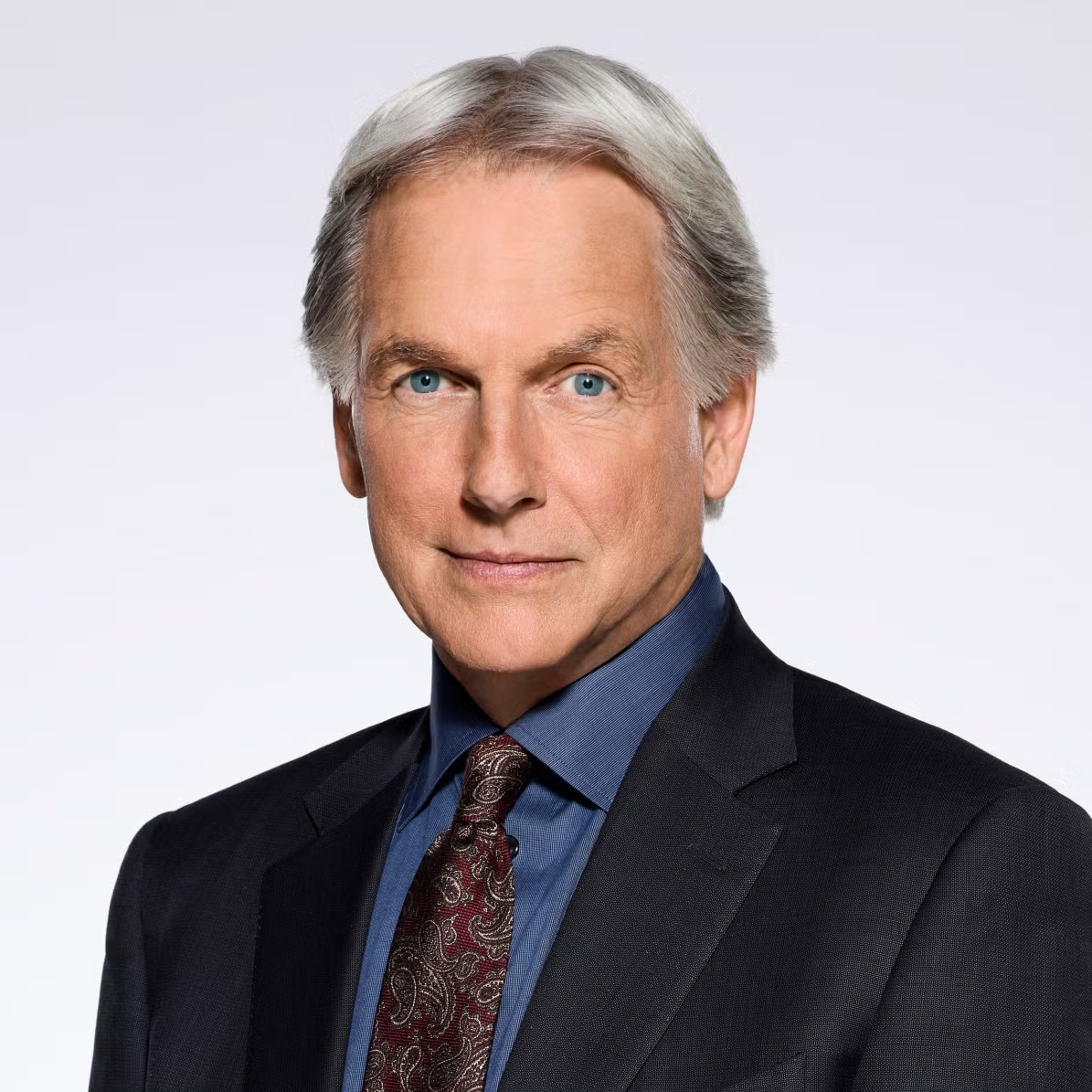
ames Brolin, actor con recorrido sostenido desde la televisión de prime time hasta el cine de estudio, en una imagen de estilo institucional.
James Brolin (born in Los Angeles in 1940) built a long and adaptable career, with peaks of popularity in television and steady work in film. His profile blends the presence of a classic leading man, studio-honed craft, and the interpretive maturity that made him a reliable figure for directors and producers. Between awards, shifts in register, and a publicly observed life, his trajectory reads as ongoing reinvention.
Early steps and identity shift
He began his acting training in California and, upon entering the professional circuit, adopted the name James Brolin from his family surname, Bruderlin. The adjustment worked as a branding decision: simple pronunciation, immediate recall, and alignment with the star system. Before his major breakthrough, he accumulated experience in episodic roles that gave him camera technique, scene rhythm, and on-set discipline.
Television breakthrough and recognition
His consolidation came with the medical series Marcus Welby, M.D., where he played Dr. Steven Kiley. The show’s audience success made him a widely recognized face and posed a classic challenge: avoiding being fixed to a single character. During that period he earned major television awards, indicating that popularity rested not just on visibility but also on acting resources, tonal control, and dramatic precision.
Seventies and eighties cinema
In parallel, he strengthened his presence in commercial film through titles that placed him in thrillers and science fiction, such as Westworld (1973) and Capricorn One (1977). In The Amityville Horror (1979), he approached terror from the domestic sphere, sustaining tension through psychological progression rather than excess. That era positioned him as a protagonist capable of carrying narrative pressure without losing credibility.
Maturity and on-screen repositioning
Over time, Brolin shifted toward roles of authority: executives, paternal figures, chiefs, and restrained antagonists. This move is a technical one—less emotional display, greater subtext control. The series Hotel reinforced his screen leadership, while his film work alternated supporting roles that increased his value when a project required presence and economy rather than protagonism.
Work with directors and industrial culture
His filmography shows a pragmatic pattern: choosing projects where the script assigns him a clear structural function. In Traffic (2000) and Catch Me If You Can (2002), he integrated seamlessly into ensemble casts without competing for centrality, contributing institutional credibility. That logic kept him relevant across stylistic shifts, from classic network television to more fragmented and realistic storytelling.
Recent television and character-based comedy
In Life in Pieces, he returned to broad-reach television through a different register: family comedy with fast pacing and short scenes, where effectiveness depends on timing and character consistency across varied situations. There, Brolin played authority with irony and warmth, leveraging his classic presence without turning it rigid, showing flexibility toward contemporary formats.
Public life, family, and professional continuity
His relationship with Barbra Streisand, whom he married in 1998, placed him under constant media attention. Rather than turning that exposure into spectacle, he maintained a low-key profile, prioritizing steady work and private life. He is also father to actor Josh Brolin, a connection often read as a lineage of craft rather than automatic inheritance—two careers with different tones and choices.
Controversies and constructive reading
Public discussions around him have centered more on celebrity scrutiny than on set conflicts. The name change, the pressure of television fame, and the attention to his private life can be read as professional management: decisions to protect his work, sustain employability, and avoid letting media narratives overshadow craft. His habitual response was continuity, discretion, and focus on the job.
Legacy and relevance
Brolin embodies an idea of the industrial actor who understands the craft as a system: preparation, punctuality, script comprehension, and adaptation to editing. His legacy rests not on a single emblematic film, but on a continuity that spans genres and formats—from prime-time series to major-studio cinema. In a market that penalizes age, his career shows that longevity is built through tactical decisions and measured acting style.