Maggie Gyllenhaal talent and evolution in contemporary cinema
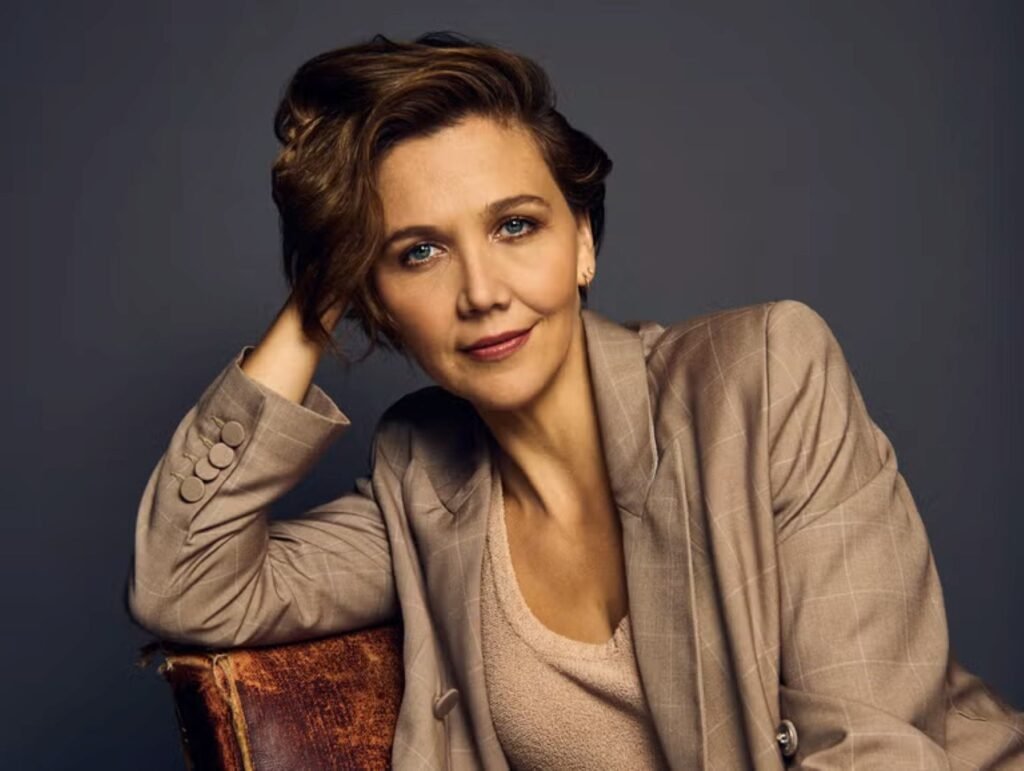
Maggie Gyllenhaal’s career is defined by a consistent selection of complex characters and psychologically driven narratives. From her early roles in American independent cinema to her consolidation as a director, her trajectory reflects a sustained artistic pursuit. Her work explores human relationships, moral conflict, and the female experience across different stages of life, integrating acting, production, and screenwriting.
Family background and artistic formation
Maggie Gyllenhaal was born in New York into a family closely linked to the film industry. She is the daughter of director Stephen Gyllenhaal and screenwriter Naomi Foner, a context that facilitated early exposure to audiovisual language. She studied English literature at Columbia University, strengthening her interest in narrative construction. During this period, she also pursued acting studies, building a technical foundation centered on character analysis and psychologically nuanced performance.
Early steps in independent cinema
The beginning of her career took place primarily within American independent film. One of her early notable projects was Donnie Darko (2001), a film that later achieved cult recognition. Shortly after, she starred in Secretary, a work that explored a complex emotional relationship shaped by unconventional power dynamics. Her performance drew attention for its ability to convey vulnerability, autonomy, and a female identity distant from traditional archetypes.
Consolidation in larger-scale productions
In the following decade, she alternated between independent projects and larger productions. She appeared in World Trade Center, directed by Oliver Stone, which portrays human experiences following the September 11 attacks. She later played Rachel Dawes in The Dark Knight, directed by Christopher Nolan. The film’s global success expanded her industry visibility, although she continued selecting introspective roles focused on psychological development rather than spectacle.
Critical recognition and awards
Gyllenhaal’s versatility received institutional recognition at different stages of her career. In 2010, she was nominated for an Academy Award for Best Supporting Actress for her role in Crazy Heart. In television, she won a Golden Globe for The Honourable Woman, a miniseries examining political and diplomatic tensions in the Middle East. She later starred in The Deuce, centered on the emergence of the adult entertainment industry in 1970s New York.
Transition to film direction
Her move into directing materialized in 2021 with The Lost Daughter, an adaptation of the novel by Elena Ferrante. In addition to directing, she wrote the screenplay, a process that involves translating literary material into visual structure through scene selection, dialogue, and pacing. The film premiered at the Venice Film Festival, where it received the award for Best Screenplay, confirming her ability to develop an authorial voice in contemporary cinema.
Artistic debates and thematic choices
Many of the projects she engages with address complex social and emotional issues. Films such as Secretary and series like The Deuce examine power, identity, and sexuality from an analytical perspective. These choices have generated critical discussion, which is common when cinema explores sensitive areas of human experience. In this context, her work is often associated with films that represent psychological conflict without narrative simplification.
A trajectory in transformation
Maggie Gyllenhaal’s professional evolution reflects a broader trend in contemporary cinema, where performers expand their roles into writing and directing. Her experience as an actress contributed to shaping a distinct perspective on character development and scene construction. This trajectory allows her work to combine interpretive sensitivity with narrative structure, suggesting an ongoing artistic continuity focused on introspective storytelling and emotionally complex characters.