Mark Harmon key face of American television
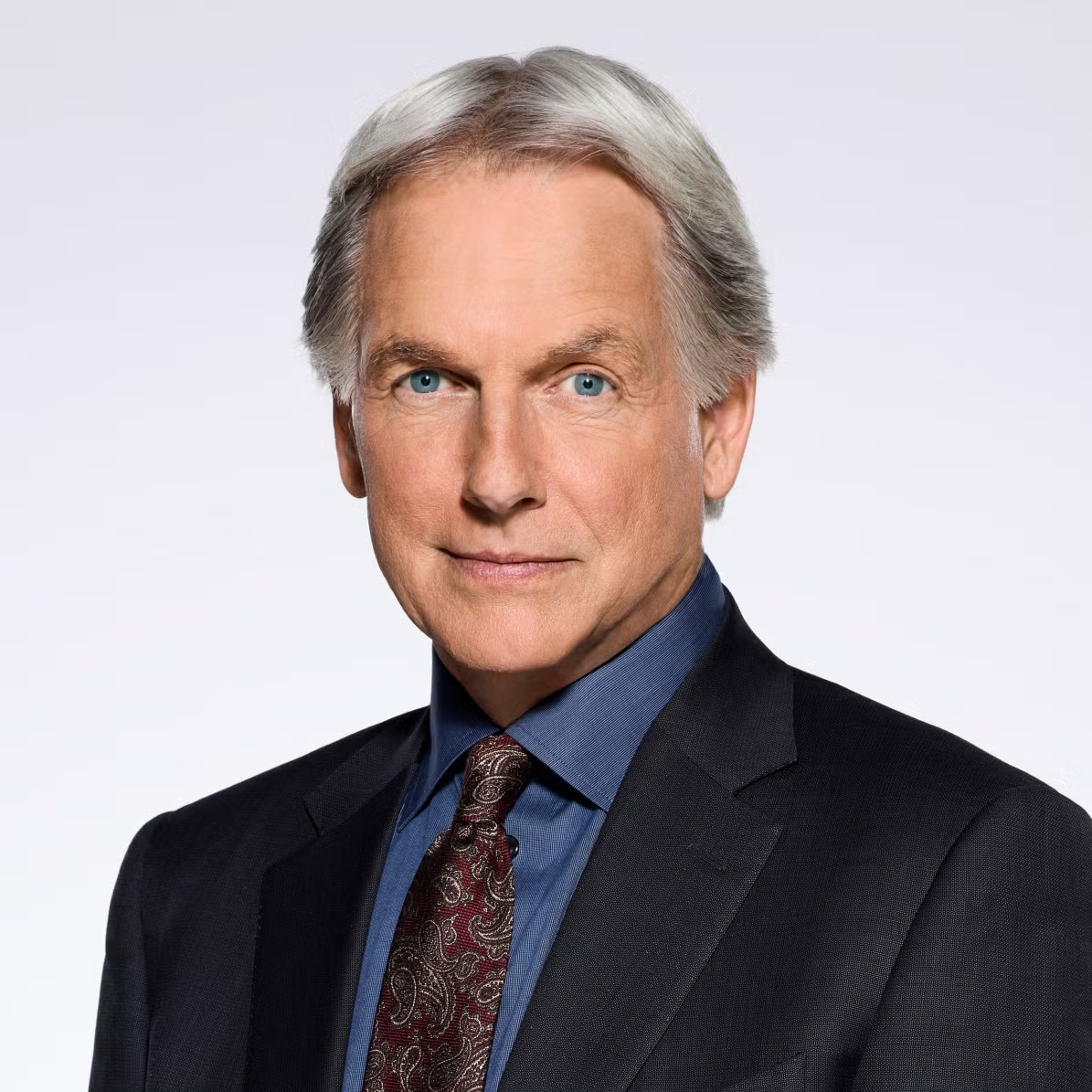
El actor estadounidense consolidó una de las trayectorias más estables de la televisión con su papel en NCIS.
Mark Harmon built a sustained career within American television, with an approach centered on the stability of long-term projects and the construction of consistent characters. His image is mainly linked to police and dramatic formats, where he managed to consolidate audiences over decades. The combination of acting and producing allowed him to expand his influence within the industry, integrating creative and strategic decisions in high-performing series.
Early formation and disciplined foundation
Before entering the acting world, Harmon played as quarterback for UCLA’s university football team. This stage introduced a logic of discipline, tactical reading, and coordinated work that he later transferred to his professional career. His background did not originate in traditional theatrical circuits, but in a gradual transition into television, which facilitated his adaptation to serialized production dynamics and demanding work rhythms.
First steps in television and consolidation
During the 1980s, Harmon managed to establish himself in television productions with roles that gave him visibility. His participation in St. Elsewhere marked a point of development by allowing him to portray characters with greater emotional complexity. This stage functioned as a growth platform, enabling him to access larger-scale projects and build an acting identity based on restraint and controlled expression.
NCIS and the leap to global centrality
His arrival in NCIS in 2003 represented the point of greatest expansion in his career. The character of Leroy Jethro Gibbs was structured around quiet leadership, strict codes, and accumulated experience. The series reached significant international projection, positioning itself among the most-watched in the police genre. Harmon not only acted, but also participated as executive producer, integrating narrative and operational decisions within the project.
Acting style and character construction
Harmon’s acting approach is characterized by expressive economy. His work avoids dramatic excess and prioritizes minimal gestures, pauses, and a contained screen presence. This methodology functions effectively in television formats where narrative clarity is central. The construction of Gibbs follows this logic, creating a figure of authority based on experience rather than explicit imposition.
Recognition and validation through audience response
Throughout his career, Harmon received awards linked to audience preference, such as the People’s Choice Awards. His position within the industry does not depend exclusively on institutional prizes, but on his ability to sustain audience levels over long periods. This form of validation reflects a constant connection with viewers and narrative efficiency within the projects he joins.
Controversies and internal production dynamics
During the development of NCIS, tensions were reported within the team, including differences with members of the cast. These situations led to organizational adjustments without affecting the continuity of the product or its audience performance. From an operational perspective, these episodes reveal the complexity of managing long-running productions and the need to maintain structural stability in the face of internal conflict.
Production and creative control of content
Harmon’s role as executive producer involved active participation in the creative direction of NCIS. This function includes decisions regarding script, casting, and character development. The combination of acting and producing allowed him to align artistic execution with project strategy. This position reinforces his profile as an actor with a comprehensive understanding of the television business.
Personal profile and management of exposure
Unlike other actors of his generation, Harmon maintains limited public visibility. His personal life is managed with a low level of media exposure, which helps sustain a stable image. This decision reduces the wear associated with overexposure and allows attention to remain focused on his professional work, strengthening his position within the industry.
Legacy and permanence in the industry
Harmon’s career is structured around continuity rather than abrupt change. His long-term permanence in the same project reflects a strategy oriented toward stability and sustained development. In a context where turnover is frequent, his career represents a model based on consistency, discipline, and the integration of acting and production within contemporary television.