Steve McQueen speed, rebellion and unforgettable cinema
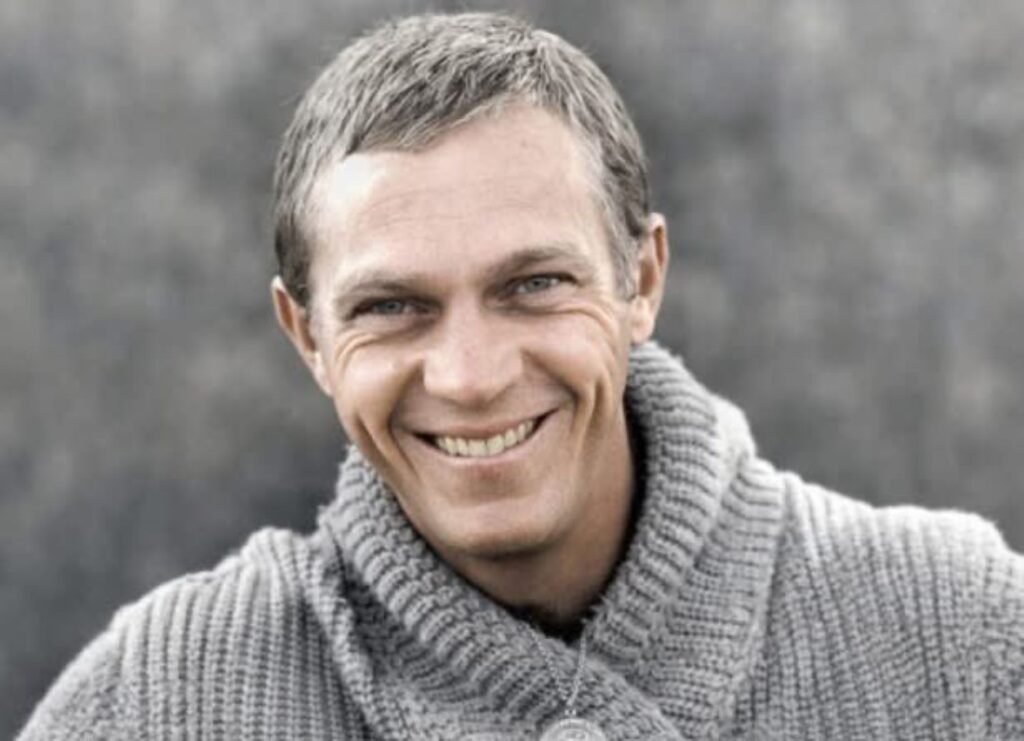
Steve McQueen became one of the most recognizable figures in American cinema during the 1960s and 1970s. His acting style relied on a combination of silence, physical control, and dramatic tension. This approach distinguished him in an industry dominated by more expressive performances. His career coincided with a period of transformation in Hollywood that allowed actors to gain greater influence over production and character development.
Childhood and early challenges
Steve McQueen was born in 1930 in Beech Grove, Indiana, within a complex family environment marked by paternal absence and economic hardship. During his adolescence, episodes of indiscipline led him to enter the Boys Republic institution in California. There he found discipline and practical guidance that helped reorganize his life. This experience deeply shaped his character, and he later maintained a lasting supportive relationship with the institution.
Training and acting vocation
After serving in the United States Marine Corps, McQueen turned toward acting. He used the GI Bill to study at the Neighborhood Playhouse in New York. There he learned interpretive techniques centered on the psychological observation of characters. This approach aimed to understand internal motivations and translate them into natural gestures on screen, contributing to his restrained style based on physical presence and minimal dialogue.
Early recognition in television
During the 1950s, he began appearing in television productions that allowed him to gain on-camera experience. His most significant recognition came with the series Wanted Dead or Alive (1958–1961), where he portrayed bounty hunter Josh Randall. The show stood out for its dynamic pacing and for the use of the modified rifle known as the Mare’s Leg, which became one of its most iconic visual elements.
Breakthrough into film
His transition to cinema came with The Magnificent Seven (1960), an adaptation of the Japanese film Seven Samurai into the American western genre. McQueen shared the screen with actors such as Yul Brynner and Charles Bronson. Although not initially the lead figure, his screen presence and acting style captured audience attention, helping position him as an emerging film star.
The Great Escape and global recognition
International recognition arrived in 1963 with The Great Escape. McQueen portrayed Captain Virgil Hilts, an Allied prisoner attempting to escape from a German camp during World War II. A memorable motorcycle chase scene became one of the most iconic moments in adventure cinema. McQueen insisted on performing several of the stunts himself, reinforcing his reputation for physical commitment.
Bullitt and the most famous chase
In 1968, he starred in Bullitt, directed by Peter Yates. The film follows a San Francisco detective investigating a murder linked to organized crime. Its car chase sequence redefined the visual language of police films. Filmed with cameras mounted on vehicles to capture real speed, the sequence turned the Ford Mustang driven by McQueen into a lasting symbol of action cinema.
Motorsport and personal passion
McQueen’s interest in engines extended beyond the screen. He regularly participated in motorcycle and car racing competitions. In 1970, he competed in the 12 Hours of Sebring, an international endurance race. This passion influenced the production of Le Mans (1971), centered on the famous French race. Despite production challenges, the film gained recognition among motorsport enthusiasts for its realism.
Papillon and dramatic range
In 1973, he starred in Papillon alongside Dustin Hoffman. The film is based on the memoirs of Henri Charrière, a prisoner sentenced to forced labor in French Guiana. McQueen’s character repeatedly attempts escape while enduring years of isolation. His performance revealed a deeper dramatic dimension, combining adventure with psychological endurance.
Final years and legacy
In the late 1970s, McQueen was diagnosed with cancer linked to asbestos exposure. Seeking alternative treatments, he traveled to Mexico, where he died in 1980 at the age of fifty. Despite his early death, his influence remains present in contemporary cinema. His acting style demonstrated that dramatic intensity can be built through silence, controlled gestures, and physical presence, elements that continue to shape actors and directors today.