Eileen Gu: technique, identity and global influence on snow
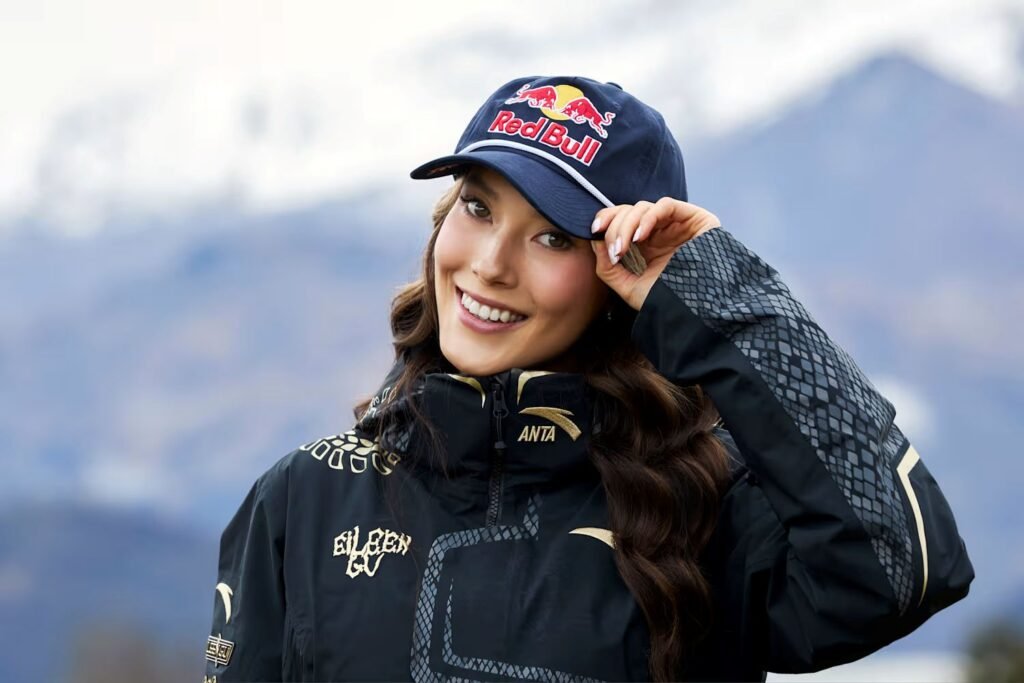
La esquiadora olímpica Eileen Gu durante una rutina de halfpipe, disciplina en la que obtuvo medalla de oro en Beijing 2022.
Eileen Gu established herself as one of the most influential figures in contemporary winter sports by combining technical performance, cultural presence, and a distinctive identity narrative. Born in the United States and competing internationally for China, her career extends beyond competition into the realms of communication and representation. Her trajectory demonstrates how elite performance can coexist with public debate without diminishing athletic excellence.
Early formation and technical construction
From a young age she trained at ski resorts in the United States, where freestyle skiing demands both physical mastery and aerial creativity. The halfpipe requires amplitude, axis control, and precise landings; slopestyle integrates technical modules with consecutive jumps; big air concentrates maximum difficulty into a limited number of attempts. Her preparation focused on mastering all three disciplines, an uncommon achievement given their biomechanical and strategic differences.
Beijing 2022: Olympic consolidation
At the Beijing 2022 Winter Olympics she earned two gold medals, in big air and halfpipe, and a silver medal in slopestyle. That performance positioned her among the most versatile athletes in Olympic freestyle skiing. Competing across three events requires managing risk, energy, and technical consistency within a compressed schedule, increasing the structural difficulty of each appearance and amplifying the significance of the results achieved.
Representing China: identity and strategic decision
In 2019 she announced that she would compete for China, her mother’s country of origin. The decision generated international debate, particularly in the United States, where she had developed her early career. From a broader perspective, the move can be interpreted as an affirmation of bicultural identity and an expansion of representation within global sport. Her public statements emphasized inspiring younger generations and fostering cultural bridges in an interconnected environment.
Controversies and public resilience
Media exposure led to scrutiny regarding citizenship and national affiliation. In 2026 she spoke about episodes of harassment related to her competitive choice. Rather than affecting her athletic trajectory, she maintained active participation in international circuits and preserved performance standards. For high-profile athletes, emotional management and communication strategy become integral components of preparation, as decisive as physical conditioning or technical planning.
Sustained performance and future projection
Following her Olympic breakthrough, she continued competing in world championships and World Cup events, sustaining podium-level regularity. Freestyle skiing evolves rapidly, with younger athletes introducing new maneuvers each season. Remaining competitive requires updating technical repertoire, strengthening physical conditioning, and minimizing injury risk. Her continued presence at the elite level reflects structured planning oriented toward progression rather than momentary impact.
Academic path and dual discipline
Alongside her athletic career, she pursued university studies, integrating academic formation with an intense competitive calendar. This dual commitment demands rigorous organization and time management. In high-risk sports, maintaining an educational pathway broadens professional horizons and reduces dependence solely on physical performance. The balance reinforces an image of comprehensive development focused on both immediate results and long-term trajectory.
Personal brand and sports economics
Eileen Gu became one of the most visible figures in the winter sports advertising market. In disciplines with traditionally limited global audiences, her profile expanded the commercial reach of freestyle skiing. Sponsors seek athletes with verified performance and strong cultural narratives. In her case, Olympic success, transnational identity, and media presence combined to create a platform that extends beyond competition and reshapes the economic value of the modern athlete.
Cultural influence and emerging legacy
Beyond medals, her figure represents a generation of athletes operating simultaneously in competitive, cultural, and digital dimensions. Her impact relates to expanding the freestyle audience and increasing female visibility in extreme sports. Debate surrounding national identity, rather than limiting her projection, reinforced her position as a symbol of contemporary cultural mobility. Her legacy remains in development, sustained by technique, discipline, and strategic adaptation.