Hernán Giardini
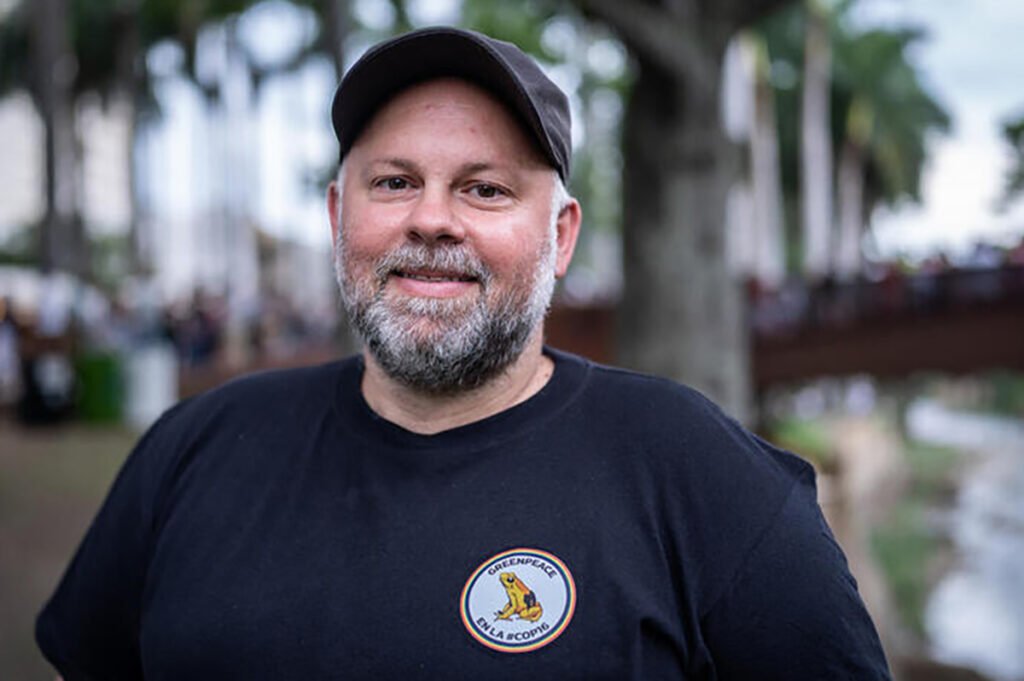
Hernán Giardini, referente de Greenpeace, impulsó reformas clave como la Ley de Bosques y la Ley de Glaciares mediante campañas de presión pública y articulación territorial. The 16th UN Biodiversity Conference, CBD COP16 is taking place in Cali, Colombia. This year's biodiversity summit must achieve the successful implementation of the Kunming-Montreal Global Biodiversity Framework adopted at CBD COP15, addressing the shared root causes of the biodiversity and climate crises, as well as the shared solution, which must centre on justice and solutions led by Indigenous Peoples.
Hernán Giardini is a journalist, a graduate in Communication Sciences from the University of Buenos Aires (UBA), and one of the leading figures in environmental activism in Argentina. For the past two decades, he has served as Greenpeace’s Forests Campaign Coordinator, a role from which he has driven key legislation for the protection of native ecosystems across the Southern Cone. His profile blends political strategy with media communication, acting as a bridge between citizen mobilization, local communities, and government institutions.
Career and background
Before becoming a central figure within Greenpeace, Giardini built his experience through grassroots communication work. He collaborated closely with social movements, worker-recovered factories, and rural organizations—an early stage that shaped his territorial and community-oriented approach. He joined the environmental NGO through its policy and research division, where he applied his academic training to professionalize public-awareness and advocacy campaigns.
Beyond activism, he has a long-standing career in media. Since 1997 he has been a radio producer and host, and he currently coordinates Radio Piuke in Bariloche. He has also worked in documentary film, directing Viaje a la tierra de los Sin Tierra (2004), and has served as a writer and editor for independent digital outlets.
Legislative milestones and environmental leadership
Giardini is best known for his decisive role in two landmark pieces of environmental legislation in Argentina:
- The Forest Law (2007): Giardini led the strategy of public and political pressure that resulted in the law’s approval. His work included coordinating actions with Indigenous and farming communities and achieving unprecedented media exposure (175 news pieces in 45 days), placing deforestation at the center of the national debate. He later contributed to provincial implementation in Chaco, Salta, and Santiago del Estero.
- The Glaciers Law (2010): Although his main focus is forests, he played an active role in the campaign that gathered 1.5 million signatures to protect freshwater reserves. The law prohibited mining and hydrocarbons in glacier and periglacial environments.
Current challenges and vision
Today, Giardini lives in Bariloche, Río Negro, from where he coordinates national actions and tracks deforestation across the country. His team is responsible for annual reports exposing illegal clearing—which accounts for more than half of Argentina’s forest loss—and for high-profile legal actions, including the 2019 Supreme Court filing for the Chiguayante case.
Giardini maintains a critical view of the post-pandemic landscape. He argues that the health crisis did not generate the systemic shift many expected, and instead deepened a form of individualism that complicates collective action. In response, his strategy focuses on constantly renewing environmental narratives to reach new audiences and push governments toward stronger political commitment and stricter penalties for environmental crimes.
Personal life
Outside the public sphere, Giardini remains closely connected to nature through mountain trekking. A music enthusiast, he practices percussion and describes himself as a frequent traveler—interests that balance his life in the Argentine Patagonia.