Thomas Massie: fiscal coherence and institutional dissent
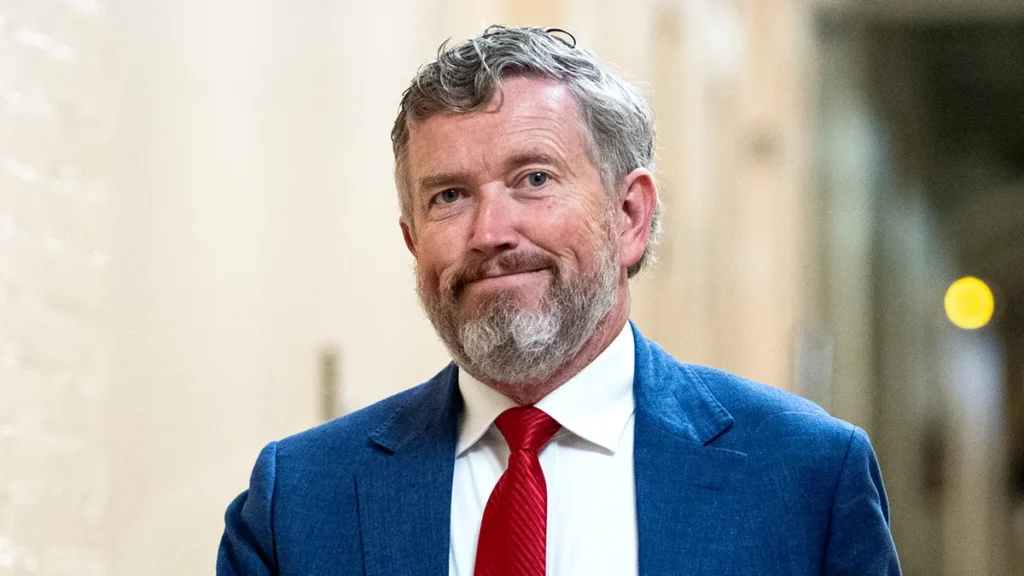
El legislador de Kentucky construyó un perfil de disenso procedimental y disciplina fiscal dentro de la Cámara de Representantes.
Thomas Massie stands out in contemporary U.S. politics as an MIT-trained engineer turned legislator with a strong “institutional audit” impulse. His trajectory combines technical experience, local government management, and an ideology centered on individual autonomy. He has built a public identity grounded in procedure, doctrinal consistency, and criticism of expanding federal spending and federal power.
Education and an inventor’s mindset
With undergraduate and graduate training in engineering, Massie developed haptics-related work that led to patents and technology commercialization. That technical background reinforced an operating method built on design, testing, measurement, and iteration. The same analytic logic appears in his legislative posture, which tends to emphasize process, incentives, and budget control rather than rhetorical signaling.
Shift into local politics
Before Congress, he served as the chief executive of a Kentucky county. From that role he promoted administrative efficiency and projects tied to energy and public management. The territorial experience gave him a concrete lesson in how debt and federal regulation affect small communities, and how services are sustained when budgets are finite—an outlook that later became central to his national agenda.
Entering Congress and early positioning
He entered the House in 2012. His technical profile helped distinguish him within his party: he developed a reputation for resisting fast-track consensus and for demanding a closer look at appropriations and procedure. In floor practice he often prioritizes recorded votes, traceability, and rule-based debate, even when that posture places him in the minority.
Legislative style and ideological consistency
Massie frequently votes outside party leadership lines. His stated reasoning tends to combine fiscal restraint with a libertarian-leaning defense of individual liberties, insisting that lawmakers should avoid procedural shortcuts that concentrate power. For supporters, the throughline is credibility via consistency; for internal negotiators, it can function as friction.
Controversies framed as consistency
In 2020, he pushed for in-person voting conditions during a major COVID-19 relief package, arguing that urgency should not erase institutional procedure. Separately, a family Christmas photo featuring firearms drew public criticism; among his base, it was defended as an assertion of gun rights. In both episodes, the pattern is similar: principle-signaling over tactical convenience.
Committees and thematic focus
He has served on committees tied to transportation and infrastructure and the judiciary, and he has been associated with Rules committee work as well. Those venues align with a skill set that treats governance as systems engineering: energy, connectivity, works, regulation, and federal–state competencies, approached through questions about cost, incentives, and execution rather than short-cycle messaging.
Personal life and practical philosophy
Massie’s lifestyle has been publicly linked to off-grid and self-sufficiency themes, reinforcing his narrative of material independence and reduced dependence on the state. In personal terms, a major inflection point in recent years was the death of his wife, Rhonda, in 2024.
Independence from party leadership
In 2025, he was removed from the House Rules Committee amid tensions with Republican leadership. The episode illustrated the internal cost of maintaining dissent on high-salience votes: he appears willing to accept diminished institutional positioning rather than compromise voting autonomy, and his electoral brand often treats that trade-off as proof of credibility.
Projection and political legacy
Massie has consolidated a coherence-based brand in an environment where party discipline typically dominates. His influence is less about shepherding major landmark laws and more about introducing procedural friction and fiscal scrutiny into debates that might otherwise close quickly. In practice, he represents a model of applying an engineering mindset to power: clear rules, limits, audit logic, and aversion to shortcuts.