Helen DeWitt and the architecture of narrative knowledge

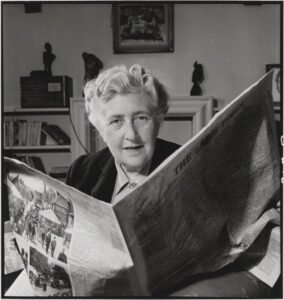
La escritora estadounidense Helen DeWitt, reconocida por integrar lenguaje, filosofía y estructuras de conocimiento en su obra narrativa.
The trajectory of Helen DeWitt is organized around an uncommon premise: literature as a system of thought. Her work does not limit itself to storytelling, but constructs structures where language, learning, and logic operate as central materials. This approach places her within a lineage of authors who treat fiction as a form of intellectual inquiry.
Academic formation and conceptual foundation
DeWitt’s academic background in classical studies at the University of Oxford establishes a technical starting point. The analysis of ancient texts involves working with logic, rhetoric, and philological tradition. This framework carries into her writing, where each element responds to a structural function. Language does not act as a conventional narrative vehicle, but as an object of exploration and conceptual construction within the text.
Early development and structural persistence
Before achieving recognition, DeWitt went through an extended period of diverse jobs while developing manuscripts. It has been documented that she produced dozens of narrative attempts before publishing her first novel. This process does not follow a simple trial-and-error logic, but rather an accumulation of narrative structures under constant adjustment, closer to a research process than to traditional literary production.
The Last Samurai as a turning point
The publication of The Last Samurai in 2000 introduces a narrative model based on the intersection of knowledge and fiction. The novel integrates multiple languages, philosophical references, and fragmented structures. Through the character of a child with exceptional abilities, it examines autonomous learning as a system. The work functions as a platform where different disciplines are articulated within a single narrative logic.
Critical recognition and reinterpretation
Following its publication, the novel received critical recognition, although its circulation was interrupted for several years. Its later reissue enabled a reinterpretation in a different context, where it began to be considered a reference work within contemporary fiction. This trajectory illustrates how certain texts require specific cultural conditions to be fully interpreted in their complexity.
Subsequent production and conceptual continuity
DeWitt’s later works, such as Lightning Rods and Some Trick, continue to explore social systems and cultural structures. Her narrative shifts toward corporate environments and market dynamics, maintaining an analysis of how implicit rules organize human behavior. Her more recent production reinforces a tendency toward shorter formats without reducing conceptual density.
Relationship with the publishing industry
DeWitt’s relationship with the publishing system has involved tensions linked to the nature of her work. Difficulties in editing complex texts—especially those integrating multiple languages and formats—highlight structural limitations within the sector. These situations reinforce an authorial stance that prioritizes textual integrity over commercial demands.
Style and writing method
DeWitt’s style is characterized by a combination of technical precision and analytical construction. The integration of disciplines such as linguistics, philosophy, and mathematics generates texts of high density. Narrative fragmentation and the use of multiple linguistic registers create a reading experience that requires active participation. The reader does not receive a linear story, but a system to be interpreted.
Impact on contemporary literature
DeWitt’s contribution lies in redefining the function of the novel. Her work proposes that fiction can operate as a space for autonomous learning, where knowledge is not simplified but organized within a narrative structure. This approach positions her among authors who expand the limits of the traditional literary form.