Silvana Corso: the Argentine educator who turned inclusion into school management
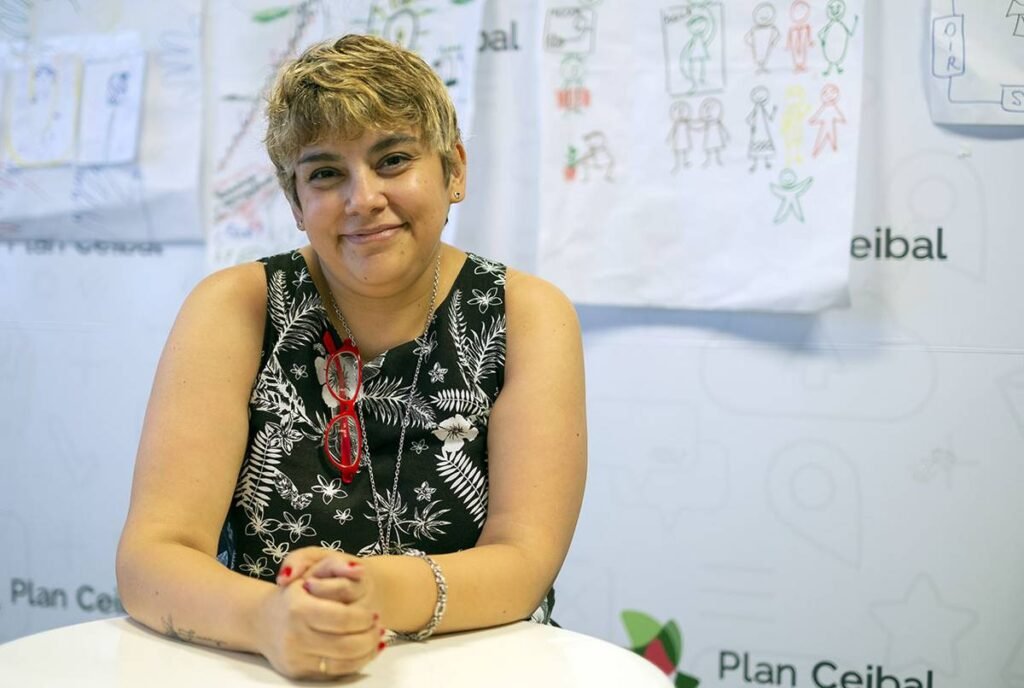
Silvana Corso fue finalista del Global Teacher Prize 2017 por su labor vinculada a la inclusión educativa en la escuela pública.
Silvana Corso is an Argentine teacher, pedagogue and educational manager recognized for her work in inclusive education within the public school system. Her career became associated with Escuela de Educación Media No. 2 “Rumania” in the City of Buenos Aires, where she promoted an institutional model aimed at integrating students with disabilities and young people in socially vulnerable contexts. In 2017, she was selected among the 50 finalists for the Global Teacher Prize, a recognition that gave her experience international projection.
A career linked to public education
Silvana Corso built an educational career marked by direct practice in public institutions. Her path combines teacher training, school management and specialization in inclusion. Before becoming a reference in the field, she developed a pedagogical perspective from the classroom and from institutional leadership, where decisions are not limited to curricular content, but also involve bonds, learning trajectories, support systems and concrete forms of school permanence.
Training and pedagogical perspective
Corso trained as a History teacher and later deepened her work in areas linked to disability, learning disorders, educational needs, inclusion strategies, diversity, educational technology and school practices adapted to students with different ways of learning. That training allowed her to think about teaching from a broad perspective, where difference does not appear as an obstacle, but as a real condition that schools must know how to address.
Escuela Rumania as an inclusion experience
Silvana Corso’s name became especially linked to Escuela de Educación Media No. 2 “Rumania,” located in Villa Real, City of Buenos Aires. There, she promoted an institutional experience aimed at welcoming students with disabilities and young people facing complex social situations. The value of the project lay in integrating those students into regular school, preventing inclusion from being reduced to formal enrollment without sustained pedagogical support.
School management with an institutional approach
One of Corso’s central contributions was understanding that educational inclusion does not depend only on the will of an isolated teacher. For it to work, it requires organization, internal agreements, support from teams, work with families, adaptation of strategies and review of traditional forms of assessment. Her experience showed that an inclusive school needs an institutional culture capable of sustaining high expectations without ignoring the particular needs of each student.
Recognition in the Global Teacher Prize
In 2017, Silvana Corso was selected among the 50 finalists for the Global Teacher Prize, an international distinction that recognizes teachers with high-impact experiences. Her nomination was significant because it placed a practice built within Argentine public education at the center of attention. The recognition was not based on an isolated innovation, but on a form of management capable of making student diversity the core of the educational proposal.
Projection as a speaker and trainer
In addition to her school work, Silvana Corso developed an active presence as a speaker and trainer in educational spaces. Her participation in talks, conferences and training programs helped expand the reach of her experience. In those interventions, her contribution is usually linked to the construction of schools capable of welcoming differences, reviewing institutional barriers and generating real learning conditions for students who are often left outside traditional models.
Inclusive education as concrete practice
In Corso’s perspective, inclusion does not function as an abstract slogan. It involves designing classes, relationships and school pathways for real groups, with cognitive, emotional, social and cultural differences. Along those lines, her work dialogues with approaches such as Universal Design for Learning, which proposes planning from the beginning different ways of teaching, participating and assessing, instead of waiting for a student to fail before adapting the proposal.
Debates associated with her work
There are no relevant public controversies associated with Silvana Corso. The debate surrounding her figure belongs to the educational field: how to ensure that inclusion is not only an institutional statement, but an effective transformation of the school. Her career can be read positively because she brought that discussion into the terrain of daily management, where each decision about time, support, teachers and families directly affects students’ permanence.
Impact on Argentine education
Silvana Corso represents a type of pedagogical leadership that combines technical knowledge, school experience and commitment to the right to education. Her work helped make visible that educational quality is also measured by a school’s ability to welcome diverse trajectories. Her figure holds a relevant place within the Argentine debate on inclusion, because it shows that innovation can emerge from a public institution when there is leadership, method and pedagogical sensitivity.