The French engineer behind TotalEnergies: Patrick Pouyanné
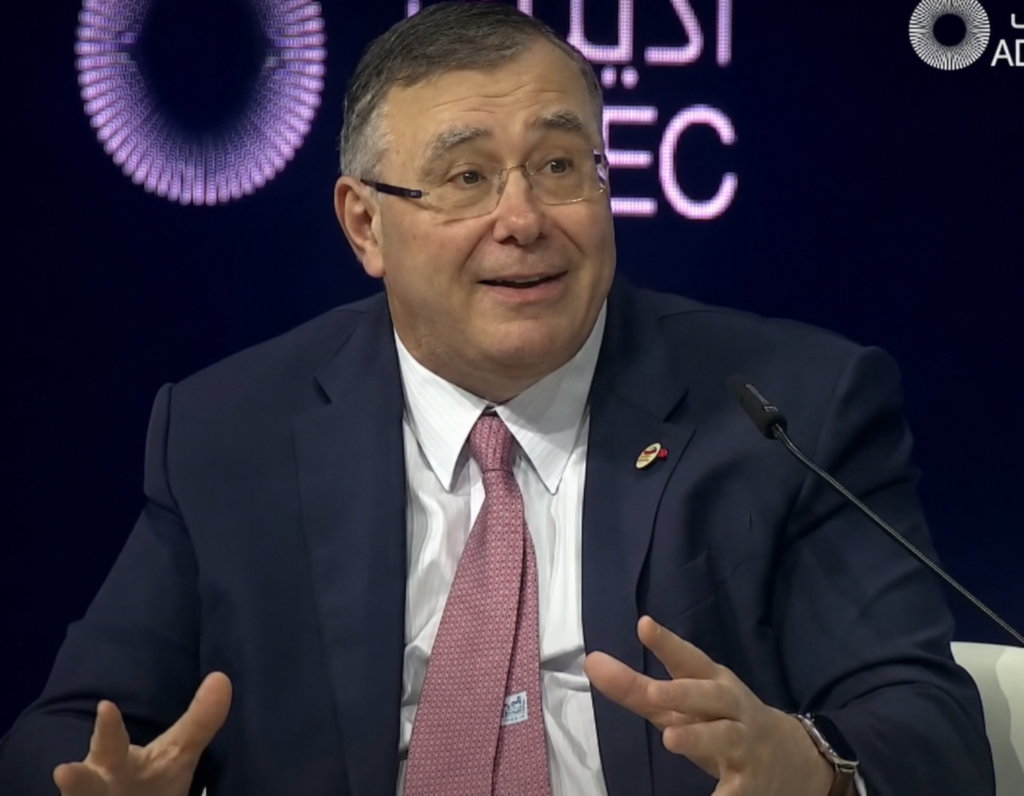
Patrick Pouyanné lidera TotalEnergies en una etapa marcada por la transformación multienergética, la disciplina financiera y los desafíos de la transición energética.
Patrick Pouyanné is a French businessman and engineer who serves as chairman and chief executive officer of TotalEnergies, one of the most relevant integrated energy companies in the world. His profile combines technical training, experience in the French public administration and an extensive career within the international energy sector. TotalEnergies reports that Pouyanné was born in 1963, graduated from École Polytechnique and belongs to the Corps des Mines, one of the technical tracks most closely linked in France to strategic sectors such as industry, energy, infrastructure and natural resources.
A career between the state, engineering and energy
Before joining the TotalEnergies group, Pouyanné worked in the French public administration between the late 1980s and the mid-1990s. That initial stage is important because it helps explain that his connection with energy did not begin only within the corporate world. His career started in spaces where industry, technology, the environment and public policy intersect with long-term decisions. In sectors such as energy, mining, transport or infrastructure, technical judgment needs to interact with regulation, planning, investment and security of supply.
In 1997, he joined TotalEnergies and began an internal career that moved through technical, operational and strategic areas. He worked across exploration and production, international functions, finance, economics, information systems, strategy, business development, research, refining and chemicals. That path allowed him to understand the company from different levels: the subsurface, industrial assets, economic analysis, corporate organization, innovation and market management. In an integrated energy company, that breadth is decisive because no segment works in isolation. Production requires infrastructure; infrastructure requires capital; capital demands returns; and every decision depends on geological, regulatory, commercial and environmental conditions.
Pouyanné was appointed CEO of Total in October 2014 and later also became chairman of the Board in December 2015. Since then, his name has been associated with a stage of business transformation. The company stopped presenting itself only as a traditional oil company and began consolidating the TotalEnergies identity, with a multi-energy proposition. That change expresses a deep shift in the sector: oil and gas continue to play a central role, but they now coexist with electricity, renewables, biofuels, biogas, low-carbon hydrogen and new environmental demands.
An active figure in the energy transition of 2026
As of 2026, Pouyanné continues to serve as chairman and CEO of TotalEnergies. In March 2026, the company’s Board met under his chairmanship and called the Ordinary and Extraordinary Shareholders’ Meeting for May 29, 2026, confirming his continuity at the head of corporate governance. This detail is useful because it updates his profile beyond his historical career: he is not a past figure of the sector, but a current executive leading a global energy company.
Pouyanné’s relevance is also explained by the scale of the company he leads. TotalEnergies operates in an industry shaped by geopolitical conflicts, price volatility, climate pressure, competition for low-cost assets, debates over energy security and growing shareholder demands. In that context, the role of an energy CEO is not limited to announcing investments or presenting financial results. It also involves deciding which resources to develop, which projects to abandon, which markets to prioritize, which technologies to accelerate and how to maintain supply in economies that still depend on oil and gas while moving toward a more diversified energy mix.
The close of 2025 also gives his profile current relevance. TotalEnergies reported adjusted net income of 15.6 billion dollars, cash flow close to 28 billion dollars and a return on average capital employed of 12.6%. The company presented those results in a context of lower oil prices, reinforcing the view of Pouyanné as an executive leading a company exposed to market cycles, the energy transition and pressure for profitability.
His profile helps explain a contemporary business figure: the technical executive who must manage a global company in the middle of a transition. Pouyanné cannot be understood only as an oil executive, but neither as a leader devoted solely to renewable energy. His role stands in an intermediate zone, where historical businesses, liquefied natural gas, electricity, renewables, financial returns, security of supply and emissions reduction coexist. That combination makes him a useful figure for understanding how business power is being reorganized within global energy.