Carolina Vera: applied climate science and decision-making
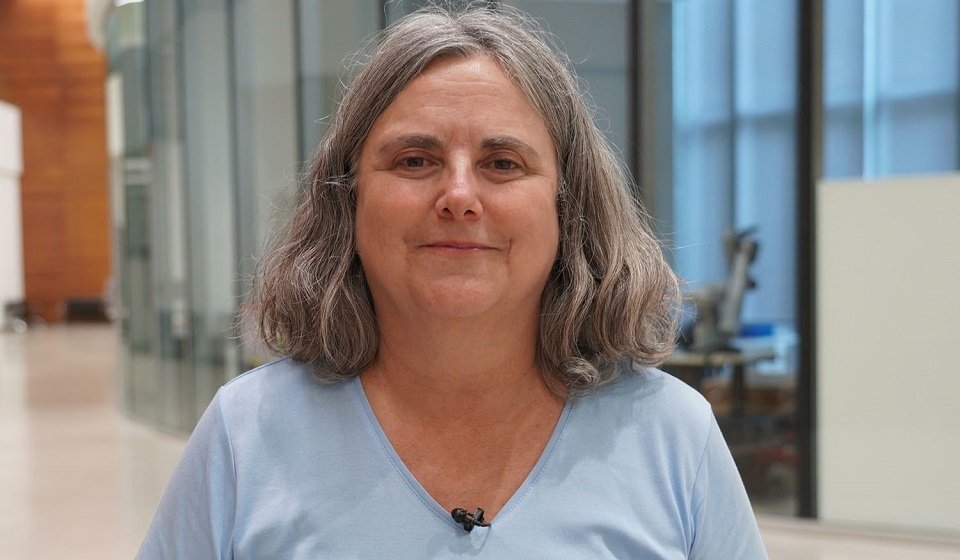
Investigadora argentina especializada en cambio climático y participación en el IPCC
Carolina Vera has developed a trajectory at the core of Latin American climate research, combining atmospheric modeling, data analysis, and policy linkage. Her work focuses on understanding complex systems and translating them into operational tools for decision-making.
Scientific training and disciplinary foundation
Her academic formation took place at the Universidad de Buenos Aires, where she earned a PhD in atmospheric sciences with a focus on climate dynamics. This field studies physical processes governing climate behavior, including atmospheric circulation and energy transfer. Its mathematical and computational basis enables the construction of models that simulate future scenarios under varying environmental conditions.
Research on climate variability
As a researcher at CONICET, she has worked extensively on phenomena such as El Niño-Southern Oscillation. This system involves ocean–atmosphere interactions that alter rainfall and temperature patterns across South America. Understanding these dynamics supports anticipation of impacts on agriculture, water management, and ecosystems.
Applied climate modeling
Climate modeling is a central technical axis of her work. It relies on physical equations to represent the climate system within computational simulations. These models evaluate emission scenarios and their projected effects. Their accuracy depends on data quality and the ability to calibrate outputs to regional conditions.
Participation in the IPCC
Vera has contributed to the Intergovernmental Panel on Climate Change, participating in teams that assess climate impacts and adaptation strategies. IPCC reports synthesize global scientific evidence through peer-reviewed literature and international validation processes, serving as a key reference for climate policy.
Link with public policy
A defining dimension of her trajectory is the integration between science and government. She has contributed to the development of climate information systems that generate forecasts and early warnings. These tools are applied in energy planning, agriculture, and infrastructure, reducing risks associated with extreme events through evidence-based decisions.
Academic and institutional leadership
Within academic environments, she has held leadership roles linked to research and institutional coordination. Her approach promotes interdisciplinary integration, recognizing that climate change requires analysis beyond meteorology, incorporating economic and social variables.
Debates in climate science
The field involves tensions related to model uncertainty and their application in public decision-making. Scientific participation in these processes raises questions about the role of evidence under conditions of risk. Vera’s work aligns with approaches that prioritize integration between scientific knowledge and strategic planning.
Regional impact and cooperation
Her contributions have strengthened scientific networks across Latin America. The development of regional data and models improves response capacity to extreme events and reduces dependence on external information, enabling more precise, locally adapted diagnostics.
Projection and evolution of the field
Advances such as artificial intelligence applied to climate analysis are reshaping predictive capabilities. In this context, her experience in modeling and systemic analysis positions her within ongoing scientific updates, where integration between data, models, and policy remains central.