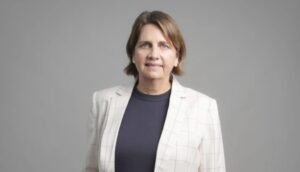
Melina Furman: the architecture of curiosity in science education
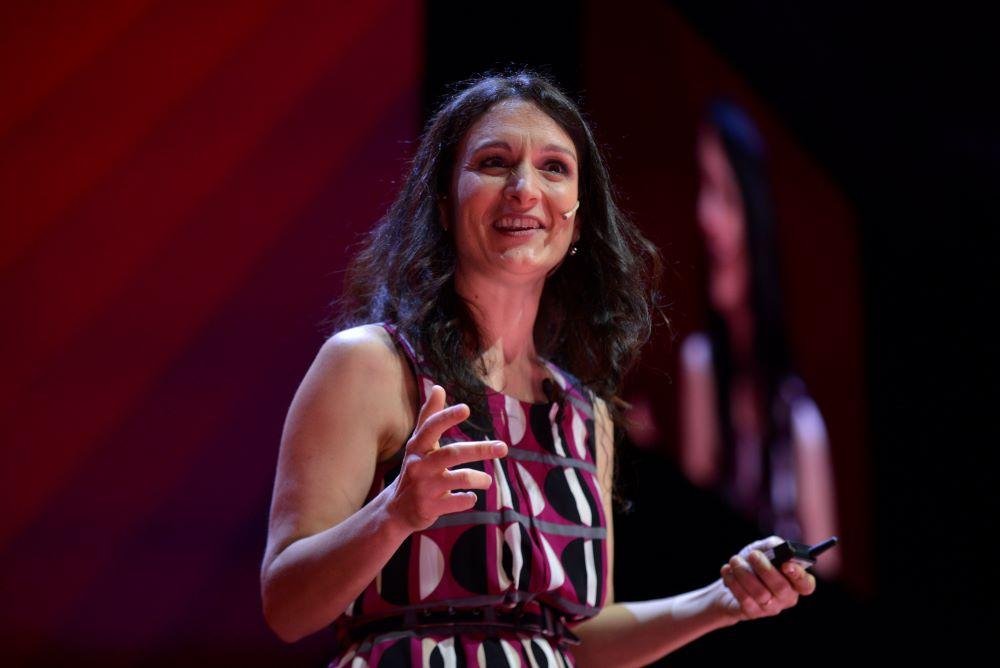
La investigadora argentina desarrolló un enfoque pedagógico centrado en el pensamiento crítico y la exploración
Melina Furman built her trajectory around a core operational idea: deep learning emerges when knowledge is organized around questions. Her work integrated biology, educational research, and science communication, focusing on how to develop scientific thinking from early ages.
Academic formation
Furman trained as a biologist at the Universidad de Buenos Aires and later specialized in science education at Columbia University, where she completed both a master’s and a PhD. This interdisciplinary path reflects a methodological structure: transferring the logic of scientific inquiry—observation, hypothesis formation, and validation—into classroom practice.
Professional trajectory
Her professional development was consolidated at CONICET and Universidad de San Andrés, where she worked as a researcher and educator. Her work focused on science teaching and teacher training, emphasizing practical applications capable of transforming classroom dynamics within the Argentine education system.
Projects and initiatives
Furman contributed to initiatives such as Expedición Ciencia and TED-Ed Clubs Argentina. These programs operate as active learning environments where participants construct knowledge through exploration and communication. The design principle is that learning strengthens when students produce, argue, and share ideas rather than passively receive information.
Editorial production
Her written work connects research with pedagogical application. Books such as Enseñar distinto and Guía para criar hijos curiosos translate theoretical concepts into actionable strategies for educators and families. The structure of these works focuses on reorganizing knowledge to make it operational in everyday contexts, positioning curiosity as a sustained driver of learning.
Educational innovation
Furman’s contribution lies in redesigning the educational process. Her approach frames science as a practice rather than a body of content. This involves working with open-ended problems, encouraging questioning, and treating error as part of cognitive development. From a technical perspective, it promotes metacognitive skills that help students understand how they learn and build knowledge.
Science communication
Beyond academia, she maintained a consistent presence in public communication through talks, media content, and large-scale educational platforms. Her approach translates complex ideas without losing conceptual structure, expanding access to scientific knowledge through applicable formats.
Recognition
Her work received institutional recognition, including being named Distinguished Personality in Education by the City of Buenos Aires. These acknowledgments reflect measurable impact on teacher training, educational policy, and scientific culture.
Debates and tensions
Her framework challenges traditional models based on memorization and standardized evaluation. Prioritizing critical thinking and curiosity introduces tension within systems structured around fixed content. These debates highlight the need to adapt education to contexts where information is readily accessible and interpretation becomes the central skill.
Legacy
Furman passed away in 2024, leaving a body of work that integrates theory, practice, and communication. Her legacy persists through replicable methodologies, educational programs, and a conceptual framework that positions teaching as an active construction process, particularly in science education.