Stephen King: Half a Century Writing the Nightmares of Millions of Readers
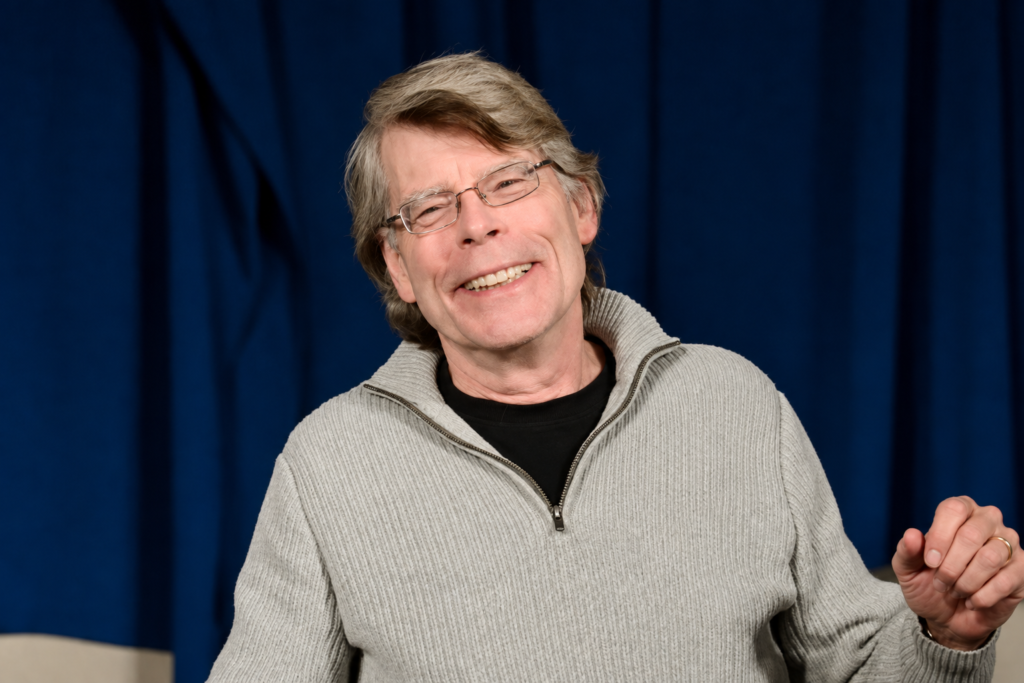
Stephen King construyó durante más de cincuenta años una obra que atravesó la literatura, el cine y la cultura popular, desde Carrie hasta sus publicaciones más recientes.
For more than half a century, Stephen King has been publishing stories that people read with the lights on. He has written more than sixty books, inspired some of the most memorable horror and drama films in cinema, and achieved something few authors manage: turning his name into a genre of its own. Behind the public figure is a boy raised without a father, a teacher who wrote in the laundry room of a trailer home, a man who overcame addiction and survived an accident that nearly killed him, and a writer who, past the age of 78, continues to publish.
Portland, an Absent Father and a Typewriter
King was born in Portland, Maine, in 1947. When he was two years old, his father left home and never returned. His mother, Nellie Ruth Pillsbury, raised Stephen and his older brother David on her own, and for years the family moved between several states before settling in Durham, a small town in Maine.
That landscape of rural towns, long winters and neighbors who have known one another all their lives would eventually become the setting for much of his work. Derry, Castle Rock and Jerusalem’s Lot, the fictional towns in his novels, owe much to those places.
He studied English at the University of Maine, where he wrote a column for the campus newspaper and met Tabitha Spruce, whom he married in 1971. The early years were financially difficult: he taught English at a high school, had worked in an industrial laundry, and the couple lived in a trailer with their young children. King wrote at night, with a typewriter resting on his knees in the room where the washing machine stood.
The Novel That Ended Up in the Trash
The story of his first success is one of the best-known anecdotes in American literature. King began writing a story about a teenage girl humiliated by her classmates who discovers she has telekinetic powers. Dissatisfied with the result, he threw the pages in the trash. Tabitha retrieved them, read them and convinced him to continue.
Carrie was published in 1974. The sale of the paperback rights transformed the family’s finances overnight and allowed him to leave teaching and devote himself entirely to writing.
A Decade of Classics
What followed was a run few writers have ever matched. Within a few years, he published ‘Salem’s Lot (1975), The Shining (1977), The Stand (1978) and The Dead Zone (1979). The 1980s brought Pet Sematary, It and Misery, as well as the first volumes of The Dark Tower, the series King himself considers the center of his literary universe and which he completed in 2004.
His style, close to everyday speech and filled with brand names, radio songs and ordinary characters, turned him into a mass-market author. For years, it also earned him the disdain of some critics, who regarded him as merely a commercial writer.
Richard Bachman, the Other Self
In the late 1970s, King wanted to find out whether his success depended on his name or on his stories. He began publishing novels under the pseudonym Richard Bachman, including The Long Walk and The Running Man. The experiment ended in 1985, when a bookstore employee noticed similarities in style and traced copyright records back to King. He was not angry: shortly afterward, he jokingly announced that Bachman had died of “cancer of the pseudonym.”
From Page to Screen
Few authors have been adapted as often. Brian De Palma brought Carrie to the screen in 1976, Stanley Kubrick filmed The Shining in 1980, and later came Stand by Me, Misery — which earned Kathy Bates an Oscar —, The Shawshank Redemption and The Green Mile. In 2017, It became the highest-grossing horror film of its time.
His relationship with those adaptations has not always been harmonious, and he has never hidden that fact. For decades, he openly said that he disliked Kubrick’s film because he felt it had lost the heart of the family story he had written. Rather than remaining simply a dispute, that frankness helped fuel one of the richest debates about adaptation in film history, and years later King gave his blessing to Doctor Sleep (2019), the film that brought the two versions of the story together.
He also has a generous tradition with young filmmakers. For decades, he has allowed film students to adapt some of his short stories for a symbolic fee of one dollar, on the condition that the films not be used commercially. They are known in the industry as dollar babies.
Personal Battles
During the 1980s, at the height of his fame, King struggled with alcohol and cocaine addiction. He has admitted that he barely remembers writing some of the novels from that period. At the end of the decade, his family staged an intervention, and King chose recovery. Since then, he has spoken about the subject with a frankness that has helped many readers going through similar experiences.
On June 19, 1999, while walking along a road near his home in Maine, he was struck by a van. He suffered multiple fractures to his leg and hip and a collapsed lung, and his recovery was long and painful. During those months, he completed On Writing (2000), a book that is half autobiography and half writing manual and has become standard reading in writing workshops around the world.
The Decision to Withdraw a Book
One of the episodes that best illustrates his sense of responsibility involves Rage, an early novel published as Bachman about a student who takes hostages at his school. When it became known that the book had appeared in connection with several school shootings in the United States, King asked for it to be taken out of print. He accepted losing one of his own titles rather than risk having it continue to circulate in that context. Years later, he wrote an essay about gun violence in his country.
Recognition That Came With Time
In 2003, he received the National Book Foundation Medal for Distinguished Contribution to American Letters. The choice drew criticism from some academics who objected to seeing a popular author receive such recognition. King responded in his speech with a defense of the literature read by ordinary people, and time ultimately strengthened his position: today, his work is studied at universities. In 2014, he received the National Medal of Arts, presented by President Barack Obama, and in 2015 he won an Edgar Award for the crime novel Mr. Mercedes.
Maine as His Own Territory
King never left Maine. Together with Tabitha, he created a foundation that supports libraries, schools and community organizations in the state, and he also helped establish the Haven Foundation, which assists independent artists and writers facing health or financial difficulties. Writing runs in the family: Tabitha is a novelist, and their sons Joe Hill and Owen King are also writers. With Owen, King co-wrote Sleeping Beauties (2017).
2026, a Return to the Territories
At 78, King maintains a pace that much younger writers might envy. In 2025, he published Never Flinch, a new novel featuring detective Holly Gibney. Other Worlds Than These is scheduled for October 6, 2026, as the third and final book in the saga that began with The Talisman (1984) and continued with Black House (2001), both written with Peter Straub. Straub died in 2022, and King completed the novel alone, working from material his friend had left behind.
The screen adaptations continue as well. Prime Video is scheduled to premiere a new series based on Carrie on October 7, 2026, starring Summer H. Howell, and in November a 40th-anniversary collector’s edition of It is expected, with a foreword by the Duffer brothers, creators of Stranger Things.
Half a century after Tabitha rescued those pages from the trash, the story of Carrie White is being told again. This time, for a generation that had not yet been born when King was writing at night beside the washing machine.