Conrado Estol: Forty Years Dedicated to Preventing Stroke
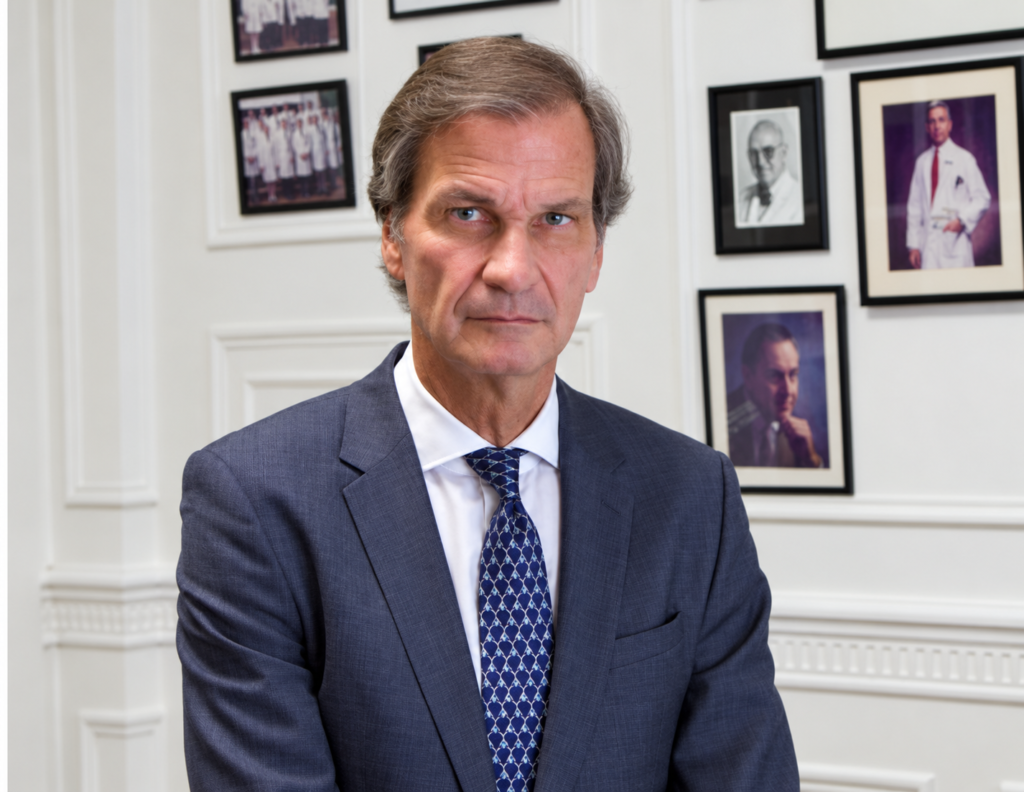
Conrado Estol desarrolló gran parte de su carrera alrededor de la prevención vascular, el tratamiento del ACV y la divulgación médica.
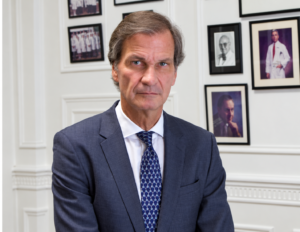
Conrado Estol was born in Manhattan, trained at some of the most demanding medical centers in the United States and, when he was offered a position as a professor of Neurology in Boston, decided to return to Argentina. A specialist in stroke, he took part in some of the early research into the drugs that are now a standard treatment for the condition, founded a center devoted to vascular prevention and became one of Argentina’s most widely followed medical communicators. Four decades later, he maintains that his profession rests on something no technology can replace: the relationship with the patient.
Between New York and the Vineyards of Mendoza
Estol was born at Doctor’s Hospital in Manhattan and spent his childhood between two worlds: winters in New York and summers in the vineyards of Mendoza. He says that this life divided between two places shaped his character and, over time, his vocation. His father, also named Conrado Estol, is an aeronautical engineer.
He studied Medicine at the University of Buenos Aires, graduating in 1982, and later earned a doctorate with a thesis on the neurological complications of liver transplantation, which received the highest distinction.
Training in the United States
After graduating, he traveled to the United States to complete his training. He did his Internal Medicine residency at hospitals affiliated with Mount Sinai in New York and his Neurology residency at the University of Pittsburgh. He specialized in stroke in Boston, at Tufts University’s New England Medical Center and Harvard’s Spaulding Rehabilitation Hospital, working alongside Louis Caplan, one of the world’s leading figures in cerebrovascular disease. He also obtained certification from the American Board of Psychiatry and Neurology, a voluntary examination that not every neurologist in the country chooses to take.
Those years coincided with two moments that shaped modern medicine. He witnessed the emergence of AIDS at close range and saw the first successful drug treatments for stroke. In 1988, he treated one of the first patients in the world with thrombolytic drugs, which dissolve the clots blocking the brain’s arteries. He participated in those early studies, which eventually helped make these drugs a standard treatment for stroke.
The Decision to Return
With that training and an offer to become a professor of Neurology in Boston, Estol chose to return to Argentina in the early 1990s. He has explained that his sense of belonging and the need to be close to family and friends outweighed any economic or professional advantage offered by the U.S. system. He still remembers the anxiety he felt every time he drove to Ezeiza Airport to return to the United States, and says that is why he is here.
A professional conviction also influenced the decision: he believed that practicing medicine in Argentina could bring him greater satisfaction and that his contributions could have a greater impact.
Breyna and Prevention as a Method
In 1996, he founded Breyna, a neurology and cardiology center focused on the prevention of vascular disease. The center works as a team, using a shared electronic medical record for each patient and, according to its own data, changes the diagnosis in nearly 30% of consultations and the treatment in close to 80% of evaluated patients, while maintaining a low use of tests and surgical indications.
He brought rehabilitation techniques to Argentina that he had learned in Boston and created the country’s first group of therapists dedicated to neurological stroke rehabilitation using neurodevelopment techniques. Over the years, he added other projects: he is linked to the Stroke Unit at Sanatorio Güemes, founded the clinical research companies Stat-Research and Biomakers, and more recently opened Xtend Longevity, a clinic focused on longevity.
An International Academic Career
His scientific output exceeds 170 publications, most of them in international journals. It includes around 50 original papers, mostly as first author, 40 book chapters, 20 editorials and letters, 60 conference presentations and one book as editor.
He was a visiting professor of Neurology in Paris and Cleveland, served on organizing and scientific committees for international neurology and cerebrovascular disease congresses, and in 2007 organized World Stroke Day in the Dominican Republic. For two years, he served as president of the Harvard Club of Argentina.
From the Consulting Room to Social Media
In recent years, Estol has added a role beyond the consulting room: that of medical communicator. His Instagram account has nearly two million followers, with whom he discusses sleep, habits, prevention and longevity. He wrote the book A mí no me va a pasar (“It Won’t Happen to Me”), whose title summarizes the attitude he tries to challenge among his patients: the idea that vascular diseases always happen to someone else.
He often cites a Mayo Clinic study according to which fewer than 5% of people follow the basic habits of a healthy lifestyle, and says his experience in clinical practice confirms that figure. Among the topics he has discussed publicly is an analysis of the Andes plane crash, in which he explained how hypothermia may have protected the brain of one of the survivors who had been presumed dead and left in the snow at the entrance to the fuselage.
Forty Years of a Medical Career
The Buenos Aires City Legislature declared him a Distinguished Personality in the field of Health as he marked 40 years of professional work. At the ceremony, held in the Salón Montevideo, his father took the floor to review the milestones of his son’s career.
In a recent interview, Estol summarized his journey with an idea that also runs through his clinical work: relationships are the foundation of everything. For him, the connection with the patient remains irreplaceable, even at a time when medical technology is advancing faster than ever. Perhaps that is the same reason why, more than thirty years ago, he chose to board a plane back to Argentina.