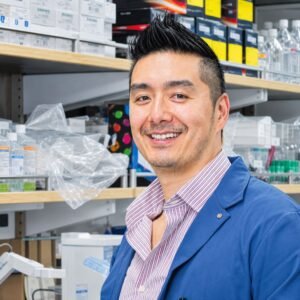
Dean Ho: Finding the Right Dose with Artificial Intelligence
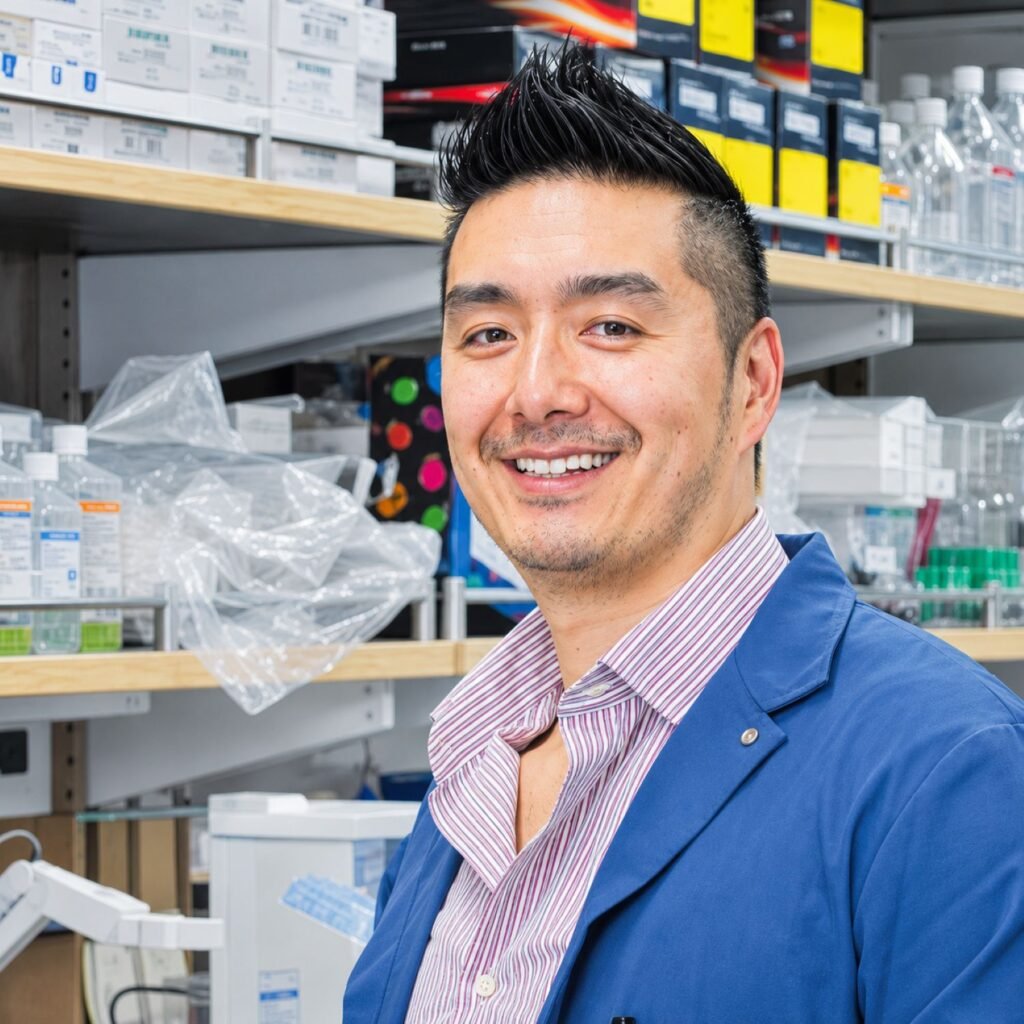
Dean Ho dirige investigaciones sobre el uso de datos individuales para ajustar tratamientos y desarrollar intervenciones de salud personalizadas.
Why do two patients with the same diagnosis receive a similar dose when their responses may differ? That question offers a starting point for understanding the work of Dean Ho, a UCLA-trained researcher based in Singapore. His team develops tools to adjust treatments according to each person’s response, working alongside healthcare professionals.
At the National University of Singapore (NUS), Ho directs the N.1 Institute for Health and the Institute for Digital Medicine, known as WisDM. He also heads the Department of Biomedical Engineering. His research brings together engineering, data analysis and clinical studies.
From UCLA to Northwestern: the US years
Ho completed his university education at UCLA, earning a bachelor’s degree in Physiological Sciences in 2001, a master’s degree in Biomedical Engineering in 2003 and a doctorate in the same field in 2005. He subsequently conducted research at Caltech and held a postdoctoral position associated with the California NanoSystems Institute and Hewlett-Packard at UCLA. In 2006, he joined Northwestern University.
One area of his research focused on nanodiamonds, tiny carbon particles studied as drug-delivery vehicles. In 2011, he contributed to research published in Science Translational Medicine on their use to improve treatment of chemotherapy-resistant tumors. That work preceded his return to UCLA.
In 2012, he returned to the university as a professor and co-director of the Jane and Jerry Weintraub Center for Reconstructive Biotechnology. His career thus combined the development of biomedical materials with the search for therapeutic applications.
Singapore and clinical research
In 2018, he joined NUS as a professor. From Singapore, he expanded his work in personalized medicine and digital health technologies.
The university reports that Ho and his collaborators manage a portfolio of more than ten prospective, interventional human clinical trials. Their projects cover several applications, including oncology, digital therapeutics and treatment optimization.
He also co-founded KYAN Therapeutics and Biotic Laboratories, companies associated with the development and transfer of his technologies. Those activities complement his academic work, although each platform must be assessed through its own studies and results.
CURATE.AI: adjusting treatment using patient data
One of his best-known platforms is CURATE.AI. It begins by observing how a person responds to different doses of a drug or a combination of medicines. Those data are used to build an individual profile that can inform adjustments during treatment.
Its distinguishing feature is that it uses the patient’s own data to personalize their treatment regimen. It also accounts for the fact that the same person may respond differently over time. Adjustment is therefore treated as a process that can be revisited rather than a one-time decision.
The aim is to provide information for clinical decisions. The platform is studied in specific settings, and its results must be interpreted according to the treatment, disease and design of each trial.
DELTA: the researcher as participant
Ho is also the sole participant in DELTA, an N-of-1 digital health study. The team records how his biomarkers change in response to interventions involving nutrition, exercise and other habits.
In August 2026, NUS announced findings published in PLOS One. The work builds on an earlier study of metabolic changes published in PNAS Nexus in 2024.
DELTA and CURATE.AI share an interest in individual data, but they have different objectives. The former examines physiological responses and habits; the latter is used to investigate treatment personalization. Findings from a single-participant study also cannot, on their own, establish that an intervention will work the same way in other people.
Recognition and next steps
Ho was elected a fellow of the National Academy of Inventors in 2018. He is also a fellow of the AAAS, the American Institute for Medical and Biological Engineering and the Royal Society of Chemistry. His distinctions include the NSF CAREER Award, the Coulter Foundation’s Translational Research Award and the V Foundation Scholar Award.
His work explores a concrete possibility: improving the use of existing treatments through adjustments based on individual responses. Bringing that approach into hospital practice requires clinical studies, evaluation of results and collaboration with the teams caring for patients. Much of his research now focuses on those stages.