Marina Simian: the researcher who went on a TV game show to fund her laboratory and now runs a biotech company fighting cancer
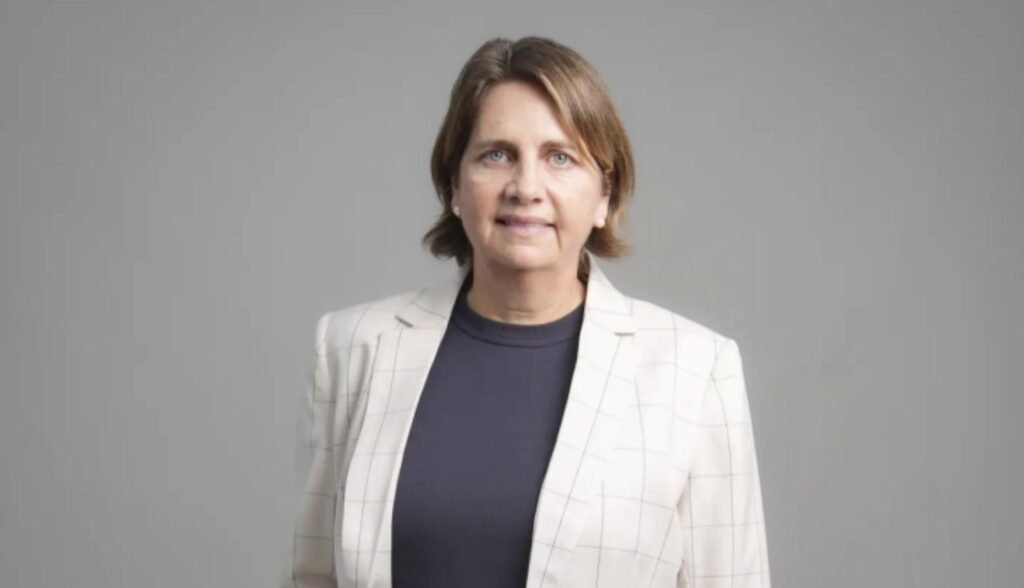
Marina Simian pasó más de dos décadas investigando cáncer de mama en el CONICET y en 2021 fundó Oncoliq para transformar ese conocimiento en tests de detección temprana basados en sangre.
She spent more than two decades at CONICET studying why some breast tumors stop responding to treatment. In 2019, she sat in front of the cameras on a television quiz show to win enough money to buy laboratory reagents. Two years later, she left the lab to found Oncoliq, the company through which she is trying to detect cancer with a simple blood draw.
A scholarship at fifteen and the professor who changed her path
Her vocation appeared early. In her fourth year at Northlands School, she won a scholarship to study marine biology for a semester in the United States, something fairly unusual at the time. But the decisive turn came at university: during the first year of her degree at the Faculty of Exact and Natural Sciences, Alberto Kornblihtt taught her Introduction to Cellular and Molecular Biology. Simian remembers that course as the moment when she became captivated by the discipline that would eventually occupy her life.
What followed was a classic path, although hardly a short one: a PhD at the Lawrence Berkeley National Laboratory at the University of California and postdoctoral work at the Ángel H. Roffo Institute of Oncology in Buenos Aires. She herself describes the training of a researcher as a journey comparable to becoming a doctor, and an often frustrating one, because experiments almost never turn out the way you expect.
The grant that built her laboratory
Two things happened at the same time in 2006. She joined CONICET’s Scientific Researcher Career program and, at 34, won a $250,000 international grant from the U.S.-based Susan G. Komen for the Cure foundation. She was the first Latin American researcher to receive it.
The money arrived before there was a structure capable of managing it, so she went to the president of the Roffo Institute and asked for help administering the funds. With that support, she built her research group, began taking on fellows and established a line of research she would pursue for years: the tumor microenvironment, meaning everything surrounding a cancer cell that influences its behavior.
The specific focus was tamoxifen, the hormone therapy taken by most breast cancer patients for ten years. Around three out of ten experience a recurrence. Her hypothesis, inherited from the approach of her mentor Mina Bissell, was that the answer did not lie only inside the cell but also in the external scaffold supporting it.
Thirteen years for one paper
That bet produced an important result in 2018. A team led by Simian at UNSAM’s Institute of Nanosystems published a study in the Journal of Cell Biology identifying beta 1 integrin, a fibronectin receptor, as a new therapeutic target. The finding challenged the traditional model of how the estrogen receptor regulates the genes that drive tumor proliferation.
Behind it were thirteen years of work, two doctoral theses —those of Osvaldo Pontiggia and Rocío Sampayo, the latter the paper’s first author— and a network of collaborators that included Fernando Stefani in super-resolution microscopy, Dante Chialvo for the mathematical analysis of the images, Alfredo Cáceres in Córdoba and laboratories in California. Bissell herself provided the human samples that allowed the researchers to confirm their findings.
It is an unusual example of high-impact Argentine science built around an idea sustained for more than a decade through fragmented funding.
The television appearance that brought the debate into prime time
In May 2019, Simian appeared on Who Wants to Be a Millionaire?, the Telefe program hosted by Santiago del Moro, and won 500,000 pesos. Her reason was entirely practical: she did not have enough money to buy laboratory supplies.
At the time, she explained that from a PICT grant she had won in 2017, only half of one annual installment had been deposited, around 260,000 pesos, which at the exchange rate was worth slightly less than $5,700 —an amount with which it is virtually impossible to conduct cellular and molecular biology research.
Her appearance caused a stir. Some saw the scene as a spectacle; others interpreted it as an uncomfortable snapshot of the state of Argentina’s scientific system. A government congressman publicly congratulated her for appearing on the show, adding another layer to the debate, and days later then-president Mauricio Macri received her at the presidential residence in Olivos.
She never presented the episode as a media operation. She said she had not anticipated such a reaction, that colleagues pointed out that the appearance had brought more attention to the issue than a protest march, and that if that was the result, she welcomed it.
In retrospect, the decision worked on both levels: it paid for a year’s worth of reagents and made a debate that had largely remained behind closed doors visible to a mass audience. The decision was also collective: Simian volunteered to participate on the condition that her team went with her.
Around the same time, she was asked whether she would leave the country. She replied that she could, because she had the career and international connections to do so, but that at 47, with a husband and three children, it was not so simple, and that she wanted to continue doing science in Argentina.
From academia to business
The shift came in 2021. The pandemic had left her fellows unable to enter the laboratory, and Simian did not want to start PhD programs that would be condemned to one or two years of paralysis. Added to that was a growing fatigue with her role as a mentor and the fact that she had turned fifty, something she openly describes as part of the equation.
She then founded Oncoliq with Adriana De Siervi. The technology had been developing since 2014 in her partner’s laboratory through studies of molecules known as microRNAs in mice. When the researchers moved to human samples, comparing blood from breast cancer patients with blood from healthy women, they found that those changes could signal the presence of a tumor. The method combines PCR analysis with machine learning to recognize patterns.
The proposal is a screening tool, not a diagnostic test: it indicates that something may be happening, not which type of cancer is present. Its advantages lie in cost, low invasiveness and the possibility of reaching areas without access to medical imaging. With a reported sensitivity of 90 percent, compared with 85 percent for mammography, the team’s hypothesis is that it could detect tumors that imaging does not yet reveal.
The numbers behind the project
By 2023, after processing more than 400 breast tests and more than 700 prostate tests, the Falling Walls Foundation recognized the development as a scientific innovation of the year and brought the team to its international summit before leaders from the biotech sector.
The company has licensed the CONICET patent in national phases in the United States and Argentina and expects to file a second patent based on adaptations made to the product.
In 2025, it closed its third investment round. According to La Nación that year, the two scientists had raised $2.8 million. Since May of that year, they have also been working with the province of Chubut on an HPV screening program aimed at the early detection of cervical cancer.
The immediate plan is to launch the breast cancer test and develop the lung cancer test, for which sample collection has already begun. The stated goal is ambitious: to cover the vast majority of cancers affecting people and do so through a test that can be integrated into the routine blood work any doctor might order.
A public position without euphemisms
For years, Simian has argued that the state makes a mistake when it fails to support science and the creation of technology-based companies because the country loses the opportunity to become a regional biotechnology leader. She has made the same argument under governments of different political orientations, giving her position a consistency that goes beyond any particular administration.
Her argument is not only about budgets. She insists that Argentina already has the raw material: a strong scientific tradition, Latin American leadership in the hard sciences and a high concentration of researchers by regional standards.
What is missing, in her view, is the system that turns knowledge into products, the kind of self-sustaining ecosystem that operates in cities such as Boston.
How she works today
She divides her time between Buenos Aires, La Pedrera —where she goes kitesurfing after work and spends time with her husband and three children— and the United States, where she travels for around two months each year to raise funds.
The arrangement resembles the one she created when she was younger, when her first two children were born during her PhD and she maintained three very long laboratory days each week —Tuesdays, Thursdays and Saturdays— while organizing everything else around them.
She gives two pieces of advice to young scientists who want to become entrepreneurs. First, finish your training, because a PhD is what prepares you to develop a drug or a test without underestimating the complexity of laboratory work. Second, find a real and significant problem, because most startups fail by developing something nobody needs.
She is convinced that Argentina will eventually produce biotechnology unicorns. Her personal ambition, however, is expressed in more modest —and more difficult— terms: that what comes out of the laboratory eventually reaches people, and hopefully that it comes from here.