Verónica Lassalle: the chemist from Bahía Blanca who makes nanoparticles to heal and clean
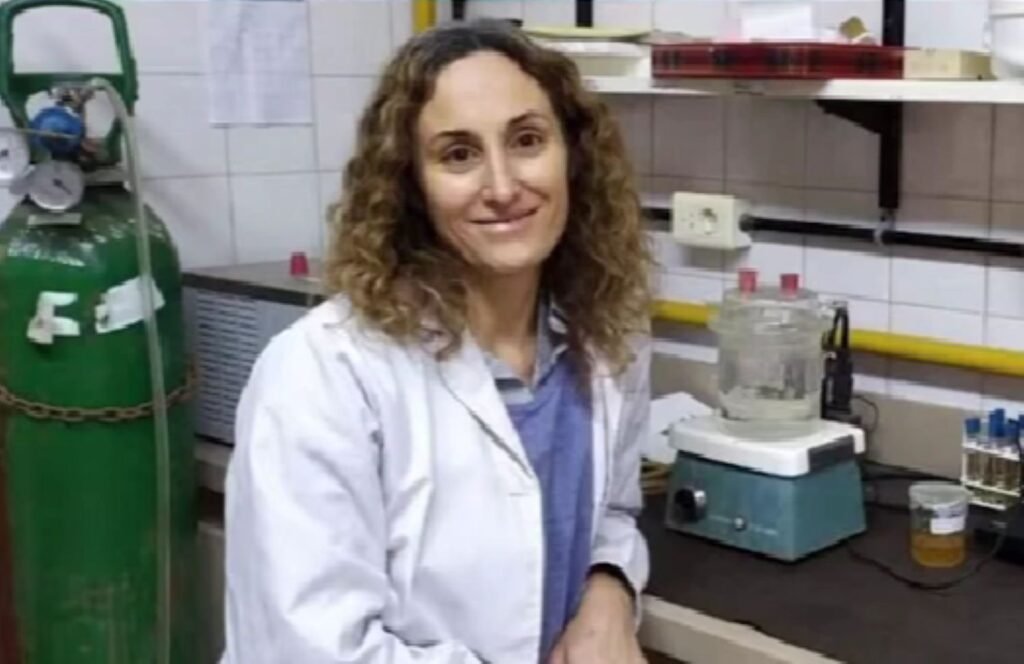
Verónica Lassalle dirige investigaciones sobre nanopartículas capaces de transportar fármacos, remover arsénico del agua y mejorar productos de protección personal.
There is one material that appears in almost everything she does: magnetite. It is inexpensive, non-toxic, tolerated by the human body and responsive to magnets, which makes it possible to guide it towards a tumour or remove it from a water tank once its task is complete. From that starting point, Verónica Lassalle built twenty years of work in Bahía Blanca around a rule she repeats in every interview: materials must be affordable, because an expensive development reaches no one.
From the polymer laboratory to particles controlled by a magnet
She earned her doctorate in Chemistry from the National University of the South in 2006, after completing postgraduate studies in polymer technology at the Pilot Plant of Chemical Engineering (PLAPIQUI, UNS-CONICET). She remained there for another two years in the field of catalysis, conducting research on the enzymatic synthesis of biodegradable polymers.
Her relationship with CONICET had begun earlier, in 2001, when she became a fellow. In April 2008, she entered the scientific research career as an assistant researcher at the Institute of Chemistry of the South, and since November 2017 she has held the position of independent researcher. Since 2011, she has led NanoHiAp, the Applied Hybrid Nanomaterials group, and serves on the institute’s Governing Council. She teaches in the Department of Chemistry at the UNS and has provided consulting services at the Cayetano Heredia Peruvian University in Lima.
Two fronts: water and the body
NanoHiAp’s work focuses on magnetic nanosystems and hybrid materials that combine polymers with inorganic components. Its applications follow two paths that rarely share the same laboratory.
One is environmental: magnetite particles capable of capturing arsenic from groundwater and then being recovered with a magnet, allowing them to be reused rather than discarded.
The other is biomedical. Her group has worked with iron oxide nanoparticles coated with polyethylene glycol, silica or gelatin to transport drugs to a specific target. She has supervised theses and publications on doxorubicin carried by magnetic nanocarriers and its effect on colorectal cancer cells, on quercetin in breast cancer cell lines and on theranostic agents—capable of diagnosing and treating at the same time—designed for veterinary medicine. Her body of work has received more than 2,200 citations on Google Scholar.
March 2020, and a research project that changed direction
When the pandemic began, Lassalle and Vera Álvarez of INTEMA (CONICET-UNMdP) realised that materials from a doctoral fellowship they were jointly supervising could have activity against the coronavirus. They redirected the research and submitted the project “Development of polymer gels, films and coatings for protective materials and the inactivation of COVID-19 on different surfaces” to a call by Argentina’s Research, Development and Innovation Agency. It was one of 64 projects selected from 910 proposals.
The material had a gel-like consistency and was incorporated into fabrics during manufacturing: a natural polymer with antiviral activity reinforced with inorganic nanoparticles. The aim was to protect reusable hospital textiles—scrubs, sheets and towels—and later to develop a household spray. Validation was planned in collaboration with textile research groups at INTI.
UV Reprotector: one tube for the sun and mosquitoes
The development that brought her the greatest public attention began in late February 2023. Together with the SODA group led by Marcos Grunhut at the same institute, and with the Bahía Blanca microenterprise Peñenwen Cosmética Natural, her team formulated a multifunctional product that filters ultraviolet radiation, repels insects and has anti-inflammatory properties.
It uses zinc oxide and titanium dioxide nanoparticles, the only filters accepted under COSMOS and EcoCert standards for natural cosmetics, which also avoid the whitening effect of traditional sunscreens. Its repellent function comes from essential oils derived from aromatic plants of the Cymbopogon, Ocimum and Eucalyptus genera. In their laboratories, the researchers developed an in vitro method to measure the sun protection factor of emulsions containing those nanoparticles.
By early 2024, the UV protection had already been validated and the product’s safety demonstrated, while mosquito trials were still pending. Funding came from the Buenos Aires Province FITBA programme under its 2022 call, and the next step is regulatory approval by ANMAT or provincial authorities before production can be scaled up. The declared goal is to keep the price low enough for public distribution.
When the numbers do not add up
Since 2024, Lassalle has become one of the voices within Bahía Blanca’s scientific community publicly questioning budget cuts. Her figures are clear: 600 doctoral fellowships were awarded instead of the 1,300 originally planned, while a CONICET budget frozen at the previous year’s level would leave the institute unable to meet its expenses during the second half of the year. The national Government presents those restrictions as part of its fiscal-balance programme, and the debate over the size and priorities of Argentina’s scientific system remains open.
Her argument is not based on institutional self-interest but on traceability. A low-cost sunscreen may look like a small project, she says, but it would not exist without years of experimental data, publications and funding. What she regrets most is something else: the inability to retain fellows trained within the public system who eventually apply those skills abroad. Even so, she remains confident that the trend will reverse, as it has in the past.