Diego Luna, Forty-Six Years Between Acting, Directing and Producing
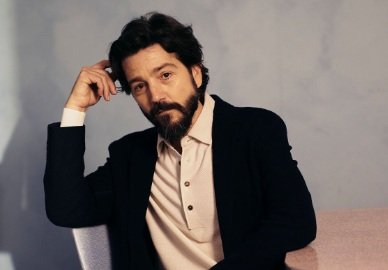
Diego Luna combina la actuación con la dirección y la producción, y participó en la creación de las productoras Canana Films y La Corriente del Golfo y del festival Ambulante.
His mother died in a car accident when he was two. His father is one of Mexico’s most important set designers, and he grew up among the sets his father created. He first acted at seven and became a teenage telenovela star before Y tu mamá también made him known outside the country in 2001. He later established two production companies, founded Latin America’s largest documentary festival, portrayed a drug lord, became the first Latino lead in a Star Wars series and, in 2026, premiered his fourth film as a director at the Cannes Film Festival.
Motherless at Two, in a Theater
His biography begins with an absence and a craft.
His mother, Fiona Alexander, was a British costume designer who died in a car accident when he was two. He was raised by his father, Alejandro Luna, one of Mexico’s most respected set designers, who worked in theater, film and opera for decades.
That defines the place where he grew up. He was not a child who discovered acting at a casting call: he grew up among his father’s stage productions, at rehearsals, behind the curtains. At seven, he appeared in his first play.
From there, he moved into television and became a teenage star of Mexican telenovelas, the most industrialized and least prestigious acting circuit in his country. It is worth mentioning because it is the part his generation often conceals: before auteur cinema came years of professional experience in mass-market productions.
2001: The Film That Changed the Scale
Y tu mamá también, directed by Alfonso Cuarón, put him on the international map alongside Gael García Bernal, his friend since childhood.
From that point, his career split into two circuits he never abandoned. On one side, American cinema: he worked with Steven Spielberg in The Terminal, Kevin Costner in Open Range, Gus Van Sant in Milk and Neill Blomkamp in Elysium. On the other, Mexican and Latin American cinema, where he continued acting and began producing.
In 2025, he starred in the adaptation of Kiss of the Spider Woman, based on Manuel Puig’s novel.
The Structure He Built with Gael
What most distinguishes him from other actors of his generation is not on screen.
With García Bernal, he founded Canana Films and later La Corriente del Golfo, two production companies that financed Mexican and Latin American cinema when doing so was very difficult. Together, they also created Ambulante, a documentary film festival that operates as a tour: rather than waiting for audiences in a theater in the capital, it takes films to different states across the country.
The reasoning behind Ambulante is familiar to any Latin American producer. Documentary is the genre with the fewest screens and the smallest budgets, and in a large country, distribution is the bottleneck. Organizing a tour rather than a fixed-location festival addresses the problem through logistics.
He added Pan y Circo, a conversation program about social and political issues that won a Daytime Emmy, and the series Everything Will Be Fine.
Cassian Andor
In 2016, he played Cassian Andor in Rogue One, the first Star Wars spin-off film, and the character returned in 2022 with his own series.
Andor ran for two seasons, through 2025, and earned him two Golden Globe nominations. In interviews, he described the ending as exhausting and said he does not think an experience like it will happen again in his life.
The detail that matters to his career is of a different kind. A Mexican actor led a global franchise without changing his accent or his name, and the character became the centerpiece of the saga’s most critically acclaimed production. For an industry that spent decades offering Latin American actors supporting roles defined by their origins, that represents a shift.
Where His Work Draws Debate
There are two areas in which his work generates debate, and both deserve to be addressed directly because both arose from choosing uncomfortable ground.
The first is Narcos: Mexico, in which he played Miguel Ángel Félix Gallardo, founder of the Guadalajara cartel, between 2018 and 2020. In Mexico, fiction about drug trafficking is a contested genre: it is criticized for making figures responsible for thousands of deaths attractive, and each new production reopens the question of whether telling those stories explains them or promotes them. Luna accepted a leading role at the center of that discussion, playing a character who offers no heroic way out.
The second is political. With Pan y Circo, he began discussing abortion, migration, violence and inequality on camera, and his migration activism placed him in a debate where a popular actor pays a price. Anyone expressing opinions on those subjects in Mexico loses part of their audience, and he did it anyway.
Both decisions follow the same logic: he chose the subjects his country debates rather than those that would keep him comfortable.
Cannes and Sarajevo, 2026
His fourth film as a director is his most ambitious.
Ceniza en la boca adapts Brenda Navarro’s novel and tells the story of a young immigrant woman in Spain. It premiered at the Cannes Film Festival in May 2026, where it received a standing ovation, and international critics gave it mixed reviews: there was praise for its subject and reservations about its pacing.
He had previously directed Abel in 2010, César Chávez in 2014, about the Chicano labor leader, and Mr. Pig in 2016.
Recognition came in August. At the 32nd Sarajevo Film Festival, held from August 14 to 21, 2026, he received the Honorary Heart of Sarajevo, the festival’s highest honorary distinction. Festival director Jovan Marjanović said he had built a career moving between major international productions and deeply human stories reflecting the richness of Latin American culture. Luna presented the film there and gave a masterclass for young filmmakers.
The previous year, Time had included him among the world’s one hundred most influential people.
What Comes Next
At 46, his schedule is divided among the three professions, and none seems subordinate to the others.
He has lived in Mexico City since 2017, has been in a relationship with actress Marina de Tavira since 2019 and has two children from his marriage to Camila Sodi, to whom he was married between 2008 and 2013.
What sustains his position is not any of the major roles. It is having built, alongside his acting career, the infrastructure that allows other films to exist: two production companies, a festival that travels across the country and a catalog of titles he financed without starring in them.