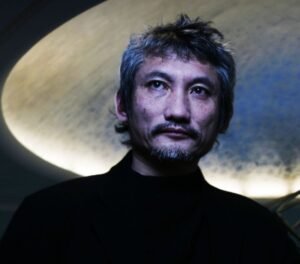
Gastón Duprat, Creator of The Boss and The Distinguished Citizen
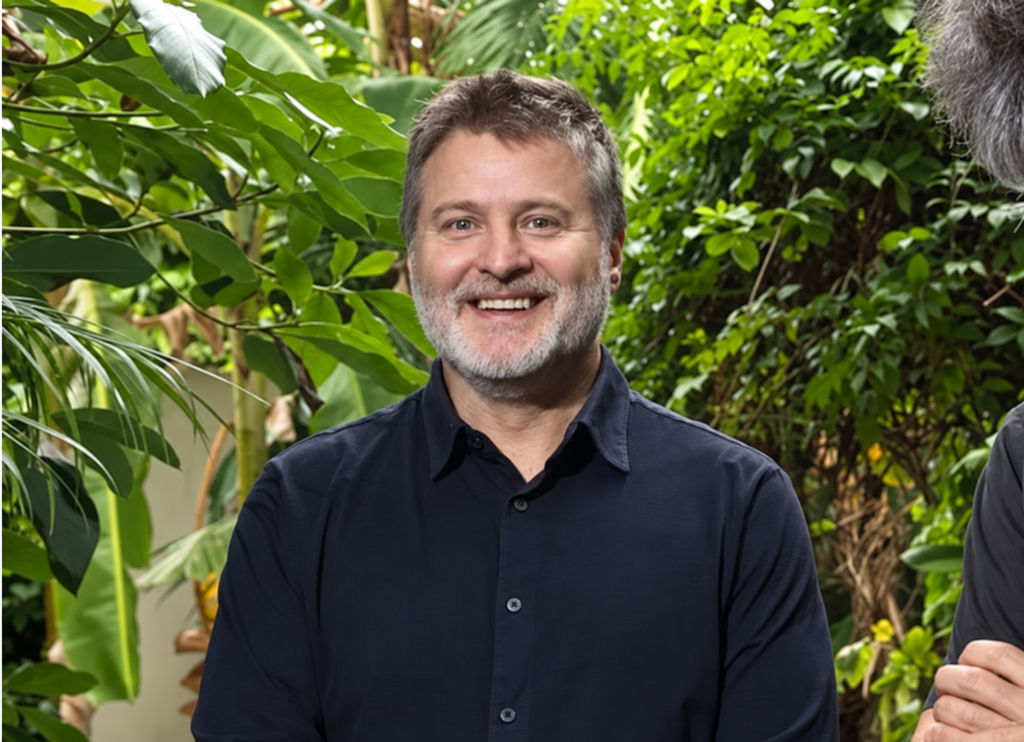
Gastón Duprat construyó junto a Mariano Cohn una de las trayectorias más reconocidas del cine y la televisión argentina, con títulos como El ciudadano ilustre, Competencia oficial, El encargado y Homo Argentum.
He started out making experimental video art in the 1990s and ended up directing the highest-grossing Argentine film of recent years. Together with Mariano Cohn, his partner for three decades, Gastón Duprat built a body of work that mocks the very world to which he belongs: contemporary art, museums and artists convinced of their own moral superiority. Along the way, he won a Goya, a Volpi Cup in Venice, a Rose d’Or and a handful of Platino Awards, saw France adapt two of his films and Hollywood another, and grew accustomed to his releases being accompanied by some kind of union or political complaint.
Bahía Blanca, video art and a partnership spanning thirty years
Duprat was born in Bahía Blanca in December 1969. His career did not begin in industrial filmmaking but on the margins: experimental video works that circulated through national and international festivals during the 1990s, with titles such as El hombre que murió dos veces, Cirugía en pañales, Camus, Circuito, Hágalo usted mismo and Soy Francisco López. That work earned him the Leonardo Award in 1999 and, in 2002, a Konex Diploma of Merit in the Video Art category, shared with Cohn.
His partnership with Mariano Cohn began in the middle of that decade and has never stopped. Together they own the production company Televisión Abierta, named after the program with which they broke the mold of Argentine television in the late 1990s. There is a third permanent member of the team: Andrés Duprat, Gastón’s brother, screenwriter of most of their projects and, for many years, director of the National Museum of Fine Arts.
Before cinema: television unlike anything else
Before establishing themselves on the big screen, the duo invented formats. Televisión Abierta gave ordinary people an open microphone and returned for several seasons over the course of two decades. Cupido brought blind dating to local television. El Gordo Liberosky worked as microfiction. Cuentos de terror featured writer Alberto Laiseca telling stories directly to camera, a cult program that remains in the memory of several generations. Several of those formats were later adapted in Spain, the United States, Italy and Japan.
They also ran two public television channels: Ciudad Abierta, for the City of Buenos Aires, between 2003 and 2005, and Digo, for the province, in 2012.
The films: art as the scene of the crime
Cohn and Duprat’s cinema returns again and again to the same territory. Yo, presidente brought together interviews with Raúl Alfonsín, Carlos Menem, Eduardo Duhalde and Néstor Kirchner. El artista dissected the contemporary art market. El hombre de al lado was filmed inside the Curutchet House, Le Corbusier’s only work in Latin America, and won the award for best screenplay at the Mar del Plata Film Festival. Querida, voy a comprar cigarrillos y vuelvo was based on a story by Laiseca. They also produced documentaries, including one about León Ferrari, and experiments such as Living Stars and Todo sobre el asado.
The international breakthrough came with The Distinguished Citizen in 2016: the story of an Argentine Nobel Prize-winning writer who returns to his hometown. Óscar Martínez won the Volpi Cup for Best Actor in Venice, and the film won the Goya for Best Ibero-American Film and two Platino Awards. Official Competition, starring Penélope Cruz and Antonio Banderas, competed in Venice and won the Platino Award for Best Comedy.
Recognition can also be measured in a less glamorous but more telling format: remakes. The Distinguished Citizen received a French version; so did My Masterpiece; 4×4 was remade in Brazil, India and the United States, with Bill Skarsgård. An English-language version of The Man Next Door is in development, as is a Brazilian version of Querida, voy a comprar cigarrillos y vuelvo.
The Boss and the trilogy of appearances
The agreement with Disney in Argentina changed the pace of work. Duprat estimates that the production company was behind around twenty-three series, only three of which bear his signature as director: The Boss, Nada and Fine Arts.
The Boss, with Guillermo Francella as Eliseo Basurto, became a phenomenon. It was nominated for an International Emmy, won the Rose d’Or and, according to its own creator, is the most-watched series in Argentine history. Duprat explains it without mystery: an apartment building is a territory everyone knows and about which everyone has a story. Nada brought together Luis Brandoni and Robert De Niro. Fine Arts shifted the focus to a contemporary art museum in Madrid, with Óscar Martínez playing a pompous and old-fashioned director; there, Duprat and Cohn are credited as showrunners rather than directors, because relocating to Spain was not feasible and filming was handled by Martín Bustos, with the entire concept and tone designed in advance.
The idea of showing the hidden side of a museum, Duprat explains, had been floating around for fifteen years.
A poetics of sarcasm
Asked about his method for creating ambiguous characters, Duprat rejects the idea that there is a plan. He says he does not sit down and decide to be sarcastic: reality seems that way to him, and his perspective simply reproduces it without translation. What others call a character’s dark side, he calls the light side.
His favorite target is his own environment. He says he criticizes the art world because he belongs to it and has the authority to do so, and because it is his own ideas that are being exposed to ridicule. What particularly bothers him is the belief that artists are morally superior or more sensitive than everyone else: he finds it repellent and, at the same time, funny. His underlying argument is that laughing at one’s own way of life prevents that way of life from becoming a prison.
Actors are not interchangeable within that framework. Characters are built around them: he first talks to Francella, Brandoni or Martínez and, if they are interested in the direction, the project moves forward. Each one produces a different kind of comedy, and that difference is part of the design.
The anger his work provokes
Duprat does not avoid controversy; to a large extent, he manages it. With The Boss, INADI contacted him with concerns about the trailer and sought to stop its broadcast, the building managers’ union expressed its displeasure, and there were even approaches from people around then-president Alberto Fernández. His interpretation of the episode is purely pragmatic: all of that circulated in the press and helped make sure nobody wanted to miss the series. When asked about the third season, he predicted it would be the most provocative one yet and that those who had already been angry would become even angrier.
His public statements have also divided opinion. On cuts to cultural funding, he took a two-sided position: he said the austerity measures were nothing to celebrate, but also argued that INCAA had been operating badly for many years and that responsibility could not be attributed solely to the administration in office. Another statement drew even more attention: that artists believe they are more important than ordinary people and therefore deserve subsidies, an idea he disagrees with, while making clear that he himself is an artist and that his profession gives him no superiority over anyone else.
On cultural cancellation, he argues that in many cases things go too far and that he does not support any action that censors an author’s work. Vandalizing statues strikes him as an ineffective form of protest because the act attracts attention while the reason behind it is almost never understood. He also says he does not use social media or closely follow the reactions his work generates there.
Homo Argentum: the record and the controversy
In August 2025, he released Homo Argentum, an episodic film made up of sixteen short stories, all starring Guillermo Francella, and filmed between Argentina and Italy. Its commercial performance was extraordinary: nearly half a million viewers in its first four days, more than one million after eleven days and around one and a half million after three weeks. It was the best opening weekend of the duo’s career and the second-best debut in history for an Argentine film. It arrived on Disney+ in December after a long theatrical run and staggered releases in Chile, Uruguay, Paraguay, Peru, Ecuador and Brazil.
The film also became the subject of political dispute even before its release, with both the government and the opposition claiming parts of the debate. Critics were divided: some harsh reviews considered it a minor work, while others praised its ability to stir things up. Duprat often says he likes his work to fuel discussion and, in that sense, the result was exactly what he was looking for.
What comes next
His next project takes him out of his usual geography: a film to be shot in New York with Robert De Niro and Julianne Moore. After years of working almost exclusively in serialized formats, Duprat has expressed his intention to return to making films the way they used to, one project at a time, with each movie functioning as an event in itself.