Daniel Grinbank: 50 Years of Argentina’s Entertainment Industry
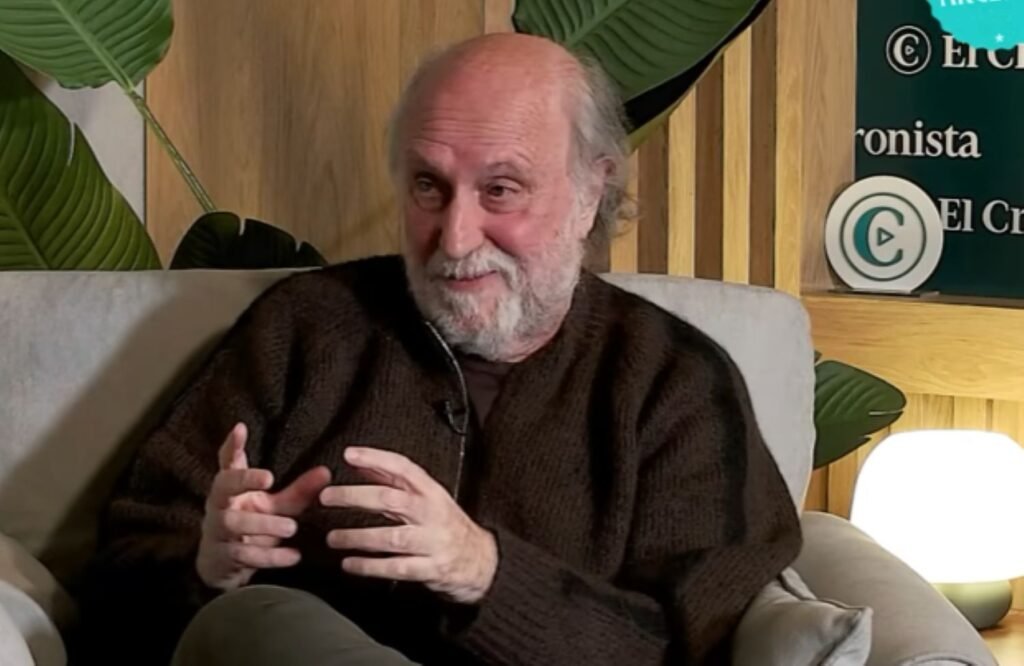
Daniel Grinbank lleva más de medio siglo vinculado con la música y el entretenimiento argentino. Fundó Rock & Pop, produjo visitas de artistas internacionales y actualmente trabaja en teatro y experiencias inmersivas.
He began moving through Argentina’s music scene at 15, and half a century later he is still producing. Daniel Grinbank founded FM Rock & Pop, brought the Rolling Stones, Madonna, David Bowie, U2, Nirvana and Lady Gaga to Argentina, represented Charly García and Mercedes Sosa, organized the Rolling Stones’ free concert in Copacabana for an audience of one and a half million people, and today produces theater and immersive virtual-reality exhibitions. He also carries a reputation that he himself sums up without euphemisms: in the public imagination, he says, producers are seen as predators. This profile traces his career, his successes, the episodes that went wrong and the decisions he made when business collided with his convictions.
Fifty years in an industry he helped build
Grinbank was born in Buenos Aires in 1954 and by the age of 15 he was already moving through the emerging Argentine rock scene. Since then, he has worked across almost every possible format in entertainment: concert production, radio, television, straight theater, musicals and, more recently, immersive exhibitions. His publisher describes him as a key figure in Argentina’s cultural landscape over the past half century, while a comparison often made by specialized journalists places him alongside Tito Lectoure as one of the two men who did the most for Argentine entertainment in the second half of the twentieth century.
One family detail helps explain part of that path: he is the nephew of Herb Cohen, manager of artists such as Frank Zappa and Alice Cooper in California during the 1960s and 1970s. The connection with the industry was there before he even began.
The four moments he chooses himself
When asked to list his best moves, Grinbank takes some liberties and names more than three.
The first was bringing Mercedes Sosa back in 1982 after her exile. The second was the 1988 Amnesty International Festival, marking the fortieth anniversary of the Universal Declaration of Human Rights, with Peter Gabriel, Sting and Bruce Springsteen and a worldwide broadcast. The third includes all the Rolling Stones’ visits, with a special mention for 1998, when the band shared the stage with Bob Dylan. His fourth choice is the liberty he takes with the list: entering the world of immersive exhibitions, a field he discovered late and that has restored some of his enthusiasm.
He adds two other chapters that do not fit into the concert count: Rock & Pop and theater. In 2001, he began producing Broadway musicals and remembers presenting Beauty and the Beast at the Ópera as a particular source of satisfaction.
Copacabana 2006: the biggest production of his career
The episode he identifies as the greatest logistical challenge of his life took place in Rio de Janeiro. City authorities wanted an event that would project the image of a safe destination and counter the damage that news about crime was doing to tourism. Grinbank and his Brazilian partner Luiz Niemeyer organized a free Rolling Stones concert on Copacabana Beach, financed by local hotel, restaurant and business associations betting on the tourism return.
The project almost collapsed because of the numbers: the logistics, involving four DC-10 cargo planes, were operating at a loss. The team redesigned the stage to make the project viable and obtained the band’s approval. Security was handled through community work in the favelas led by official Ana Maria Maia, who negotiated spaces for local vendors and defused potential confrontations. There were ambulance corridors, a traffic operation on a national scale and even water-based parking areas coordinated with the maritime authorities for boats positioned along the sides. On February 18, 2006, the Stones played for more than one and a half million people without a single incident.
Two days later, the shows at River began, and the comparison was harsh. A group linked to ticket scalping broke through one of the barriers and triggered disturbances along Avenida del Libertador that ended with smashed shop windows and around $250,000 in compensation that no insurer would cover at that distance from the stadium. Grinbank often contrasts the two scenes: one and a half million people peacefully gathered on one side, around five hundred troublemakers on the other.
The controversies, in his own words
His relationship with Charly García is the most frequently cited case. Grinbank was his manager and the relationship ended badly, with the musician painting graffiti on his office and calling him a mercenary. Grinbank does not avoid the episode; in fact, the title of his autobiography, Te amo, te odio, dame más, comes from “Peperina,” the song by Serú Girán. Despite the breakup, he still defines García as a cultural transformer, an assessment he maintains regardless of their personal relationship.
The failure that weighs on him most is Depeche Mode’s concert in La Plata: the effects rack for the screens broke down and the band’s technical team tried to repair it instead of switching to a closed-circuit system, the quick solution that was available. The screens did not work, the audience became angry and, because spectators do not distinguish between the internal jurisdictions of a production, the blame fell on the producer. He accepts it: when something goes wrong, he ends up as the villain of the story.
There was also a crisis at the radio station. Around 1985, six or seven years after starting, he realized that Rock & Pop’s programming was becoming repetitive and scrapped the entire schedule. It was an unpopular decision that left him, in his own words, looking like the worst predator in the business. The only host who remained was Mario Pergolini, to whom he explained that it was a transition. The subsequent reformulation worked and, decades later, Pergolini publicly told him that he had changed his life, a recognition that moved Grinbank. In his book, he also describes the dilemma of giving up part of the radio station to the Mexican group CIE, one of the passages most discussed by readers.
The autobiography drew its own criticism. Reviewers praised the collection of anecdotes, which is difficult to match, but pointed to factual errors and editing that left the written text too close to its oral register. It is a debate about form rather than content: the book remains the most complete entry point into that history.
Twice he said no and lost money
There are decisions Grinbank presents as personal boundaries rather than commercial ones. He held the exclusive rights to River stadium when the possibility arose of producing Michael Jackson and decided not to do it: he considered the abuse allegations against the artist serious. He handed the stadium over to a third party and stepped away from the business.
The second case was Roger Waters, whose longtime producer in Argentina he had been. When the musician expressed support for Putin after the invasion of Ukraine, Grinbank asked his team to find another producer. The distance between them deepened later, when Waters denied the events of October 7. His argument is straightforward: he cannot work with someone whose statements turn his stomach, and he makes clear that one wrong does not justify another.
From rock to tickets for an immersive exhibition
His most recent reinvention began with Imagine Van Gogh, which brought more than 350,000 visitors to La Rural, a figure he admits he would never have imagined. It was followed by an exhibition devoted to Banksy and, later, The Horizon of Khufu and Art Masters, two virtual-reality experiences that recreate ancient Egypt and five works from the Prado Museum. At the same time, he produces Scenes from a Marriage, starring Andrea Pietra and Ricardo Darín, the first time he has worked with his partner in that role.
His view of the current business combines professional experience with sociology. He attributes the boom in massive concerts to the post-pandemic effect combined with the growth of digital consumption: more streaming creates more desire for live music. He also points to new venues such as the Movistar Arena and the reopening of River, as well as the emergence of a generation raised on trap music that grew up listening without being able to see its artists live.
He also expresses a concern that is less obvious for someone in his field: he asks his team to deliberately step outside the algorithms. His argument is that platforms eventually know users’ tastes better than users themselves, and that the producer’s job is precisely to search the niches the system does not illuminate.
A businessman who speaks his mind
Grinbank does not hide his political positions, and that has brought costs. He publicly defended Lali Espósito when President Javier Milei attacked her and framed the issue as a broader problem: a head of state attempting to restrict a citizen’s freedom of expression. His argument about cultural industries is economic before it is ideological: he maintains that culture generates spillover effects in hotels, restaurants, tourism and commerce, and cites concrete examples, from the New Amsterdam Theatre that Rudy Giuliani handed over to Disney as part of the transformation of 42nd Street to the incentives that brought the Latin Grammys to Seville.
At the same time, he avoids being pigeonholed. He criticizes the way INCAA operates without calling for its closure, questions collective management societies over their structures and costs, and criticizes the previous government just as freely. He says he chooses to operate without official advertising. His most repeated definition is that the market works nowhere in the way it is proposed in Argentina, and that solutions are usually found in the middle rather than at the extremes of the political divide.
Environmentalism is his other active cause. He publicly warned about proposed changes to the glacier law and the fire law and said he would fight harder on those issues than on any other debate, even at the risk of losing a sponsor.
What remains
At 71, he continues working for a reason he repeats without embellishment: he loves what he does and has always been able to dedicate himself to what he enjoys. He describes himself as someone who lives with a great dose of freedom, a word that, he says, has recently been debased. He buys his own tickets when he wants to see someone —he has already bought his Rosalía tickets—, shares a Spotify playlist with his 15-year-old daughter and admits that between the two of them they accumulated ninety days of music in a single year.
What remains from the old fights is the title of a book. What remains from the career is an industry that, to a large extent, was built on the things he tried first.