Ady Beitler: the Nilus founder recognized by the World Economic Forum
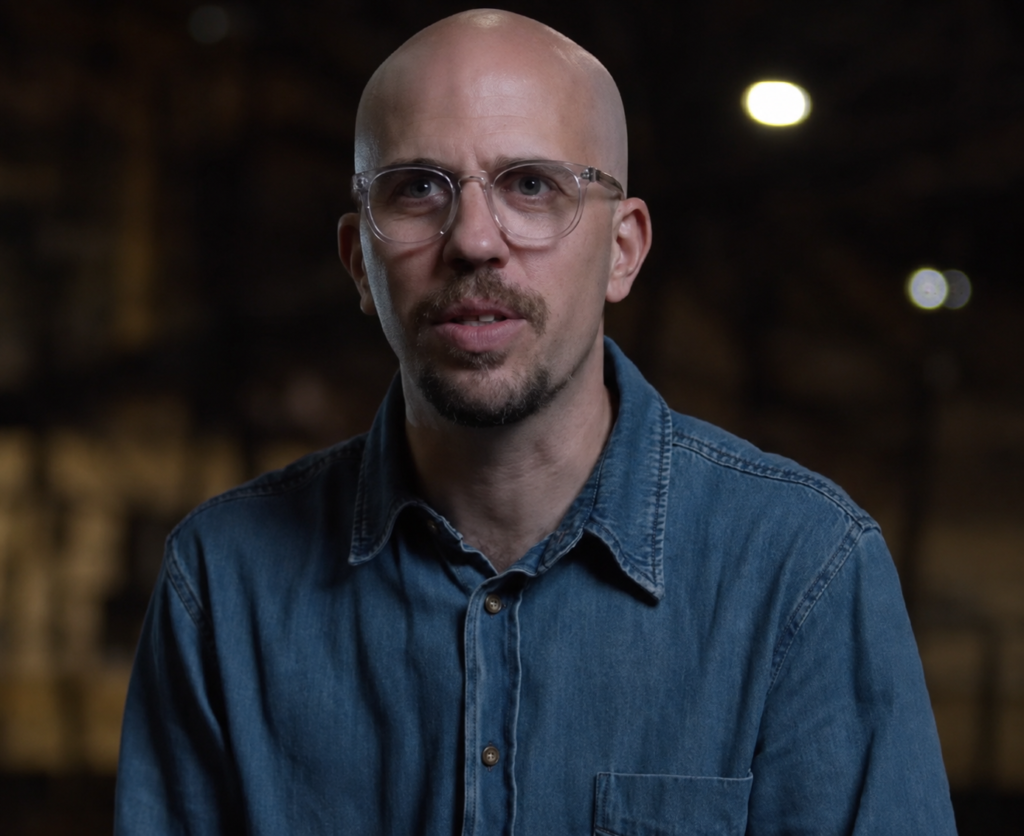
Ady Beitler dejó su carrera en el BID para crear Nilus, una compañía que combina tecnología, compras comunitarias y logística para abaratar alimentos y reducir desperdicios.
He says he did not get this far because of some unusual degree of social sensitivity, but because he sat down and read. A lawyer educated in Montevideo and at Harvard, with years of experience at the Inter-American Development Bank, Ady Beitler left the multilateral institution to found Nilus, a company that has already helped 650,000 low-income people pay less for their food.
From Montevideo to Washington, with a stop at Harvard
Beitler’s education began at the University of Montevideo, where he studied law, followed by a master’s degree at Harvard Law School and later a certification in advanced project management at Stanford. Nothing in that résumé suggested that he would eventually create a company dedicated to making food more affordable in low-income communities.
His professional career unfolded at the Inter-American Development Bank, between its Buenos Aires and Washington offices. He became a senior specialist in integration and trade, leading technology-based projects designed to facilitate international commerce. ConnectAmericas.com and Argentina’s Single Window for Foreign Trade were two of them. He also coordinated the Digital Economy working group of the Americas Business Dialogue and worked on initiatives supporting small businesses across the continent.
That background explains much about the way Nilus operates today: someone accustomed to moving processes across governments, institutions and the private sector, with all the bureaucratic patience that requires.
Anger as a starting point
Beitler tends to describe the origin of the company in distinctly unheroic terms. He does not present himself as someone endowed with exceptional emotional intelligence or an innate social calling. He says he arrived at Nilus by studying, reading and sitting with the problem until he understood it.
What he does acknowledge is a specific emotional driver: anger. It infuriates him that poor people pay more. That asymmetry, well known in economic literature but rarely attacked using market mechanisms, became the core of the business.
Before founding the company, there were decisions he himself describes as courageous: leaving the IDB, traveling to Haiti after the earthquake and choosing to try to change things through entrepreneurship rather than politics.
What Nilus actually does
The company, incubated at Harvard Innovation Labs, attacks inefficiencies in the food supply chain through three approaches at once.
The first is food rescue. Using geolocation, big data, visualization dashboards and route-optimization algorithms, Nilus identifies food at risk of being wasted and moves it as quickly as possible to nearby community kitchens. The organizations receive the food free of charge because it is donated, paying only for transportation.
The second is community purchasing. Nilus combines orders from many families or several neighborhood kitchens to negotiate collective prices that none of them could obtain individually. Beitler describes it as organizing purchase orders in order to gain access to discounts.
The third is direct disintermediation: connecting producers directly with schools, community kitchens and vulnerable households, removing links from the supply chain. According to the World Food Programme, this approach can reduce costs by as much as 70 percent.
All of this is supported by Mercadito Nilus, its digital marketplace, which also tracks purchases, organizes procurement processes and makes it possible to monitor what is being bought and at what price.
The partnership with the United Nations
Nilus’s relationship with the World Food Programme began in 2023, when the company joined the organization’s innovation accelerator and launched operations in Peru with a last-mile logistics pilot that reached 9,000 people.
In 2024, the collaboration expanded to Colombia, focusing on Venezuelan migrant communities, and to Ecuador, where the platform digitizes school food catalogs and connects small producers with institutional buyers. That program has already provided low-cost, nutritious meals to more than 25,000 school-age children.
Nilus also became the first company to receive a loan through WFP Innovation BRIDGE, an instrument created by the World Food Programme together with the United Nations Capital Development Fund.
The numbers
The cumulative figures reported by the organization show 650,000 low-income people reached, with average savings of 22 percent on food purchases, 6.6 million kilograms of food delivered and around 7,000 metric tons of CO₂ equivalent emissions avoided.
The model has also generated approximately $183,000 in income for female community leaders, a less visible figure that shows that it also compensates the people who keep the system functioning on the ground.
To put the pace into perspective, in mid-2023 the Uruguayan press reported 534,000 beneficiaries. In little more than two years, that base grew by more than 20 percent.
International recognition
In 2023, the Schwab Foundation, the World Economic Forum’s organization dedicated to social entrepreneurship, recognized Beitler as Social Entrepreneur of the Year. The company had previously won the Forum’s HRI Humanitarian Impact and Resilience Challenge and the Virtual South Summit LATAM Edition in 2020, and had also been included in the Impact 100 list.
His World Economic Forum profile describes him as the co-founder and CEO of a social enterprise that uses technology and collaborative-economy models to reduce food loss and waste, with expertise in social entrepreneurship, poverty alleviation, nutrition and last-mile logistics.
A philosophy that challenges conventional wisdom
Beitler has an explicit position against one of the most commonly quoted proverbs in the social sector. Neither give someone a fish nor teach them how to fish: sell them the fish. Sell it to that person just as you would to anyone else, because that is what provides dignity and includes them in the economy on fair terms.
It was a position that caused problems in Nilus’s early years. Beitler says the company was viewed with suspicion and prejudice because many people are uncomfortable with the idea of addressing poverty through a private company that charges for its services. His response is that professionalizing social work is precisely what makes it scalable.
He also has an unusual way of describing the purpose of work for a CEO. He argues that the goal is not money, recognition or legacy, nor simply doing what one enjoys. For him, work is a way to give meaning to one’s own pain: find a problem that hurts and do something to make people’s lives better.
What he reads
When asked to share his method, he responded with a list of eleven books. It includes Clayton Christensen and his prosperity paradox, Esther Duflo on the economics of poverty, Peter Thiel on building companies, two books by Nassim Taleb, Richard Dawkins, Robert Wright, Adam Grant, Gandhi’s autobiography and two Stoic classics, Seneca and Marcus Aurelius.
It is a revealing library: half business manual, half exploration of randomness and human behavior. It fits someone who insists that his advantage did not come from empathy, but from study.
What kind of leader he is
Beitler does not fit neatly into the mold of either a technology entrepreneur or an activist. He comes from the machinery of multilateral institutions, understands how those organizations work and uses that knowledge to make a private company operate within United Nations programs without abandoning a business logic.
He surrounded the project with complementary profiles, including Ruben Sosenke, one of the founders of PedidosYa, who brings experience building last-mile logistics at regional scale.
The result is a triple-impact company that does not live on donations but on selling food more cheaply, and that can display tons of food, savings percentages and avoided emissions on the same spreadsheet.
Beitler wants that spreadsheet to keep growing, and his reason remains the same one that drove him out of the IDB in the first place: it makes him angry that poor people have to pay more.