Marta Minujín: "Art is not meant to be looked at, but lived"
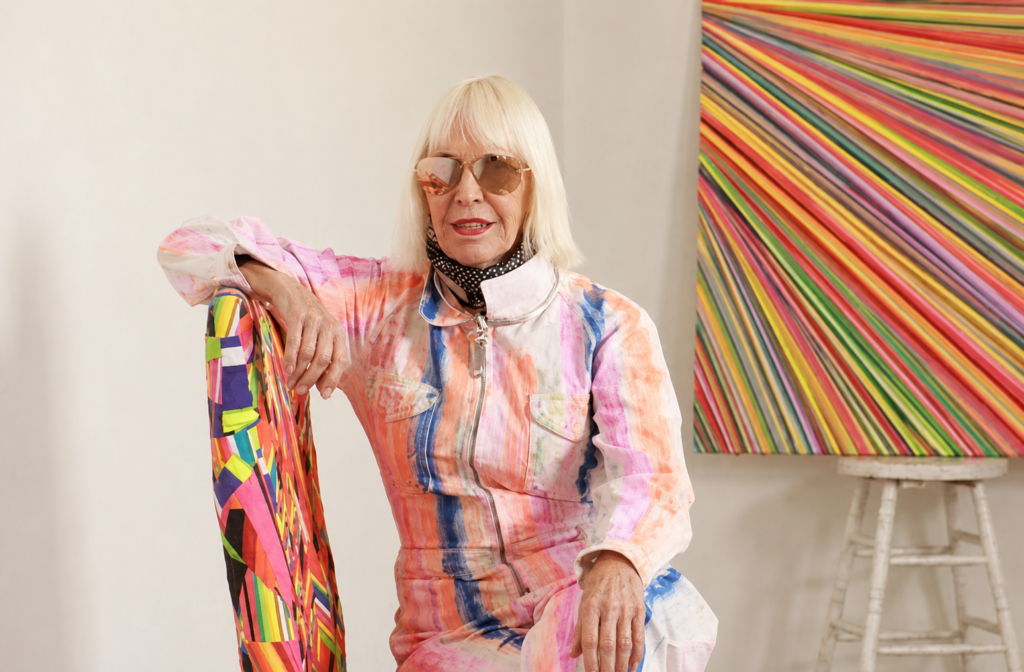
Marta Minujín lleva más de seis décadas transformando objetos cotidianos, monumentos y espacios públicos en experiencias participativas que borran la distancia entre la obra y el espectador.
In 1963, on a vacant lot in Paris, a twenty-year-old Argentine artist gathered all of her work, hired an artist dressed as a hooded executioner to destroy it with an axe, soaked the pieces in gasoline and set them on fire. Before that, she had released five hundred purchased birds and around one hundred rented rabbits, only about ten of which she managed to return. The performance ended with the sound of fire engines approaching.
That was Marta Minujín’s first happening, and the logic behind it remains intact sixty years later: art is not meant to survive locked away in what she called cultural cemeteries, but to intensify the life of the person experiencing it. Today she is 83, her work is held by the MoMA and the Pompidou, and in August 2026 she was named an Emeritus Cultural Personality of Argentina.
Paris without heat and with rats
The golden legend of the Argentine avant-garde begins with very concrete discomfort. Minujín arrived in Paris at 18, already married to Juan Carlos Gómez Sabaini, her lifelong companion. She rented a room so small that when she wanted to paint, she had to put the furniture and her clothes in the bathroom and lean the bed against the wall. When it was time to sleep, she rearranged everything again.
Later she found a larger space, but it had neither heating nor a bathroom, during a winter when temperatures fell to ten degrees below zero. She used the bathroom at a bar a block away and showered in public bathhouses. When rats appeared, she did not move out: she got a cat. She recounts all of this herself in Tres inviernos en París. Diarios íntimos (1961-1964), a book written when she was between 18 and 19 and striking for the maturity of its reflections.
She had arrived with a grant from Argentina’s Fondo Nacional de las Artes, awarded in 1960. She came back with a language of her own.
The Di Tella, La Menesunda and the environment that changed everything
In 1964, she received the National Prize from the Instituto Torcuato Di Tella. A year later, together with Rubén Santantonín, she presented La Menesunda, a walk-through environment designed to alter the audience’s sensory experience through a succession of unexpected situations. It is probably one of the most frequently cited works of Argentine art from the 1960s.
In 1966 came Simultaneidad en Simultaneidad, the Argentine part of Three Countries Happening, an international project conceived with Allan Kaprow in New York and Wolf Vostell in Berlin. It was there that her interest began in what would later be called media art, fueled by her reading of Marshall McLuhan.
New York: telephone booths and a consensual kidnapping
A Guggenheim Fellowship in 1966 took her to New York, where she lived between 1967 and 1969. In 1968 she received another grant, this time from the Rockefeller Foundation. Some of her key works emerged from that period.
Minuphone (1967) was a telephone booth that produced psychedelic effects through sound, colored liquids and fog. Its origin, she explained, was the alienation and anxiety she saw in people using public telephones. Minucode (1969) has had its own room at MoMA since 2021 as part of the museum’s new collection display.
In 1973, she even had the keys to MoMA in her hands. There she rehearsed Kidnappening, a tribute to Picasso that included a simulated kidnapping: fifteen audience members who had previously consented were blindfolded and taken to a Soho loft, the home of a well-known critic and a banquet.
That same year she organized Soft Gallery with Richard Squires at Washington’s Harold Rivkin Gallery. To create it, she rented two hundred mattresses from the caretaker of the Cairo Hotel, a building that had been evacuated after a series of murders. At the end of the exhibition, she invited the public to dismantle the installation.
Mattresses have been a constant in her work since the 1960s, and she often gives the same explanation: we spend half our lives on one; we are born on a mattress, we die on a mattress, we make love on one.
The shutdown that led to a friendship with Warhol
When she presented El batacazo at New York’s Bianchini Gallery, the exhibition lasted only a week. It was a hexahedron-shaped structure in which visitors encountered live rabbits and slid down a chute onto the head of an inflatable doll. A complaint from an animal protection organization led to its closure.
In retrospect, that shutdown functioned almost like a consecration. Andy Warhol attended the opening and had already heard about a happening with chickens that Minujín had staged in Uruguay. A friendship began there that, two decades later, produced one of the most widely reproduced images in Latin American art.
In 1985, at New York’s Odeon bar, Minujín proposed paying Argentina’s foreign debt to Warhol with corn, which she called Latin American gold, the food that, according to her argument, had sustained the world during the First World War. She bought hundreds of ears of corn at a market, sprayed them gold, and the two sat back to back among a sea of corn scattered across the floor of The Factory. The debt was settled. In 2022, the work was offered for sale as an NFT, the artist’s first in that format.
Monuments designed to come apart
Her most internationally recognizable series consists of monumental replicas of symbols of power, built for the public to participate in and eventually take apart.
In 1978 she presented Obelisco inclinado at the First Latin American Biennial of São Paulo, followed the next year by Obelisco de pan dulce at the Second Feria de las Naciones. In 1983 she built El Partenón de libros, a replica of the Greek temple covered with two hundred thousand banned books, celebrating the return of democracy after the dictatorship. In 2017 she created an even more monumental version for Documenta 14 in Kassel’s Friedrichsplatz.
In 2011 she built La Torre de Babel in Plaza San Martín: seven stories high and covered with thirty thousand books donated by embassies from around the world and members of the public. And in 2021, during the hardest period of the pandemic, she directed the construction of El Big Ben acostado con libros políticos at the Manchester International Festival through Zoom and WhatsApp, a 42-meter replica covered with twenty thousand books focused on the sociopolitical conflicts between London and Manchester in the 1980s.
The sea lion that changed its skin
Her most visited public work in Argentina is in Mar del Plata. For the opening of Museo MAR on December 27, 2013, she installed a ten-meter-high Lobo marino built on an iron and metal structure, in dialogue with José Fioravanti’s stone sea lions on the city’s waterfront.
She conceived it in two stages. The first was ephemeral: it appeared covered with thousands of golden Havanna alfajor wrappers. The second came on August 31, 2014, with a large-scale “skin change” performance in which members of the public took away the wrappers. Around fourteen thousand packages were exchanged for alfajores at the company’s stores, while others were kept as souvenirs. On October 12 of that year, the sculpture reappeared covered in golden aluminum plates treated against oxidation. That permanent skin was restored in 2018.
Minujín explained it at the time with a phrase that sums up her method: the sea lion was born to change, and it became an eternal icon because nobody wanted it to disappear.
A schedule that never slows down
Her recent calendar contradicts any idea of retirement. In 2022, A Survey covered sixty years of her career in an exhibition co-organized by Herlitzka + Faria and Henrique Faria New York. In 2023, she had solo exhibitions at the Jewish Museum in New York, the Reina Sofía and the Pinacoteca de São Paulo, and participated in Signals at MoMA and Mujeres informalistas at London’s Whitechapel Gallery. She celebrated her eightieth birthday with Casamiento con el arte, a performance at MALBA that she had already staged when she turned seventy.
In July and August 2025, she occupied the esplanade of Palacio Libertad with Golosina emocional, a twelve-meter-long inflatable work made up of more than ten pieces and conceived as an immersive route of vibrant colors and sound. She described it as an anti-sculpture, part of a project returning to her historic fluorescent-fabric mattresses. During the exhibition, the Las Martitas collective activated the work through performances inspired by her life.
In August 2026, she received the distinction of Emeritus Cultural Personality of Argentina under the dome of Palacio Libertad before a full audience. In the tribute video, she reduced her work to three words: ideas, intuition and emotion. She also said she knew she was an artist at five and that art is not meant to be looked at but lived. When she received the plaque, she said she would like to be like Van Gogh, or like Jesus Christ, because both were failures before becoming successes.
Why her work still works
One early decision explains almost everything that followed. Minujín understood very young that museum immortality was a privilege reserved for very few, and she chose something else: to shake the viewer, break their inertia and make them participate. That is why she burned her work in Paris, why she invited audiences to dismantle her soft galleries, and why her monuments are distributed piece by piece when each installation ends.
That choice made her difficult to classify. She moved through Nouveau Réalisme, Pop, land art, conceptualism, psychedelia and multimedia art without settling comfortably into any of them. At the same time, she maintained an unusual relationship with popular culture: alfajores, corn, hospital mattresses, books donated by neighbors. Materials anyone could recognize, used to create images nobody had seen before.
When people ask where all that energy came from, she does not explain it. She uses it.