Franco Rodríguez Viau: At 22, He Leads the Argentine Startup Beating Fire by Minutes
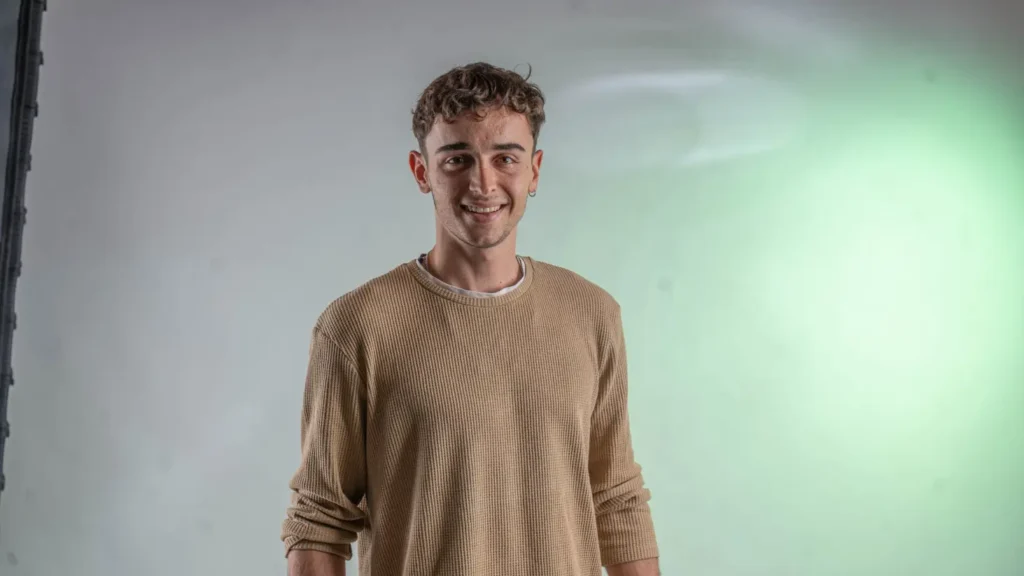
Franco Rodríguez Viau convirtió un proyecto escolar en Satellites on Fire, una plataforma que monitorea millones de hectáreas y anticipa focos de incendio mediante satélites e inteligencia artificial.
In 2020, while wildfires were devastating the hills of Córdoba, Franco Rodríguez Viau was 16 and watching on television as family friends lost everything. Instead of simply staying angry, he turned that frustration into a technical-school project with two classmates. Six years later, that school assignment is called Satellites on Fire, monitors 92 million hectares, operates in more than twenty countries, has raised $2.7 million and detects fire outbreaks, on average, 35 minutes earlier than NASA’s system. All of that came after more than one hundred investors told them no.
Pandemic, Fire and a Technical-School Classroom
The story has a clear time and place. It was 2020, in the middle of the pandemic, and wildfires were hitting several Argentine provinces. Rodríguez Viau remembers that period as terrible: some of his friends lost their homes, and he wanted to do something about it.
He was studying at ORT Technical School in Buenos Aires alongside Joaquín Chamo and Ulises López Pacholczak. The three decided to channel that frustration into a school project. They were not thinking about founding a company; they were looking for a way to help families in high-risk areas.
Before writing a single line of code, they did something many startups skip. They spent months talking to firefighters and wildfire brigades to understand what was preventing fires from being stopped in time.
“This Is Useless”
Their first prototype detected fires using satellite imagery, but it had a major problem: the information arrived three to five days late. When they presented it to national wildfire-management agencies and a national park, the response was blunt. What they had built was not useful: they needed early detection, not a report explaining what had already happened.
The criticism was hard to hear, but it became the real starting point. From there came the rule that now defines the company: listen to the problem first, then build the solution.
Ten Satellites and a WhatsApp Alert
The current system works very differently. The platform processes information from more than ten satellites, updated every ten minutes, and combines it with proprietary artificial intelligence models. When it detects a fire, it sends alerts to brigades, governments and companies through WhatsApp, text message or email.
The result is the figure that made the company widely known: its system detects outbreaks, on average, 35 minutes earlier than NASA’s FIRMS system and, in some cases, can anticipate them by as much as three hours. In a wildfire, that margin can mean the difference between extinguishing a small outbreak and losing thousands of hectares.
Rodríguez Viau explains why that matters so much: many fires start in remote areas where nobody is present, nobody notices them and, by the time they are detected, they have already become catastrophic.
The business model separates two things. Basic visualization is free, with the goal of raising awareness about wildfires, while access to alerts is the paid part of the system.
One Hundred Closed Doors
Raising capital was not easy. Rodríguez Viau has described it plainly: more than one hundred investors rejected them before they closed a $2.7 million round, with Dalus Capital among the participants.
That funding allowed the company to accelerate its international expansion. It now operates in more than twenty countries, with the United States and Brazil as priority markets. In 2026, it began monitoring all of Spain, during a year in which wildfires burned more than 300,000 hectares there, an area roughly five times the size of the city of Madrid.
The Google and Bezos Club
Two recent developments changed the scale of the project. Satellites on Fire became the first commercial company in the world to join FireSat’s Early Adopter Program, the satellite constellation backed by Google and Jeff Bezos’s fund and designed specifically for wildfire detection.
Rodríguez Viau explained the difference in practical terms: for six years, they had worked with satellites that were never built to detect fire, and that had always been the limitation. FireSat, by contrast, is designed specifically for that purpose, and getting those data directly to people already using their platform changes reaction times.
Soon afterward, the startup became a finalist for the 2026 Earthshot Prize, the environmental award created by Prince William. Rodríguez Viau said that reaching that stage six years after starting the project was deeply meaningful and could open doors with governments, agencies and companies that might otherwise be detecting dangerous fires only after valuable time had been lost.
A 22-Year-Old CEO
Rodríguez Viau now leads a company with a presence across five continents before turning 23. His two school partners still lead key areas: Chamo oversees technology and product, while López Pacholczak leads innovation.
Among the lessons he often shares is one about agreements between founders: once a company begins to grow and money enters the picture, those conversations become far harder to have. It is an unusual warning from such a young founder and says a great deal about the way he approaches business.
He also applies internally the same technology he sells externally. For months, he has been working with artificial intelligence agents to automate internal tasks and accelerate decision-making, with a clear goal: automate more and more of the routine work so the team can focus on what matters most.
From Frustration to Product
The story of Satellites on Fire is often told as one about a group of teenagers who beat NASA, but the most interesting part comes before that. It lies in the moment when they were told their invention was useless and, instead of abandoning it, went back and asked what people actually needed.
Rodríguez Viau summarizes it with an idea he often repeats: if a team has personally suffered from a real inefficiency, there may be a product opportunity there. He first encountered that inefficiency at 16, watching the hills burn, and decided not to look away.