Demis Hassabis
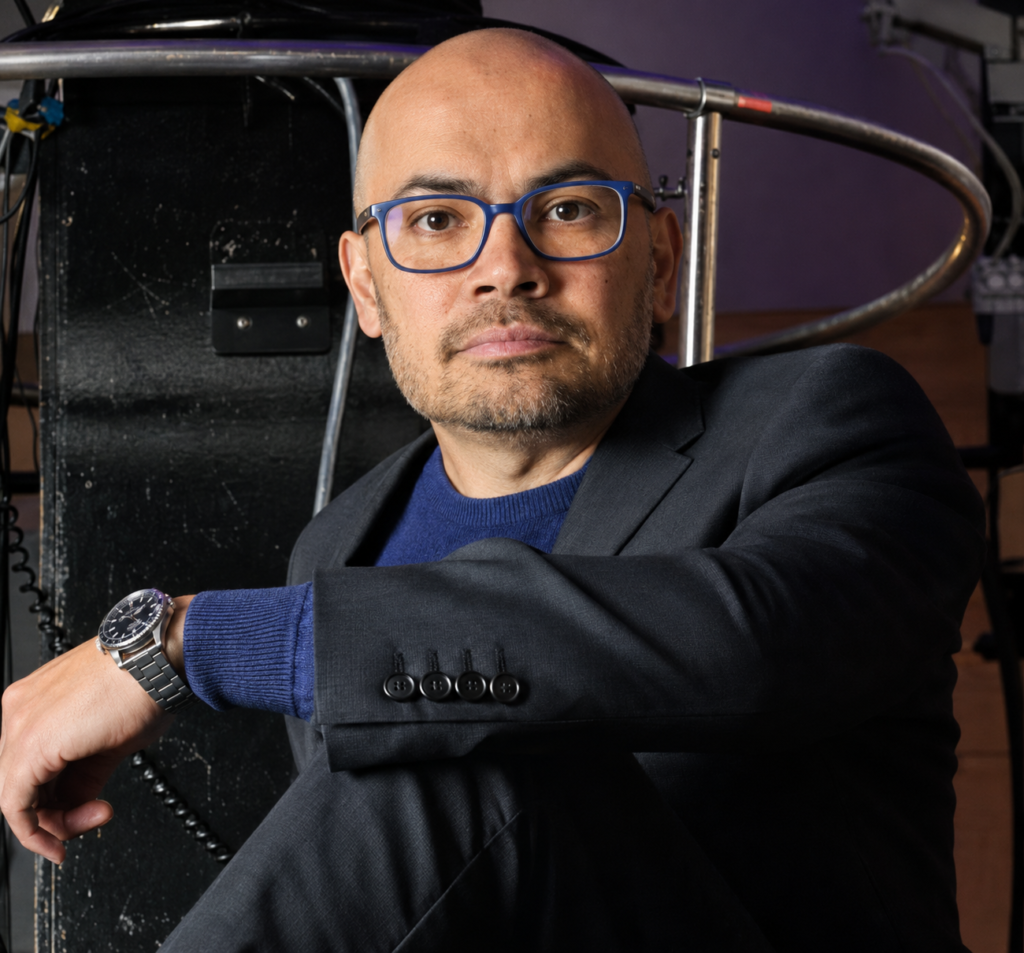
Demis Hassabis, cofundador de DeepMind, compartió el Premio Nobel de Química 2024 por su trabajo en la predicción de estructuras de proteínas.
One question has shaped Demis Hassabis’s life since adolescence: can a machine think like us? The Londoner who founded DeepMind, won the Nobel Prize in Chemistry for teaching artificial intelligence to decipher proteins and built the laboratory competing head-to-head with OpenAI made the most talked-about move of his career in August 2026: he stepped away from day-to-day responsibilities as CEO of Google DeepMind to become the division’s chairman and Chief Scientist of Alphabet. It was a role tailored to let him focus on the one pursuit he says has driven him his entire life: artificial general intelligence, which he now sees as within reach.
The Kid Who Designed Video Games Before He Could Vote
Born in London on July 27, 1976, to a Greek Cypriot father and a mother of Singaporean origin, Hassabis was a chess prodigy: he learned at four and, by thirteen, ranked among the world’s best players of his age. He bought his first computer with his tournament winnings, and by seventeen he was programming at Bullfrog, where he co-designed Theme Park, a classic simulation game that sold millions of copies.
He graduated in Computer Science from Cambridge and founded his own games studio, Elixir Studios. When he realized the industry could not satisfy his deeper ambition, he returned to academia, earning a doctorate in cognitive neuroscience at University College London, where he studied memory and imagination. His plan was explicit: understand the brain, then build an artificial one.
DeepMind: From a London Venture to Google’s Crown Jewel
In 2010, he founded DeepMind with Shane Legg and Mustafa Suleyman, with a mission that sounded like science fiction at the time: solve intelligence and, through it, everything else. Four years later, Google bought the startup for around $500 million, in one of the most influential acquisitions in recent technology history.
The defining moment came in March 2016, when AlphaGo defeated South Korean Go world champion Lee Sedol at a game that machines were thought to be decades away from mastering. Watched by hundreds of millions of people, the series changed the global conversation about artificial intelligence and made Hassabis the sector’s scientific face. Under his leadership, DeepMind later absorbed Google Brain and gave birth to the Gemini family of models, Google’s answer in the generative AI race.
AlphaFold, the Nobel Prize and the Drugs of the Future
His most celebrated contribution was not a game, but a fifty-year-old problem in biology: predicting the three-dimensional shape of proteins. Unveiled in 2020, AlphaFold solved it with an accuracy that astonished the scientific community and made the structures of more than 200 million proteins freely available to researchers worldwide. For that work, Hassabis and his colleague John Jumper received the 2024 Nobel Prize in Chemistry, shared with American scientist David Baker, alongside recognition that included a Breakthrough Prize and a British knighthood.
The commercial offshoot has a name: Isomorphic Labs, the spin-off he founded in 2021 and continues to lead as CEO. Dedicated to discovering drugs through artificial intelligence, it has partnered with global pharmaceutical companies such as Eli Lilly and Novartis. If AlphaFold mapped the territory, Isomorphic wants to collect the toll on the medicines that emerge from that map.
The Chief Scientist in the Race Toward AGI
The August 2026 reshuffle brought order to that double life. Koray Kavukcuoglu, previously DeepMind’s CTO, took charge of day-to-day operations, reporting to Sundar Pichai, while Hassabis became the division’s chairman and Alphabet’s Chief Scientist. His explicit mandate was to focus on the long-term strategy toward artificial general intelligence while continuing to lead Isomorphic. Seen within the industry as a move to protect his scientific focus amid an intense talent war with OpenAI and Meta, the change coincided with the departure of longstanding figures such as Jeff Dean, who left to establish his own research organization.
Hassabis enters this stage with a message that combines ambition and caution: he believes AGI is close, while repeatedly insisting that the world must prepare for its risks. That position has made him a voice in discussions with governments and global forums. At fifty, the precocious chess player who once designed virtual amusement parks holds the title that has always described his real work: chief scientist of the planet’s biggest technological bet.