Tarek Ali Zaki: He Founded His First Company Before Graduating and Now Develops Cancer Therapies
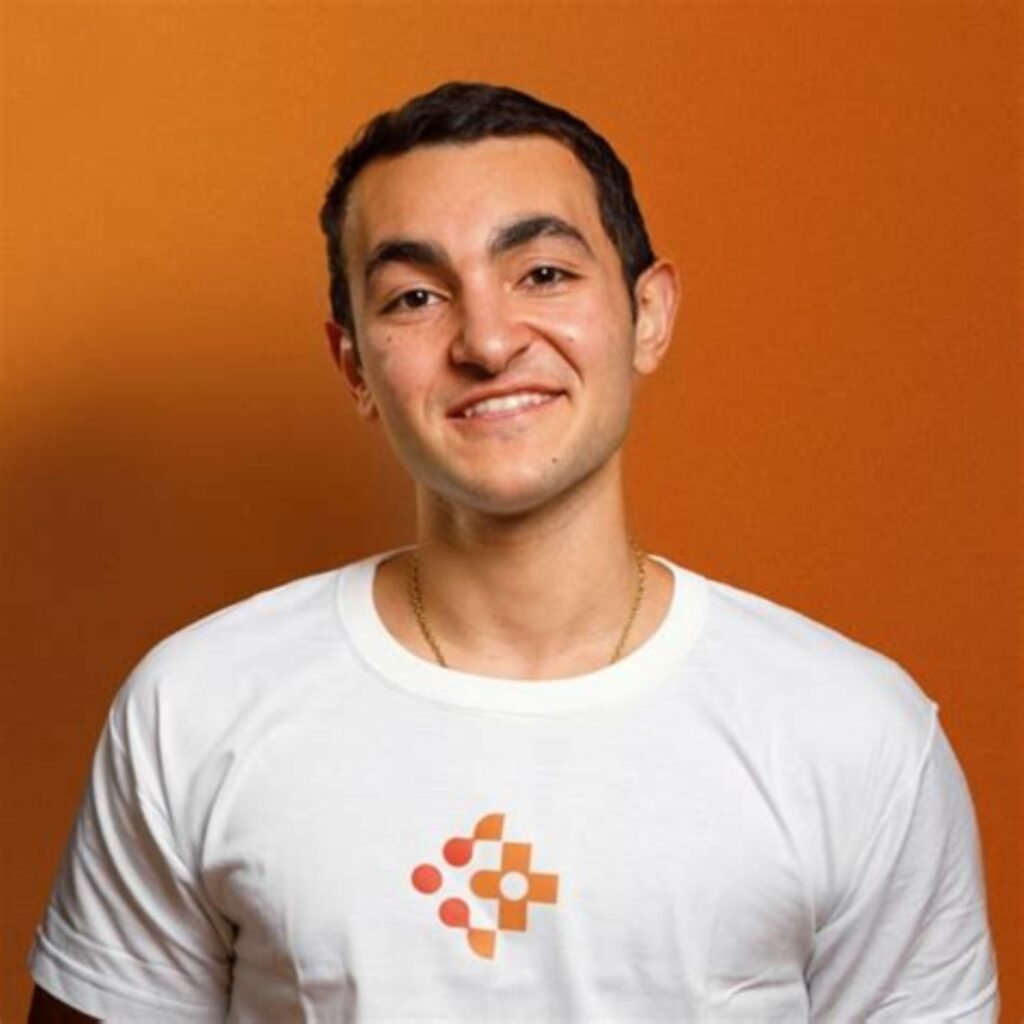
Tarek Ali Zaki cofundó OncoPrecision para llevar una tecnología nacida en Córdoba al desarrollo global de tratamientos oncológicos personalizados.
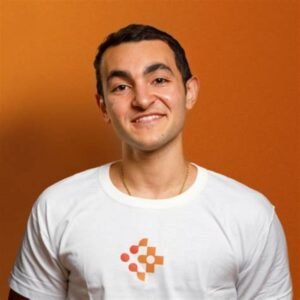
Tarek Ali Zaki was 24 when he founded his second company. The first had been a food startup; the second was a company that creates microscopic copies of each patient’s tumor to test treatments on them before giving those treatments to a person. The son of Egyptian immigrants, born in Argentina and educated at a U.S. university known for entrepreneurship, he now runs from New York a biotech company born from research in a Córdoba laboratory that aims to change one of oncology’s most painful practices: trial and error.
A Babson Student
Zaki was born in Argentina in 1996 into a family of Egyptian immigrants. From 2014 to 2018, he studied Business Administration with a concentration in Entrepreneurship at Babson College, the Massachusetts university known for educating company founders.
He was already building businesses before graduating. Between 2017 and 2019, he was co-founder and CFO of Ando, his first company. That early experience, and the fact that he exited the venture, made him what the U.S. startup ecosystem calls a repeat founder: someone who starts again with lessons learned from a previous company.
The Córdoba Laboratory
The origins of his current project are far from New York. OncoPrecision was founded in late 2020, inspired by work carried out in a laboratory at an Argentine public university in Córdoba. Zaki founded the company with three scientists: Gastón Soria, a geneticist and PhD in Biology who is now the company’s chief scientific officer; Candelaria Llorens de los Ríos, director of laboratory operations; and Gerardo Gatti, its medical and scientific liaison.
That combination defines the company: an Argentine scientific foundation with a business structure designed to compete in the global biotechnology market. The company maintains its laboratory in Córdoba, at Fundación para el Progreso de la Medicina, while its headquarters are in New York.
What Is a Patient Avatar?
The technology they developed is called Patient Micro Avatar. The idea is relatively easy to explain and extremely difficult to execute: take tumor cells from a patient’s biopsy and recreate outside the body the environment in which those cells live.
To do this, they combine the patient’s cells with modified cells designed to make the tumor behave as though it were still inside the body. From that mixture, they create miniature versions of the patient’s cancer and expose them simultaneously to different drugs, alone and in combinations. The process can produce results in about a week.
Zaki summarized it clearly in an Argentine radio interview: they replicate the patient’s cancer, duplicate it and analyze which solution works best.
The objective is twofold. First, to give oncologists concrete information that can help them choose the right therapy from the beginning. Second, to help pharmaceutical companies develop drugs with a greater probability of success. Zaki also emphasizes the quality of the biological material: using fresh, current cancer samples rather than the old cell lines still widely used in research.
The Bigger Debate
Behind the technology is a criticism of the way oncology still works. Zaki and his team argue that the dominant model remains too close to a one-size-fits-all approach and that a patient’s first treatment should already be a precision treatment.
It is a challenging proposition for a large and established industry, which is why the company has focused heavily on clinical validation. OncoPrecision has conducted studies with several cancer centers using its models for acute myeloid leukemia and acute lymphoblastic leukemia, while continuing to develop the technology for other hematological cancers and solid tumors.
The challenge is the same one facing personalized medicine more broadly: demonstrating with evidence that what happens in the avatar reliably predicts what will happen in the patient. The company chose to validate the system with medical institutions before attempting to scale it.
Funding and Recognition
The company joined IndieBio, SOSV’s biotechnology accelerator, as part of its 2021 San Francisco cohort. In April 2022, it closed a $3.3 million seed round that brought total funding to $4.2 million. Investors included SOSV through IndieBio, GRIDX, New York Ventures, Creative Ventures and Fundación para el Progreso de la Medicina, along with founders who had achieved successful exits, angel investors and family offices.
In 2024, Argentine newspaper La Nación included Zaki among three Argentine entrepreneurs who had attracted the attention of Marcos Galperin, alongside Beeflow’s Matías Viel and Kilimo’s Jairo Trad. When explaining his vision, Zaki described a future in which cancer treatment becomes more targeted and effective, minimizing trial and error on patients.
From Avatars to Antibodies
The company has evolved since then. In addition to its functional diagnostic platform, it now defines itself as a next-generation oncology therapeutics company using patient-derived biology at scale and artificial intelligence tools to develop drugs with a higher probability of clinical success.
That shift can be seen in its recent work. In 2026, the company presented preclinical data on ONC001 at the American Association for Cancer Research conference in San Diego. ONC001 is an antibody-drug conjugate targeting the CD64 protein, designed to selectively attack leukemic monocytes and tumor-associated macrophages. In June of that year, Zaki joined the company’s chief medical officer at the biotechnology industry’s international convention, also in San Diego, seeking strategic partners.
A Thirty-Year-Old Founder
Zaki is now thirty and leads a company with between eleven and fifty employees across two countries. His public profile is understated: he rarely posts on social media, and most of his public presence comes through company communications.
The most interesting part of his story is not its speed, but its combination. A business-trained entrepreneur partnered with scientists from an Argentine public university to bring technology born in a Córdoba laboratory to the global market. In an industry where strong scientific ideas often remain in academic papers, that partnership between laboratory research and business execution may be his most concrete contribution.