Marilú Marini, the leading lady honored by France and celebrated by Argentina
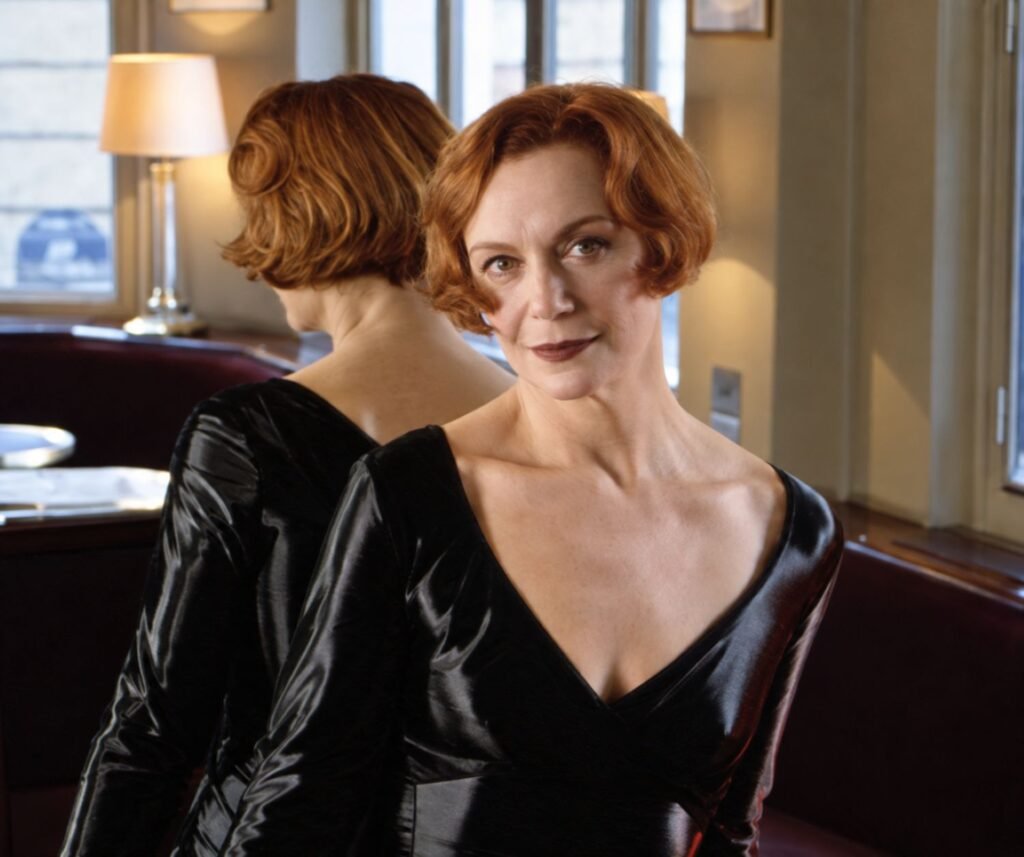
Marilú Marini desarrolló su carrera entre Argentina y Francia y recibió el Konex de Brillante en 2021.
Marilú Marini has spent more than six decades on stage and is still taking on new productions. An avant-garde dancer at the Di Tella Institute, an acclaimed performer in Paris alongside Alfredo Arias and the TSE group, decorated by the French government and awarded the 2021 Konex de Brillante as the most important figure in Argentine entertainment of the decade, she made headlines again at eighty-five with 27 Nights. This profile traces a career that crossed the Atlantic in both directions and never stopped experimenting.
The dancer from Di Tella
Marini was born in Buenos Aires on June 15, 1940, and found her way into theater through movement. She trained in dance with three pioneering teachers of Argentina’s modern dance scene: Patricia Stokoe, María Fux and Renate Schottelius. In the early sixties, she entered the heart of the Buenos Aires avant-garde. She was part of the group of artists who gave the Di Tella Institute its character and identity, and, alongside Graciela Martínez and Ana Kamien, founded Grupo Danza Actual, a laboratory for contemporary dance experimentation at a time when that form of expression still caused a stir.
That creative environment gave rise to the relationships that would shape her life, especially one: Alfredo Arias, the director with whom she shared the artistic adventures of the following decades. When Argentina’s political climate became stifling for the avant-garde, Paris emerged as a natural destination.
Paris: an Argentine at the heart of the stage
She settled in France in the seventies and joined Grupo TSE, directed by Arias, the company of Argentine artists who won over the Parisian theater scene with a baroque and satirical theatrical style. A major recognition came in 1986, when the French theater critics’ association named her best actress for The Seated Woman by Copi, the Argentine-Parisian writer with whom her name would remain permanently associated. France’s embrace extended to official honors: the government awarded her the Ordre des Arts et des Lettres and the Ordre du Mérite, two of its highest cultural distinctions.
Her film career unfolded on both continents and in several languages: from Violanta (1976) and Les Nanas (1985) to Trouble Every Day (2001) by Claire Denis, with whom she collaborated several times, and, more recently, The Sleepwalkers (2019), alongside work with Edgardo Cozarinsky and Diego Lerman.
The return of an undisputed leading lady
She never severed her ties with Buenos Aires. She returned repeatedly to Argentine stages with directors such as Roberto Villanueva and Alejandro Tantanian, and local critics recognized her with numerous awards: an ACE in 2004 and the ACE de Oro in 2014, the María Guerrero in 2013, the Cóndor in 2017 and the 2013 Martín Fierro for best actress in a miniseries. Her crowning recognition came in November 2021, when the Konex Foundation awarded her the Konex de Brillante, which honors the most important figure in Argentine entertainment of the previous decade.
Rather than simply tending to her legacy, she continued taking on new work. At eighty-five, she starred in 27 Nights (2025), the film that brought her back into the spotlight and earned her the Sur Award for best actress in 2026. For the generations who discovered her through that film, her history may come as a surprise. For those who saw her dance at Di Tella, it is simply the latest scene in the life of an artist who made curiosity the guiding principle of a sixty-year career.