Who Is Tsui Hark, the Filmmaker Who Reinvented Martial Arts Cinema?
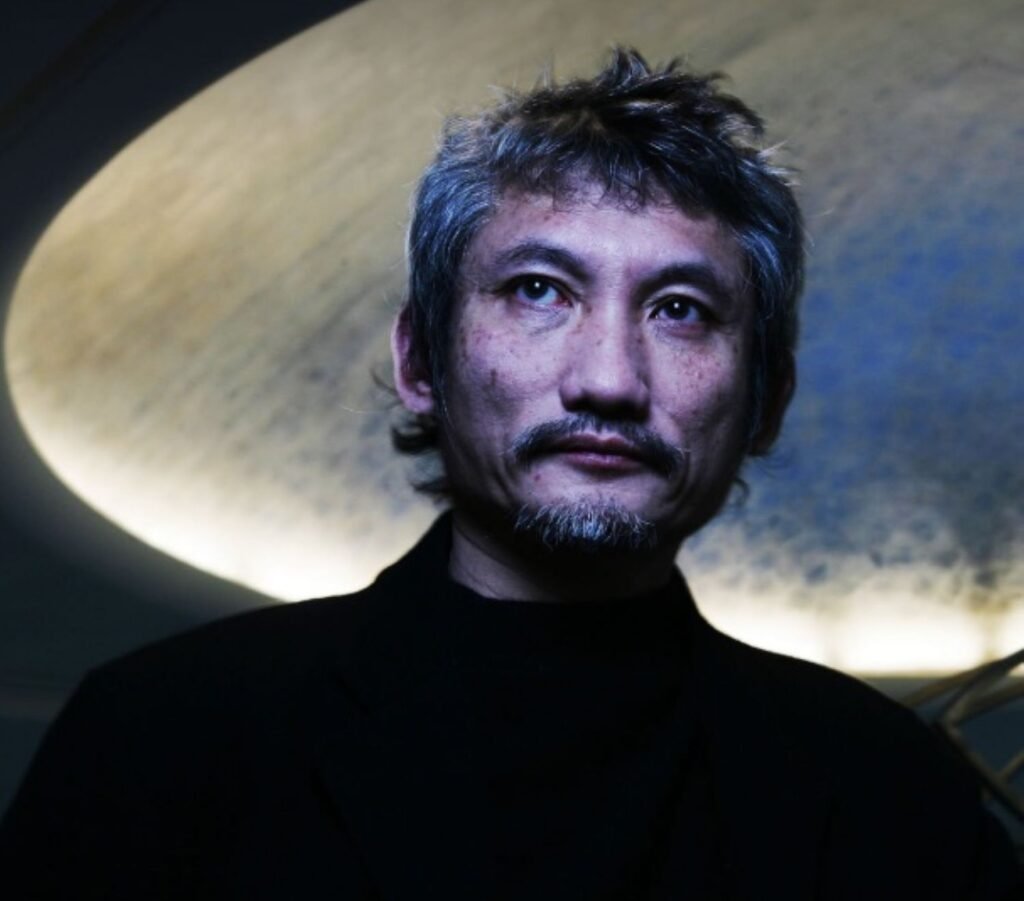
Tsui Hark construyó una carrera como director y productor que transformó el wuxia y el cine de acción de Hong Kong.
He was born in Saigon into a family of sixteen siblings, arrived in Hong Kong at thirteen and studied film in Texas, where he changed his name. In 1980, censors banned one of his films and forced him to remake it; four decades later, he made the biggest box-office hit in the history of Chinese cinema. Between those two extremes lie more than forty years of filmmaking, four Best Director awards in Hong Kong and a handful of titles that changed wuxia forever. This week, at 75, the Lumière Festival in Lyon unveiled a plaque bearing his name.
From Saigon to Hong Kong
He was born in Saigon on February 15, 1950, and was named Tsui Man-kong. He belonged to a large Chinese family, part of the diaspora known as Hoa, with sixteen siblings. At thirteen, he moved to Hong Kong, the city with which he would be associated for the rest of his life, although he arrived there as a newcomer.
His second stop was Texas. He studied film first at Southern Methodist University and then at the University of Texas at Austin, where he graduated in 1975. There, he changed his given name to Hark, which can be read as overcoming. A director who renames himself at twenty at an American university already hints at the approach he would later apply to inherited genres.
His Debut and a Film the Censors Rejected
He returned to Hong Kong and released The Butterfly Murders in 1979, a wuxia film structured as a detective mystery that immediately placed him among the Hong Kong New Wave filmmakers. The following year brought the episode that would shape his relationship with power.
Dangerous Encounters of the First Kind showed teenagers making bombs and leaving them in public places, with a direct reference to the 1967 riots and an ending assembled from archival photographs of those events. Censors immediately banned that version because of its violence and political content. Tsui had to remake and reedit it: the teenagers became hit-and-run drivers, and a storyline involving Interpol agents pursuing arms traffickers was added.
The episode ultimately worked in his favor. The controversy sparked curiosity, and the cut version attracted large audiences, earning 2,248,034 Hong Kong dollars. For years, the original cut was considered lost; Tsui eventually found a VHS workprint, although the original filming materials are considered missing.
In 1981, he won the Golden Horse Best Director award for All the Wrong Clues for the Right Solution, a comedy. That detail often goes unnoticed, and he himself emphasizes it: he considers himself more a comedy director than an action director, even though action has defined him from the beginning.
Film Workshop and the Decade That Changed Everything
In 1984, he founded Film Workshop with Nansun Shi. The production company gave him something more valuable than the freedom to direct: the ability to enable others.
That structure produced A Better Tomorrow (1986), which he produced and John Woo directed. The film won Best Film at the 1987 Hong Kong Film Awards and transformed the city’s action cinema. The following year, he produced A Chinese Ghost Story. His own work from that period includes Shanghai Blues (1984) and Peking Opera Blues (1986), two films that are still screened at festivals today.
Earlier, in 1983, he had done something technically risky: he brought Hollywood-style special effects into wuxia with Zu: Warriors from the Magic Mountain. That import changed what the genre could achieve visually.
His biggest leap came in 1991 with Once Upon a Time in China, starring Jet Li, which earned him Best Director at the 1992 Hong Kong Film Awards and became his best-known film outside Asia. Four years later, he made The Blade, a brutal, stripped-down reinterpretation of wuxia that divides even his own admirers.
The careers of Chow Yun-fat, Jet Li and John Woo were supported by films he directed or produced.
The American Stopover
In the late nineties, he tried his luck in the United States with two films starring Jean-Claude Van Damme: Double Team (1997) and Knock Off (1998). Neither performed as expected, with critics or at the box office.
The significance of that period lies not in what he made but in what came afterward. He returned to Hong Kong and released Time and Tide in 2000, an action film with a breakneck pace that abandons the slow motion and bullet ballet of the eighties. Several critics interpret it as his response to the American experience.
Detective Dee, 3D and the Records
The following decade found him reinventing himself again. Detective Dee and the Mystery of the Phantom Flame (2010) earned him another Best Director award at the Hong Kong Film Awards in 2011 and launched a franchise. That same year, the Busan festival named him Asian Filmmaker of the Year.
In 2011, he released Flying Swords of Dragon Gate, filmed in 3D, and in 2014, The Taking of Tiger Mountain, which earned him his fourth Best Director award in Hong Kong in 2016.
The most talked-about case came in 2021 with The Battle at Lake Changjin, about the Korean War, which he co-directed with Chen Kaige and Dante Lam. It was the highest-grossing Chinese film in history until Ne Zha 2 surpassed it last year. It was also the most debated: much of the Western press treated it as state propaganda because of its heroic portrayal of China’s intervention in the conflict. The film was made within the Chinese production system and with the backing of that apparatus, a fact worth keeping in mind when considering both the record and the objections. Seen in perspective, the arc is striking: the same director whose film was dismantled by censors in 1980 ended up making his country’s biggest commercial success.
In January 2025, he released Legend of the Condor Heroes: The Gallants, based on the novel by Louis Cha, Jin Yong, whose saga has sold more than 300 million copies. It opened on the first day of Chinese New Year with Xiao Zhan in the lead, topped the holiday box office, and Sony Pictures International Productions acquired the rights for the rest of the world.
Where He Is Now
Hong Kong has been revisiting his work at a measured pace. The M+ museum dedicated the series “Tsui Hark, the Free-Spirited Trailblazer” to him, and The Butterfly Murders, his debut, is part of the institution’s restoration festival this year.
This week, he is in Lyon. The Lumière Festival unveiled a golden plaque bearing his name on the Rue du Premier Film, beside the Institut Lumière, and is screening four of his films: Shanghai Blues, Peking Opera Blues, Once Upon a Time in China and Time and Tide. Peking Opera Blues opens in France on October 21 in a 4K restoration.
Speaking about what lies ahead, he said something that applies both to his profession and to the current debate: that humanity’s defining trait is always fearing replacement by something else. He expressed concern about the current crises, admitted he did not have the solution and chose to remain optimistic, with the idea that cinema helps remind people of the good aspects of being human.
At 75, the genre he has yet to explore is horror. He says it interests him precisely because it tends to take a very negative view of people.