The double life of Dita Von Teese: cult performer and glamour entrepreneur
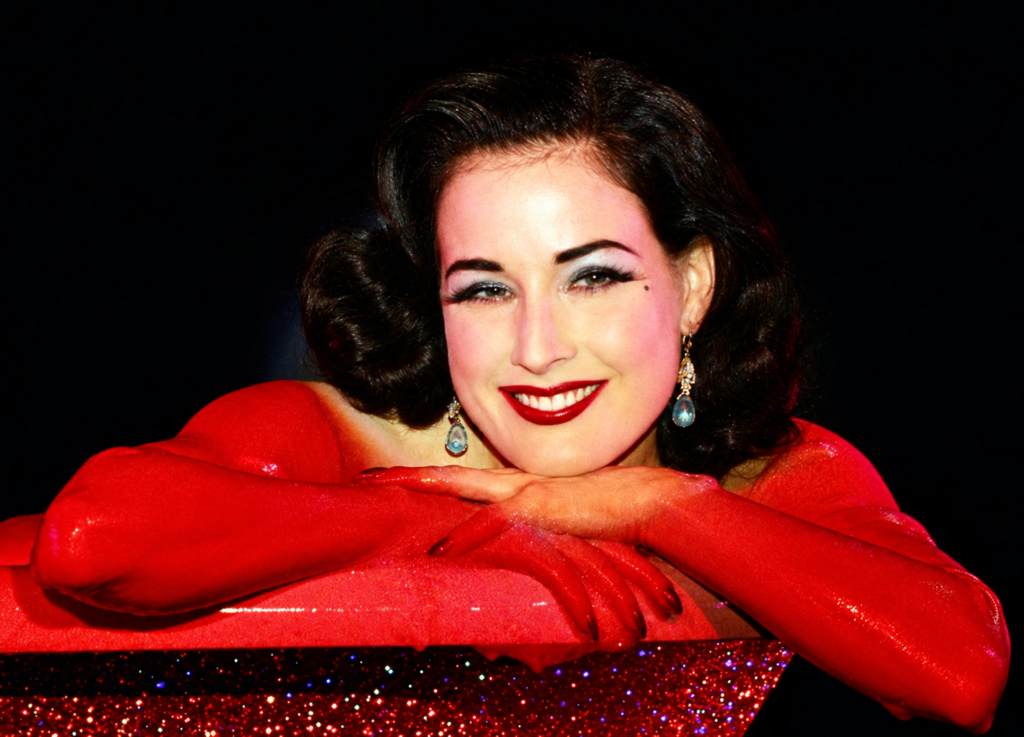
Dita Von Teese construyó una carrera internacional en el burlesque y extendió su actividad a la lencería, los perfumes y los libros.
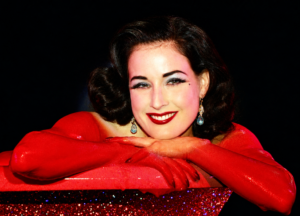
Dita Von Teese turned a genre that had been fading since the 1950s into a show that fills theaters on three continents. Born Heather Renée Sweet in a Michigan town, the classically trained dancer who worked in a lingerie shop at fifteen became the Queen of Burlesque: the performer who dances inside a giant martini glass, the first guest artist at Paris’s Crazy Horse, and an entrepreneur with lingerie lines, perfumes and bestselling books. This profile traces her career, her achievements and the controversies she navigated without disturbing her carefully styled hair.
A Michigan dancer with a silent-film name
The story begins in Rochester, Michigan, on September 28, 1972. Heather Renée Sweet trained in classical ballet from childhood and was already dancing as a soloist with a local company at thirteen. During her teenage years, her family moved to Orange County, California, where two experiences shaped what followed: at fifteen, she started working in a lingerie shop and became fascinated with garments from earlier eras; in college, she studied historical costuming. At eighteen, she had the beauty mark that became her signature tattooed on her left cheek—she had wanted a star, but the tattoo shop refused—and at nineteen, she first entered a strip club. In 1992, she made her burlesque debut with an approach that went against the prevailing fashion: a period act, a corset, long gloves and the look of 1940s pin-ups at a time when neon and Lycra were everywhere.
Her name came together in stages. Dita is a tribute to silent-film actress Dita Parlo. She chose her surname from a telephone directory for her December 2002 Playboy cover: she had requested “Von Treese,” but the magazine mistakenly printed “Von Teese,” and the error became permanent.
The queen who revived a genre
Von Teese is credited with helping bring modern burlesque back into the mainstream. Her signature acts offer the evidence: the giant martini glass, the opium den, the black bathtub, the black swan and the champagne glass traveled the world in tours including Strip Strip Hooray, The Art of the Teese and Glamonatrix. The latter began in 2019, survived the pandemic and continued through Europe, the United Kingdom and the United States between 2022 and 2023. In October 2006, she became the first guest artist in the history of Paris’s Crazy Horse, a landmark of French cabaret.
She built a business around her stage career. She launched the Von Follies lingerie line in 2012, designed for Wonderbra, released four perfumes between 2011 and 2013, created a makeup collection with Artdeco and even wore the first 3D-printed dress, developed with Michael Schmidt and Francis Bitonti. She published two books with HarperCollins—Burlesque and the Art of the Teese (2006) and the beauty guide Your Beauty Mark (2015)—while popular culture kept finding new places for her. She danced in Taylor Swift’s “Bejeweled” video in 2022, appeared in Don’t Worry Darling, served as a guest judge on RuPaul’s Drag Race and, in 2024, appeared in an episode of Queer Eye dedicated to a former showgirl. Vanity Fair called her a “burlesque superheroine.”
A graceful divorce and a craft defended
The most public chapter of her private life was her marriage to Marilyn Manson. They met when he approached her about appearing in a video, began dating on January 31, 2001, and married in late 2005, with a second ceremony at an Irish castle where she wore a purple Vivienne Westwood dress. On December 29, 2006, she filed for divorce, citing irreconcilable differences. She settled it with a gesture that reflected her character: she sought neither spousal support nor a share of his assets. She emerged from that chapter with a full performance schedule and her brand intact, and never made the relationship the basis of her public persona.
The other controversy has followed her since 1992, and she answered it through persistence: the claim that her work was not art. Von Teese responded with full theaters, meticulous costumes she designs without a stylist, a corset-trained waist that forms part of her stage discipline, and a defense of burlesque as a celebration of handmade glamour—she dyes her own hair and does her own makeup. Where critics saw provocation, she built a legacy: a Tudor house in the Hollywood Hills filled with vintage porcelain, Bettie Page’s shoes, and a genre brought back to life because someone approached it with an archivist’s care.