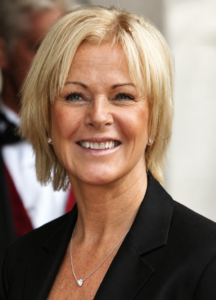
Frida Lyngstad: ABBA’s Deep Voice, Who Grew Up Believing Her Father Had Died in the War
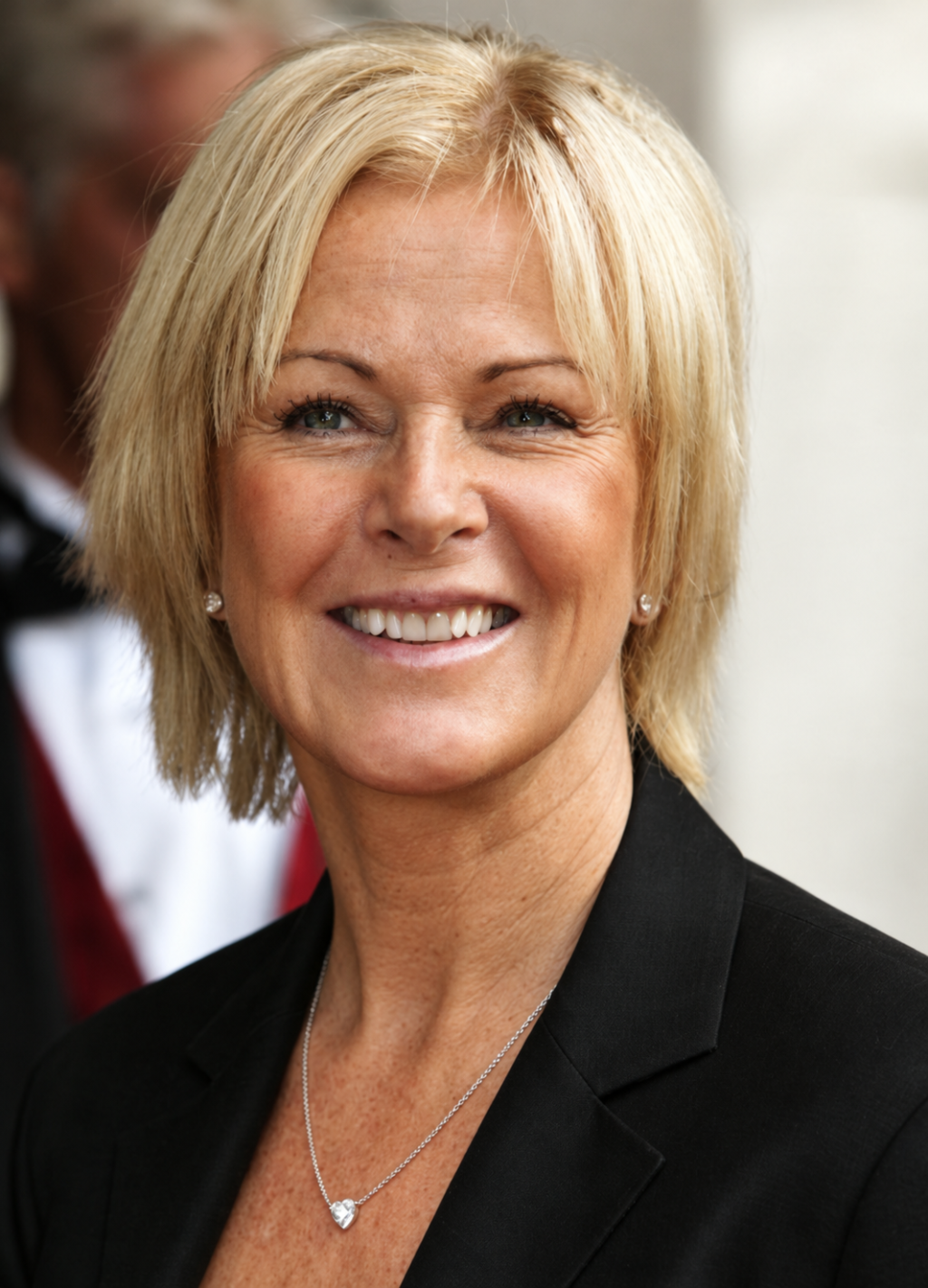
Frida Lyngstad integró ABBA y desarrolló una carrera solista con discos como Something’s Going On, producido por Phil Collins.
She was born in Norway in November 1945, the daughter of a Norwegian woman and a German sergeant, at the precise moment when having a child with an occupying soldier had become dangerous. Her mother left the village in 1947 and died shortly afterward, at 21. Her grandmother raised her in Sweden. At thirteen, she began singing with a dance orchestra; at twenty-seven, she won Eurovision with ABBA; and in 1977, at her husband’s initiative, she met the father she had believed dead for thirty-two years. She turns 81 on November 15.
Occupied Norway, 1945
She was born on November 15, 1945, in Bjørkåsen, a village in northern Norway, a few months after Germany’s surrender.
Her mother, Synni Lyngstad, was Norwegian and twenty years old. Her father, Alfred Haase, was a German army sergeant stationed in Norway during the occupation. He returned to Germany shortly after the defeat.
What followed explains why the family left. After the war, Norwegian women who had relationships with Germans lost civil rights, were detained or expelled, and were subjected to an insult recorded in contemporary documentation: they were called German whores. Their children were given derogatory nicknames. In 1947, Synni left Bjørkåsen with her mother and baby.
A clarification is useful here, because Frida’s story circulates in sensationalized versions. Several media outlets present her as the product of an experiment within the Lebensborn program, the Nazi project that encouraged relationships between German soldiers and Scandinavian women deemed suitable under its racial ideology. What is documented in her specific case is something else, and simpler: a relationship between her mother and a soldier stationed in the country, and a pregnancy. Specialist sources place her among the children of the occupation, the generation known in Norway as war children, but do not establish that she was born within an institution belonging to that program.
The distinction matters because it separates an experiment from an ordinary postwar story that was subsequently punished socially. In 2018, on the seventieth anniversary of the Universal Declaration of Human Rights, Norwegian prime minister Erna Solberg publicly apologized to those women.
Thirteen Years Old and a Dance Orchestra
The family ended up in Sweden, which had a more tolerant policy toward those children. They first lived in Härjedalen, then Malmköping and, from 1949, Torshälla, near Eskilstuna.
Her mother died of kidney failure at 21. Her grandmother Arntine raised her alone, working as a seamstress and singing Norwegian songs to her. That was the entirety of her childhood musical education.
In 1958, at thirteen, she began singing with Evald Ek’s dance orchestra. She later took lessons, performed with jazz and schlager groups, became the vocalist of Gunnar Sandevarn’s trio in 1963 and eventually formed her own band. It was an entire decade of work in halls, at weddings and at dances before any recognition.
Her breakthrough came in 1967, when she won EMI Sweden’s “New Faces” competition with “En ledig dag,” leading to television appearances and a recording contract. In 1969, she placed fourth in Melodifestivalen, the Swedish competition that selects the country’s Eurovision representative, and met Benny Andersson there.
ABBA’s Mezzo-Soprano
The group initially called itself Björn & Benny, Agnetha & Anni-Frid, only later becoming ABBA, from the four members’ initials.
Her vocal role defines the sound. She has a mezzo-soprano range, and her voice contrasts with Agnetha Fältskog’s higher, clearer voice; the blend of the two, with Frida’s lower and fuller tone, creates the texture that makes any of the group’s choruses recognizable. She sang many lead parts, including some of the best-known in the catalog.
She was also the most extroverted member and the one most comfortable with touring, and participated in designing the costumes, a part of the ABBA phenomenon remembered as vividly as the songs.
They won Eurovision in 1974 and remained together until 1982. In 2010, the group entered the Rock and Roll Hall of Fame.
1977: The Father Who Had Not Died
She grew up believing her father had died during the war. Nobody told her otherwise.
In 1977, the German magazine Bravo published a biography containing details of her origins, and as a result Alfred Haase emerged, alive, in Germany. They met in Stockholm that same year, in a meeting arranged by Benny Andersson, who was her husband at the time.
The scene contains everything a screenwriter would include, and it is real: a thirty-two-year-old singer, at the height of her fame, meeting a man she had always believed dead, and finding out through a magazine for teenagers.
Something’s Going On, with Phil Collins
Her solo career began before ABBA, with the 1971 album Frida, and she achieved considerable success in her country with Frida ensam, released in 1975 and sung in Swedish.
The album that made her an international artist in her own right was Something’s Going On, released in 1982 and produced by Phil Collins. The single “I Know There’s Something Going On” reached number 13 on the US Billboard Hot 100, a position no solo song by the other members achieved. That same year, she won Sweden’s Rockbjörnen award for best female artist.
Then came Shine in 1984, which performed considerably worse, followed by a long silence. She returned in 1996 with Djupa andetag, again in Swedish, which reached number one in Sweden. From then on, she chose to work sparingly and on individual projects: in 2015, she released “1865,” a song about the Matterhorn, and in 2018 recorded a duet with Cuban trumpeter Arturo Sandoval.
Princess Reuss, and Three Deaths
In 1992, she married Prince Heinrich Ruzzo Reuss von Plauen, a member of a German noble house, and acquired a title.
The following years were the hardest of her life. In 1998, her daughter Ann Lise-Lotte, born during her first marriage, died in a car accident in New York. In 1999, her husband Ruzzo died of lymphoma. In 2023, her grandson Jonathan died of stomach cancer.
Before that, she had lost her mother as a young child and her grandmother Arntine shortly before ABBA formed, so the woman who raised her never saw her achieve any of what came afterward.
She settled in Switzerland, lived for many years in Zermatt and now lives in Genolier. Since 2007, her partner has been Britain’s Henry Smith, fifth Viscount Hambleden. She devoted some of her time to environmental causes, and the song about the Matterhorn emerged from that period.
Voyage, and the Order of Vasa
For years, she maintained that ABBA should be allowed to rest. She used those words in 2013, when she helped with the opening of the group’s museum in Stockholm.
She changed her mind in 2017, when the four reunited to record two new songs. That eventually led to Voyage, released in 2021, the group’s first album in forty years, and the ABBA Voyage show, running since 2022 in a purpose-built venue in London, where the four appear as digital versions of themselves as they were in the seventies.
In 2024, Sweden’s king appointed them Commanders First Class of the Royal Order of Vasa, an honor that had fallen out of use for decades and was revived to recognize civil merit.
She turns 81 on November 15. She was born in a village in northern Norway where her mother could not stay, and the final tally of her career includes a Eurovision victory, a number 13 position on Billboard, a museum, a royal order and a theater in London that exists to project her image.