Conrado Varotto: the physicist who gave Argentina reactors and satellites
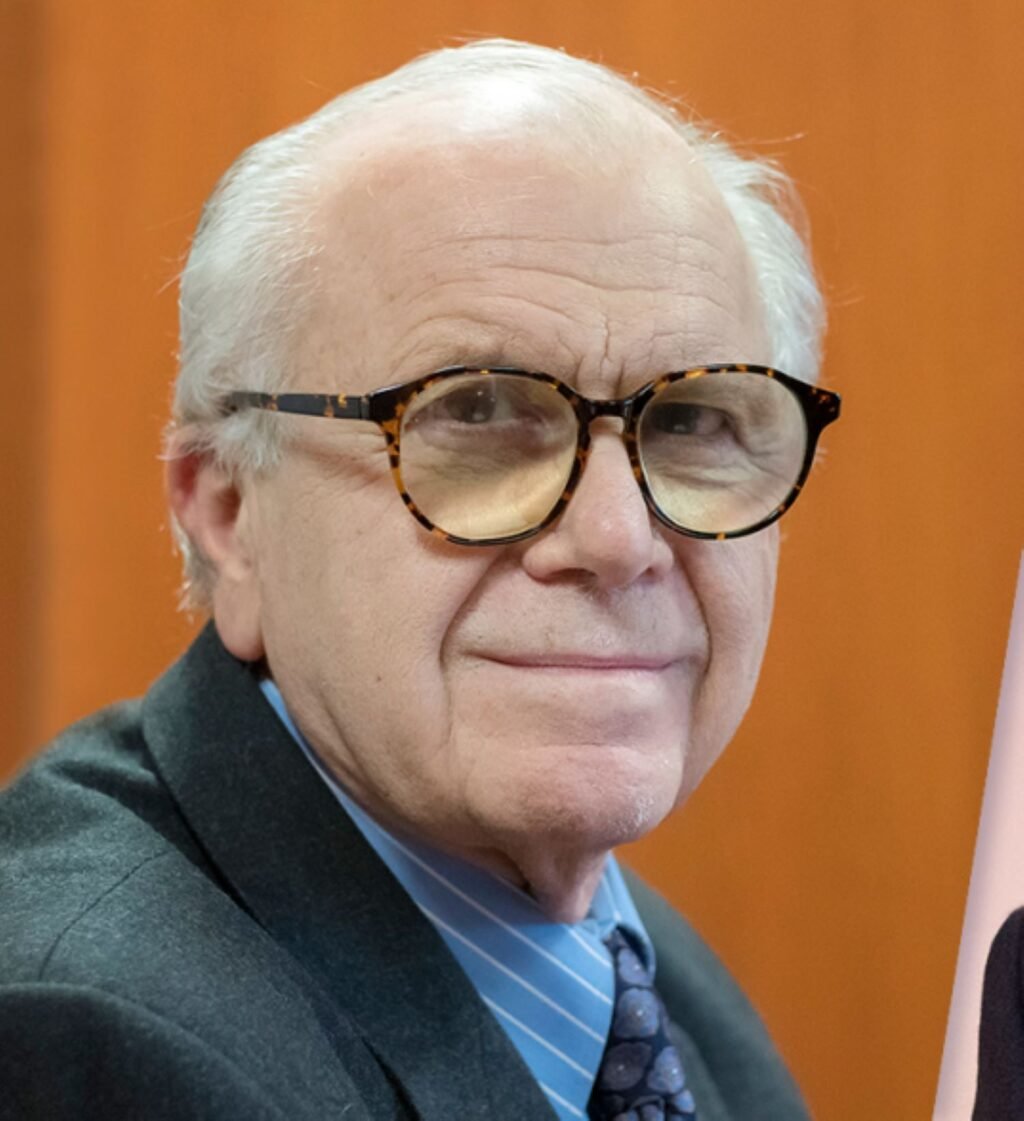
Conrado Varotto fundó INVAP y condujo la CONAE durante más de dos décadas, con una trayectoria ligada a reactores, satélites y tecnología de alto valor agregado.
A nine-year-old boy left the war in Europe behind and arrived in a country he knew nothing about. That starting point explains much of what came later: whenever Varotto receives an award, he repeats that Argentina gave him every opportunity and that he wants the country to offer the same to those born there. Carrying that sense of obligation, he built two things that now exist without him: a technology company that exports nuclear reactors and a space programme that survived every government.
Bariloche was a small town
He was born in Brugine, in the province of Padua, on August 13, 1941. He studied at what was then called the Bariloche Institute of Physics—now the Balseiro Institute—with two scholarships from the National Atomic Energy Commission, and earned his doctorate in Physics in 1968. That same year, he left with a CONICET scholarship for the University of California… no: for Stanford, where he worked as an associate researcher in the Department of Materials Science. The two years he spent there coincided with the birth of Silicon Valley, and he returned with a firm idea of what could be achieved with a strong core of professionals trained at home.
In 1971, he was placed in charge of the Applied Research Programme at the Bariloche Atomic Centre. From that position, he began solving concrete problems for Argentine companies: ferrite for inductors intended for ENTel, for example. The logic was simple, and he maintained it throughout his life: the main input in this activity is brainpower.
1976: INVAP is born
The company he founded that year in Bariloche, and managed as general and technical director until 1991, began by supporting the CNEA in nuclear technology, but with a mandate to become involved in any high-value-added development. The list of projects completed under his leadership is extensive: the RA-6 reactor at the Bariloche Atomic Centre, built in record time; zirconium sponge technology; uranium enrichment through gaseous diffusion and the Pilcaniyeu plant; fuel elements; cobalt machines for cancer treatment; dry storage for spent fuel from the Embalse nuclear power plant; and the CAREM concept, a small reactor with inherent safety features.
The commercial results came later. INVAP exported research and training reactors and auxiliary facilities to Peru, Algeria, Egypt, Australia, the Netherlands and Saudi Arabia, as well as nuclear medicine equipment to Cuba, India, Bolivia, Colombia, Brazil, Venezuela and Syria. Today, the company is approaching five decades of activity and works across four areas—nuclear, space, defence and medical systems—and its own institutional website credits Varotto with establishing a commitment to creating genuine employment that became part of its internal culture.
The leap into space
His involvement with satellites began in the late 1980s, when Mario Gulich proposed that INVAP become the main contractor for SAC-B. In 1994, Varotto took charge of CONAE, which had been created three years earlier, and remained there until May 2018: twenty-four years, a rare example of continuity within Argentina’s public administration.
Under his leadership, the SAC-A, SAC-B, SAC-C and SAC-D/Aquarius satellites were launched, the last of them from Vandenberg in June 2011. The SAOCOM series was also initiated, using L-band radars capable of seeing through clouds and measuring soil moisture, oil spills and flooding. The first satellite was launched in October 2018. Cooperation with the Italian Space Agency gave rise to SIASGE, which combines Argentina’s L-band system with the X-band technology of COSMO-SkyMed: two satellites observing the same point at different frequencies. VENG was also created in 1998 to develop independent access to space, and work began on the Tronador III launch vehicle prototype.
The figures from his administration show the scale of the transformation: CONAE’s annual budget increased from around 20 million dollars to nearly 100 million by 2019, while the ground segment expanded from a single antenna to five operational antennas in Córdoba and two in Tolhuin, Tierra del Fuego. He also introduced four fully funded master’s degree programmes at the Teófilo Tabanera Space Centre.
Areas of friction
Not everything moved in his favour, and he says so directly. The uranium enrichment programme at Pilcaniyeu, developed within the political context of the 1970s and 1980s, raised concerns abroad about Argentina’s nuclear intentions. The country later dispelled those doubts through regional and international control agreements, and that capability ultimately became an export asset. The national launch vehicle, by contrast, remains unfinished business: it has accumulated delays and budget fluctuations for more than a decade.
His harshest criticism is aimed not at any particular government, but at the political system as a whole. “The great failure was not maintaining long-term policies,” he said in 2025 when he received the Senate’s Honourable Mention for Scientific Merit. Even so, he continues to emphasise the optimistic side: he dreams of a regional space agency and of a developed Argentina built around what he calls the fourth factor of production—knowledge.
The awards, and who he credits for them
He was appointed a member of the National Academy of Sciences in 1989, received the Platinum Konex Award in Nuclear Physics and Technology in 1993, the Senate’s Sarmiento Honourable Mention in 2015, an honorary doctorate from the National Technological University and the title of National Researcher in 2019. In December 2025, the Argentine Centre of Engineers presented him with the Engineering Award, which has been granted every two years since 1969.
When he received the Senate distinction, his response was to redirect the credit: personal awards of this kind, he said, are actually the achievement of a group that worked itself to the bone.