Manuela Carbone: Argentine Cuisine over an Open Fire in Washington
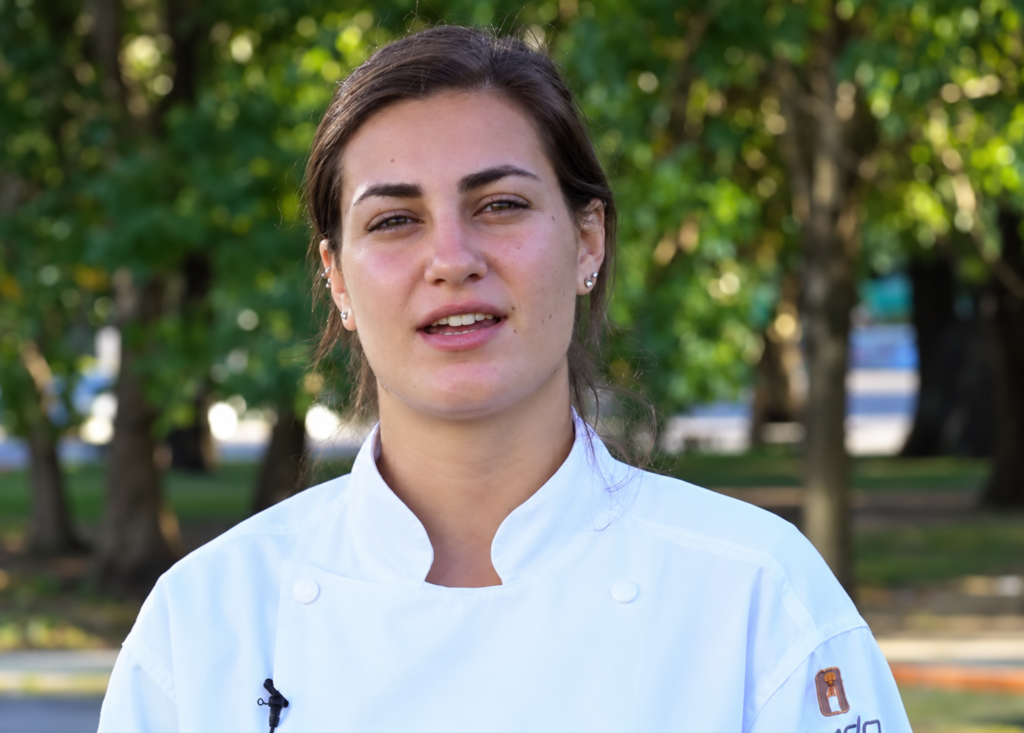
Manuela Carbone está al frente de la cocina de Brasero Atlántico, en Washington D. C.
When Argentine cuisine is discussed abroad, the conversation often ends with the grill. Manuela Carbone is working to make sure it starts there and goes much further. Born in Buenos Aires and trained in Michelin-starred kitchens across three continents, she is the executive chef of Brasero Atlántico in Washington, D.C., the culinary side of the US expansion of Florería Atlántico, Tato Giovannoni’s Buenos Aires bar that has ranked among the best in the world. From Georgetown, Carbone uses fire, charcuterie and immigrant recipes to tell a story she repeats in every interview: her country’s cuisine goes far beyond meat and barbecue.
From Buenos Aires to the world, with a stop at the Nordic fire
Her professional journey began in Buenos Aires and continued through three cities that marked different stages in her cooking: San Francisco, Stockholm and Washington. Along the way, she worked in Michelin-starred kitchens across three continents, a demanding environment where, as she has said in recent interviews, she had to work harder than her male colleagues to earn certain stations and positions. Living abroad, she says, changed her perspective on gender equality in professional kitchens.
Her time in Sweden proved decisive. It was in Stockholm that she deepened her command of open-fire cooking, the technique that now defines her work and connects the Nordic tradition of cooking over embers with Argentina’s instinct for the flame. That combination—the rigor of high-level European cuisine and the memory of Río de la Plata grilling traditions—ultimately caught the attention of the team looking for a chef to bring Argentine cuisine to the US capital.
Brasero Atlántico: Argentine cuisine arrives in Georgetown
In 2025, Carbone became executive chef of Brasero Atlántico, which opened at 1066 Wisconsin Avenue in Georgetown, alongside the first US location of Florería Atlántico. The project brings together bartender Renato “Tato” Giovannoni—the creator of the Buenos Aires bar that rose to the top ranks of The World’s 50 Best Bars—and co-founder Alex Resnik. Rikka Johnson, who has years of experience in high-end operations, oversees the day-to-day running of the business.
The concept Carbone leads is more than another steakhouse. Brasero, which had already expanded from Buenos Aires to Barcelona and Bahrain, celebrates Argentine cuisine shaped by waves of immigration: open fire, artisanal charcuterie and premium cuts influenced by Italian, French, Spanish, Jewish and Lebanese traditions. In Washington, the menu offers a modern, sustainable interpretation of recipes shaped by immigrants and the tenement houses they lived in, with the chef translating Argentina’s culinary memory for an American audience that often knows only the grilled tip of the iceberg.
Simple, delicious, warm: a philosophy in three words
When Marie Claire asked her to define her cooking in three words, she chose these: “Simple, delicious, warm.” The phrase serves as a statement of principles. Carbone distrusts empty sophistication and measures success by a concrete standard: that people leave the restaurant happy and that the team works well together. For a chef trained in high-pressure kitchens, placing the team at the center of that definition says much about her approach to leadership.
Meanwhile, her mind is already on what she wants to learn next. In the same interviews, she said she wants to explore fermentation more deeply, a technical field that connects with her Nordic experience and would allow her to add layers of flavor to a repertoire built around fire. And although she lives and cooks in the United States, her emotional map has not shifted: “Today I see Argentina as my roots and my foundation,” she said in October 2026.
An ambassador for a new Argentine gastronomy
The specialized press in her home country already presents her as the Argentine chef taking her identity around the world, while the Washington press has called her “the woman by the flames.” The two titles describe the same thing from different shores: a cook who turned her international journey into a platform to tell the story of a fuller Argentina, one shaped by immigrants who brought pasta, cured meats and spices, as well as by steak. At the helm of Brasero Atlántico, backed by one of the world’s most recognized cocktail brands, Carbone faces the task of establishing that story in one of the most competitive culinary markets in the United States. The fire is already burning.