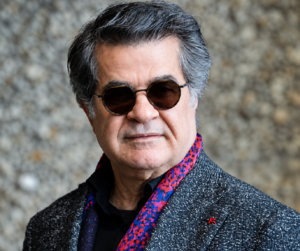
Jafar Panahi, the man Iran could not keep away from cinema
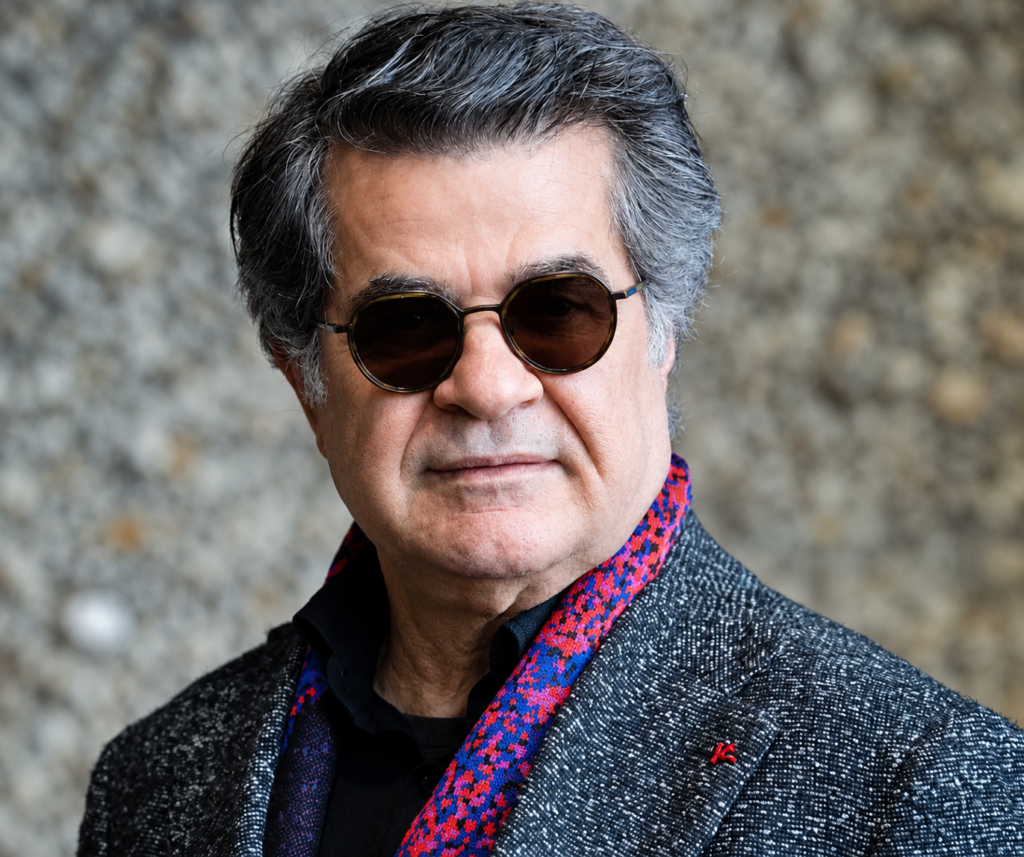
Jafar Panahi continuó haciendo cine pese a las restricciones impuestas por las autoridades iraníes.
Few living filmmakers have a biography in which life and work make such demands on each other. Born in Mianeh in 1960, Jafar Panahi made films for fifteen years under an explicit ban on filmmaking, spent time in Evin Prison, went on hunger strike to secure his release and, two years later, held the Palme d’Or at Cannes for a film shot in secret. His case is unique in the history of festivals: he is one of the very few directors to have won the top prize at Cannes, Venice, Berlin and Locarno, and he did so while the Iranian state used sentences and confiscations to try to stop him from ever filming again.
From Kiarostami’s assistant to festival favorite
Panahi trained within the great school of Iranian cinema in the 1990s: he was an assistant director to Abbas Kiarostami, who also wrote the screenplay for his debut feature, The White Balloon (1995), the simple story of a little girl who wants to buy a fish for the Persian New Year. The film won the Caméra d’Or at Cannes, the award for best debut, and put his name on the world map. Two years later, The Mirror took the Golden Leopard at Locarno.
His move toward maturity came with a turn toward the harsher side of Iranian society. The Circle (2000), an ensemble portrait of women trapped by the rules of their country, won the Golden Lion in Venice and was banned in Iran. Crimson Gold (2003) received a jury prize in the Un Certain Regard section at Cannes, and Offside (2006), about a group of female fans who disguise themselves as men to enter a soccer stadium, won the Silver Bear in Berlin. By then, Panahi was already the most awarded Iranian filmmaker of his generation and, for the authorities in Tehran, a growing problem.
Forbidden to film: the clandestine years
In 2010, after supporting the protest movement that emerged following the 2009 elections, Panahi was sentenced to six years in prison and banned for twenty years from directing films, writing screenplays, traveling abroad and giving interviews, on charges of propaganda against the regime. The director’s response was one of the most talked-about gestures in cinema that decade: This Is Not a Film (2011), a record of his life under house arrest that reached Cannes on a flash drive hidden inside a cake.
Far from stopping him, the ban inaugurated his most celebrated period. Closed Curtain won the Silver Bear for Best Screenplay in Berlin in 2013; Taxi (2015), shot with hidden cameras in a car he drove himself through Tehran, took the Golden Bear; 3 Faces won the screenplay award at Cannes in 2018; and No Bears received the Special Jury Prize in Venice in 2022. That same year, he was arrested and imprisoned in Evin. He was released on February 3, 2023, after a hunger strike, and the Iranian judiciary eventually overturned the sentence that had hung over him since 2010.
The Palme d’Or, a return to Tehran and a new sentence
On May 24, 2025, Panahi won the Palme d’Or at Cannes for It Was Just an Accident, the story of a group of former political prisoners who believe they recognize the man who tortured them and must decide whether to take revenge. He shot it like almost everything he had made over the previous fifteen years: in secret, without a filming permit, with a minimal crew and actresses who do not always wear the mandatory veil. It was his first physical appearance on the Croisette in more than fifteen years, and when the festival ended, he did what few expected: he returned to Iran.
The film also became an awards-season phenomenon. France, the country of its producer, chose it as its Oscar submission, and at the 98th Academy Awards, held on March 15, 2026, it competed in two categories: Best International Feature Film and Best Original Screenplay. It did not win that night—the international feature award went to Sentimental Value—but it collected the National Board of Review award for Best International Film, three Gotham Awards for direction, screenplay and international feature, and four Golden Globe nominations, including Best Motion Picture – Drama. Meanwhile, the pressure in his country did not ease: according to reports on December 1, 2025, Tehran’s Revolutionary Court sentenced him in absentia to one year in prison, a two-year travel ban and a prohibition on joining groups, again on charges of propaganda against the regime. His lawyer, Mostafa Nili, announced an appeal.
A filmmaker who turned restriction into language
At 66, Panahi occupies a place that no award can fully measure. His films from the years under the ban—shot in apartments, cars and border villages—showed that cinema can be made with almost nothing when there is a vision behind it, and turned each of his releases into a political as well as an artistic event. In an interview with CNN en Español during the Oscar campaign, he summed it up with an idea that runs through his entire filmography: cinema cannot leave society behind.
His influence can be seen at both ends of the profession. For the generation of Iranian filmmakers who shoot without permits, he is proof that it can be done; for Western festivals and academies, he is an uncomfortable reminder that creative freedom still carries the risk of imprisonment in much of the world. While the appeal against his latest sentence continues, Panahi remains where he chose to be: in Iran, with a camera close at hand.