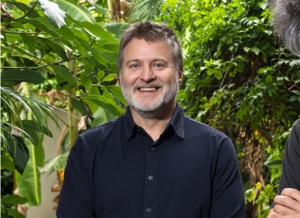
John Howe: visual architect of Middle-earth
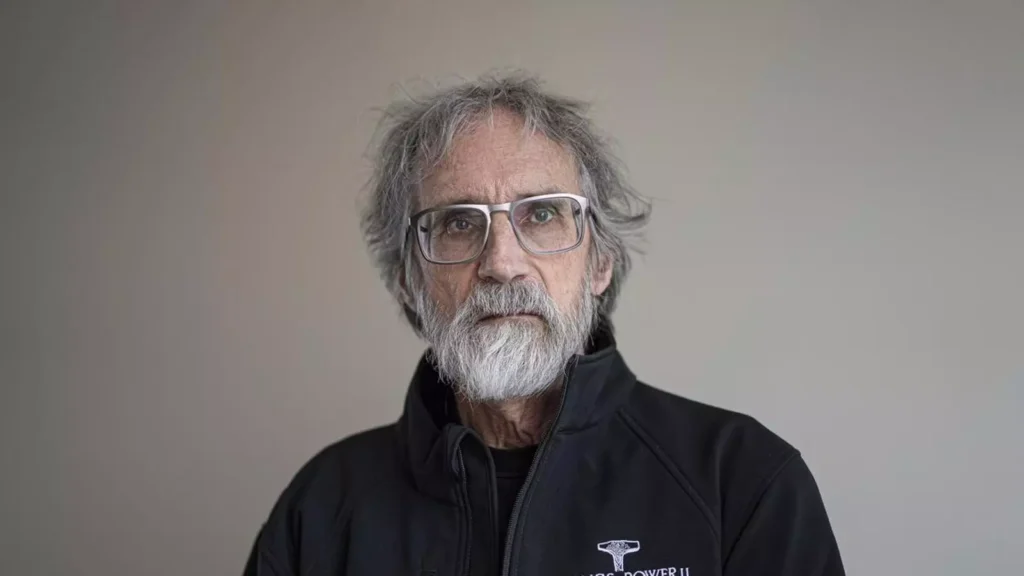
El ilustrador canadiense desarrolló una de las interpretaciones visuales más influyentes del mundo de Tolkien.
The career of John Howe develops at the intersection of illustration, literature, and conceptual design. His work does not simply depict scenes; it constructs coherent visual systems within complex narrative universes. Grounded in European training and sustained technical discipline, he has become a central reference in contemporary fantasy art, particularly through his connection to J. R. R. Tolkien and his projection into the audiovisual industry.
Training and early years
Born in Vancouver in 1957, Howe moved to Europe to study at the École des arts décoratifs de Strasbourg. This academic environment established a direct link with European visual traditions, especially medieval art and architecture. In his early professional years, he worked in commercial illustration and animation, building a technical foundation that later enabled him to approach more complex narrative projects while maintaining structural precision.
Building a visual language
The development of his style follows a logic of integration between historical documentation and artistic reinterpretation. Howe does not produce isolated images but visual systems in which each element serves a function within the whole. Armor, landscapes, and architectural structures are based on real references adapted to fictional contexts, allowing him to maintain plausibility without restricting creative interpretation.
Relationship with Tolkien’s work
His connection to the universe of The Lord of the Rings was established early and consolidated through multiple illustrated editions. Howe interprets complex scenes through compositions that emphasize atmosphere and scale. His work contributed to shaping a recognizable visual identity for Middle-earth, where conceptual fidelity coexists with original artistic decisions that expand the reading of the source material.
Film and conceptual design
His involvement in film adaptations directed by Peter Jackson significantly expanded his professional scope. As a conceptual designer, he contributed to the creation of environments, creatures, and objects that had to be translated into real production. This required converting illustrations into technically viable solutions for cinema. He later continued working on projects connected to the same universe, reinforcing his role within visual and audiovisual design.
Editorial and technical production
Beyond applied work, Howe has produced books focused on teaching fantasy art. In these publications, he outlines methods for constructing characters, creatures, and environments, systematizing his professional experience. This pedagogical dimension extends his influence by transmitting a structured methodology to new generations of illustrators interested in visual storytelling and conceptual design.
Debate and visual interpretation
The consolidation of his aesthetic within Tolkien’s imagery has generated discussions regarding fidelity to the original text. These tensions function not as conflicts but as part of an ongoing process in which multiple interpretations compete for cultural presence. Howe approaches this dynamic as inherent to visual adaptation, recognizing each image as part of a collective and evolving construction.
Visual method and structure
His production is supported by three operational principles: historical documentation, atmospheric construction, and internal coherence. Light, scale, and composition are not isolated aesthetic decisions but responses to the need to build credible environments. This approach allows each illustration to operate as a complete narrative unit within a broader visual system.
Positioning and continuity
Based in Switzerland, Howe maintains consistent activity across editorial, audiovisual, and exhibition projects. His career is characterized by continuous development without abrupt shifts, with each stage expanding his conceptual reach. His influence extends across multiple creative industries, establishing a visual standard within contemporary fantasy art.