Guillermo Rolutti: From the Teatro Colón to the Hamburg Ballet
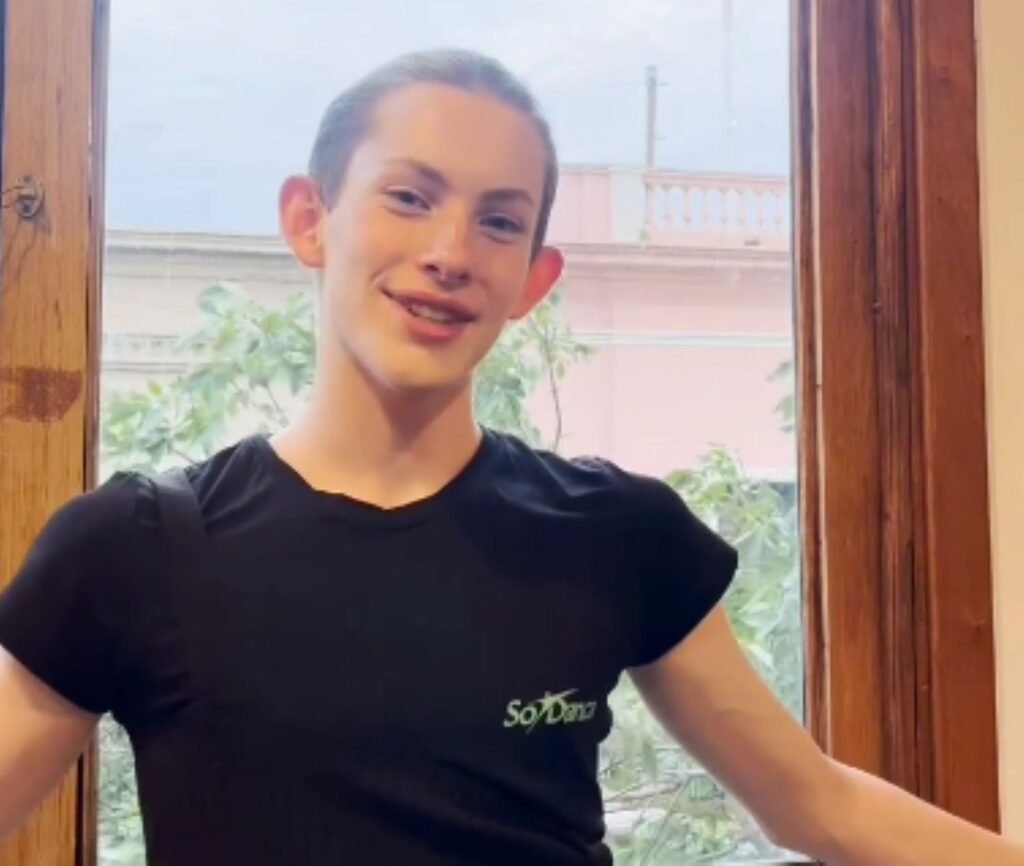
Guillermo Rolutti inició su formación en Córdoba, pasó por el Teatro Colón y continuó su carrera en la Escuela del Ballet de Hamburgo.
Guillermo Rolutti found in dance a path that took him from Córdoba to some of the most renowned institutions in international ballet. His journey combines technical training, discipline and a series of personal decisions made from a very young age. After studying at the Teatro del Libertador San Martín and the Higher Institute of Art of the Teatro Colón, he received a scholarship to continue his training at the Hamburg Ballet School in Germany.
Discovering Dance
Rolutti was born in Córdoba and became interested in movement when he was eight years old. At the time, he practised swimming and trained in trampoline jumping. Rhythmic gymnastics classes were held near the place where he exercised, and the activity caught his attention.
Shortly afterwards, he watched a ballet competition on television and asked his mother to enrol him in classes. That was how he arrived at the Nora Irinova Classical Dance Seminary, part of the Teatro del Libertador General San Martín in Córdoba. He studied there for six years and began developing the technique that would later allow him to enter competitions and auditions.
Entering the Teatro Colón
In 2021, he took part in the Grand Prix América Latina ballet competition, which gave him the opportunity to audition for the Higher Institute of Art of the Teatro Colón. After passing the audition, he moved alone to Buenos Aires at the age of 15 to continue his training.
The move required him to adapt to a new city, maintain a daily training routine and complete secondary school online. During that period, he lived in a residence and had the opportunity to perform with the Teatro Colón’s Permanent Ballet Company in the premiere of a version of Carmen directed by Alejandro Cervera. That experience marked his first direct contact with the theatre’s main stage.
The Challenge of the Prix de Lausanne
His technical development led him to take part in the Latin American preselection for the Prix de Lausanne, one of the most prestigious competitions for young dancers. Rolutti was selected and travelled to Switzerland to compete.
During the event, he received offers from several international institutions. Among them was the Hamburg Ballet School, an opportunity that had already arisen before but could not be pursued because he was still a minor.
He ultimately chose the German offer, which allowed him to complete the advanced levels of his training at an institution linked to one of Europe’s leading ballet companies.
The Campaign to Travel to Germany
The scholarship covered a large portion of the expenses, although Rolutti still needed to raise additional funds to meet the financial requirements of the visa and pay for his relocation. In 2024, he launched a public campaign to complete the necessary funding.
His mother, María Marta Parmiggiani, worked as a domestic employee and had supported his training from the beginning. The financial difficulty turned the trip into a family challenge and highlighted a common reality in dance: talent and discipline can create international opportunities, but the costs of travel, accommodation and living expenses continue to limit access.
Training at the Hamburg Ballet
Rolutti succeeded in joining the Hamburg Ballet School, where he continued his classical dance training. In 2025, he temporarily returned to Argentina to take part in Repatriados, a production that brought together young dancers trained at international institutions.
In 2026, he joined the group of students from the school who participated in Nijinsky, a work created by John Neumeier and presented with the Hamburg Ballet at the Gran Teatre del Liceu in Barcelona. His presence in that production confirmed the continuity of his European training and his gradual progression towards professional stages.
Guillermo Rolutti’s career is still at an early stage, but it already includes experiences in Córdoba, the Teatro Colón, the Prix de Lausanne and Hamburg. His story reflects a path built through years of training, travel and adaptation, with dance at the centre of a professional life that began long before he reached Europe.