Martín Genesio: energy management, industry and Argentine infrastructure
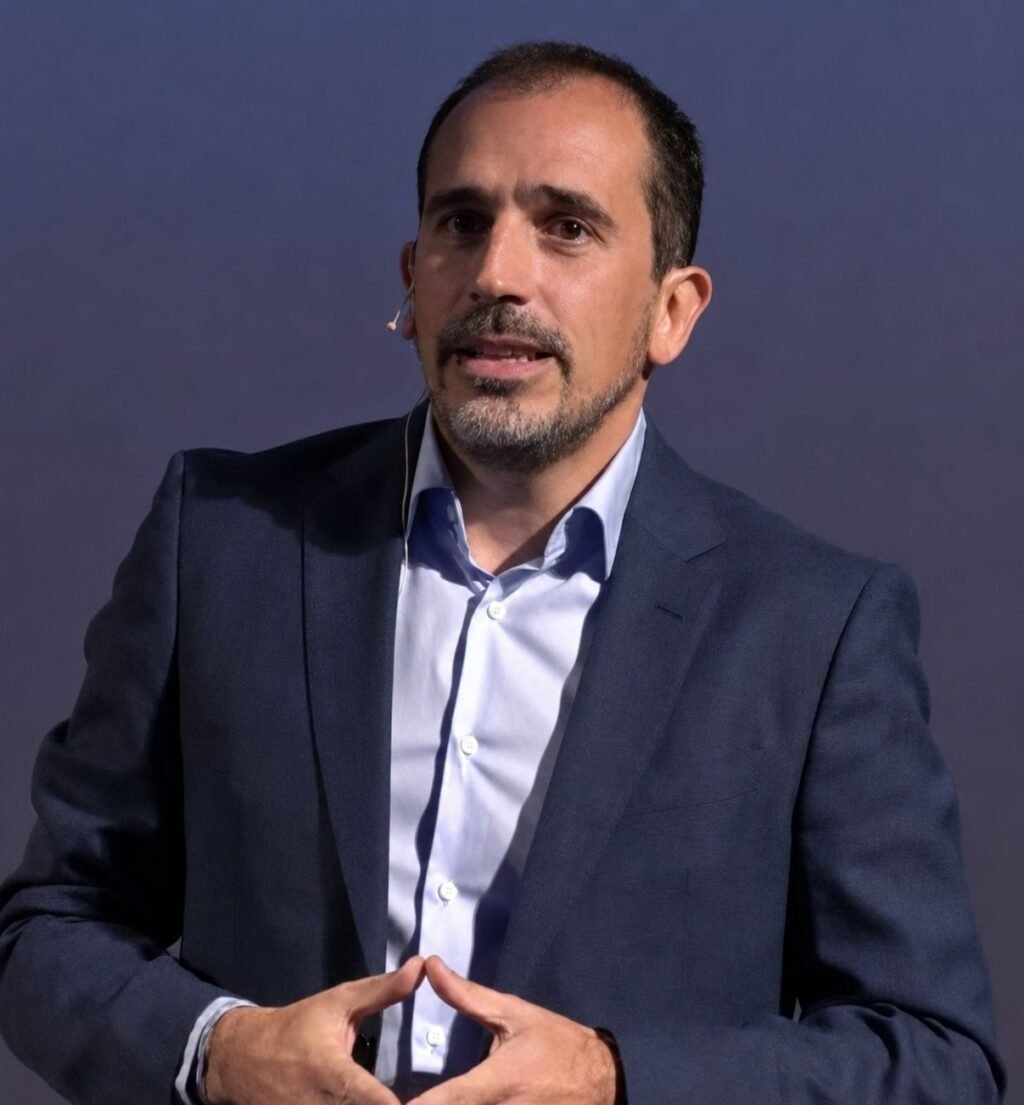
Martín Genesio conduce AES Argentina y participa en debates sobre energía, inversión, infraestructura y desarrollo productivo.
Martín Genesio is an Argentine executive linked to the energy sector, with a career developed in power generation, asset operation, energy markets and corporate leadership. His name is associated with AES Argentina, a company that is part of The AES Corporation and operates in the country within a strategic sector for the economy: the production of energy needed to supply homes, industries, businesses, urban infrastructure and new technological demands.
His profile combines technical training with a business perspective. He is an Electronic Engineer from the National Technological University, an academic foundation connected with systems, control, automation, measurement and electrical processes. He added postgraduate studies in Electricity Market and Natural Gas at ITBA, as well as an Executive MBA at IAE Business School. That combination makes it possible to understand his career from a double perspective: that of someone who knows the technical structure of the energy business and that of someone who must make investment, operational and strategic decisions in a regulated market.
Genesio joined the AES group in 2006 as commercial manager. He later became general manager of Termoandes and then moved into general operations management roles for the group’s companies in Argentina. That internal path is relevant because it shows a career built across commercial, operational and executive areas before reaching the company’s presidency. It is not the profile of an external figure arriving at senior leadership, but of an executive who advanced within the corporate ecosystem and became familiar with different layers of the energy business.
AES Argentina reports that it operates 11 generation plants distributed across Buenos Aires, Neuquén, Río Negro, Salta and San Juan, with a portfolio close to 4,000 MW of installed capacity. That scale places the company among the relevant actors in the Argentine electricity system, especially in a context where the energy discussion involves issues such as infrastructure, tariffs, transition toward cleaner sources, supply security and the ability to attract investment.
As president and CEO, Genesio participates in a public agenda where energy appears as a platform for development. In April 2026, during the AmCham Summit, he highlighted Argentina’s energy potential, but also warned that the challenge lies in developing it in a stable manner, with regulatory predictability and conditions capable of attracting capital to the sector.
His view is located at a point of balance between opportunity and restriction. On one hand, Argentina has gas, oil, wind, sun, lithium, technical capacity and territory. On the other, those resources require clear rules, sustained investment, transportation infrastructure, financial capacity and public-private coordination. In his public remarks, Genesio usually argues that energy potential does not automatically become development: it needs long-term decisions and a framework capable of transforming natural resources into available, competitive and sustainable energy.
He is also linked to a contemporary reading of energy demand. In 2025, specialized media reported his view on the possibility of Argentina becoming an energy supplier for major technology corporations and data centers, based on the diversity of its natural resources and AES’s global experience in energy supply for companies such as Google, Microsoft and Meta.
That point broadens his profile beyond traditional power generation. The expansion of artificial intelligence, cloud computing and data centers turned energy into a critical variable for the digital economy. Data centers require stable, scalable and competitive electricity; for that reason, the energy discussion no longer belongs only to heavy industry, but also to global technological infrastructure.
In terms of leadership, Genesio has also developed a public view on team management. At the 2025 Forbes CEO Summit, he said that the model of the omnipotent leader had ceased to exist and emphasized the importance of trust, adaptation and collective work in changing contexts.
That approach is especially significant in an industry such as energy, where no decision depends on one person alone. Plant operation, regulatory compliance, safety, maintenance, financial planning and institutional relations require coordinated technical and executive teams. In that framework, leadership is measured less by formal authority and more by the ability to align knowledge, operational judgment and strategic reading.
Martín Genesio can therefore be presented as an energy executive with technical training, a sustained corporate career and active participation in debates on Argentina’s energy matrix. His profile brings together engineering, management, operations, leadership and sector vision at a time when energy defines much of the country’s future competitiveness.