Mía Belastegui: writing to bloom again
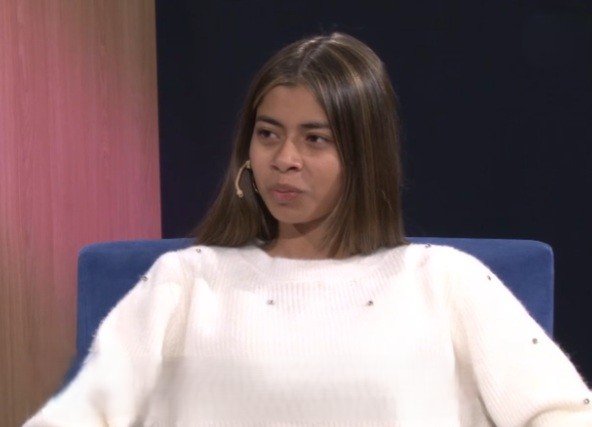
Mía Belastegui publicó Colegio de Espinas, una obra sobre bullying, silencio y recuperación personal.
Mía Belastegui is a young writer from La Plata who gained public visibility through Colegio de Espinas, a book based on her experience with school bullying. Her story makes it possible to read writing as a form of personal processing and also as a social tool: putting into words what often remains hidden within the school environment. Her profile combines young adult literature, autobiographical testimony and a sensitive view of emotional recovery.
A young voice born in La Plata
Mía Agostina Belastegui, publicly known as Mía Belastegui, is a teenager from La Plata who began to gain space in local and provincial media after the publication of Colegio de Espinas. Her profile does not come from an extensive literary career, but from a first work shaped by an intense personal experience. That condition gives her a particular identity: she writes from an age close to the young readers who may also have experienced harassment, fear or isolation.
The origin of Colegio de Espinas
Colegio de Espinas was born from an experience linked to school bullying. The work was presented as a true story about pain, silence and emotional survival. The title works as a direct image: school, which should be a space of learning and belonging, appears crossed by wounds. From that tension, Mía Belastegui builds a narrative that does not merely describe harm, but also shows the process of putting it into words and seeking a personal way out.
Writing as a form of reconstruction
The value of Mía Belastegui’s work lies in the transformation of a vulnerable experience into a communicable text. Writing about bullying requires organizing memories, selecting scenes, finding a tone and turning an intimate experience into a narrative that others can read. In that process, literature works as a tool for reconstruction: it allows what was once fragmented to be named, gives shape to pain and turns a personal story into a message with social reach.
An early trajectory with public impact
Mía Belastegui’s public trajectory is still at an early stage, but her first book has already allowed her to place a sensitive issue in the public conversation through an adolescent voice. The publication of Colegio de Espinas represents her main known achievement so far: having turned a difficult school experience into a literary work with public circulation. Her case is relevant because it moves bullying out of everyday silence and places it on a level where it can be read, discussed and recognized.
Bullying as the central conflict
There are no verified public controversies associated with Mía Belastegui in personal, professional or editorial terms. The conflict that runs through her profile is linked to the school bullying that gave rise to her work. Addressing it positively does not mean softening the problem, but understanding how a painful situation could be transformed into writing, visibility and accompaniment. Her story makes it possible to think of bullying as a phenomenon that requires listening, adult intervention and real spaces of support.
Young adult literature and personal testimony
Colegio de Espinas can be placed within an area of testimonial young adult literature. It is not presented as an institutional report or as a technical guide, but as a narrative born from experience. That difference matters, because many adolescents may recognize in a nearby voice what they do not always find in adult discourse. Testimonial writing opens a door to identification: it does not offer an automatic solution, but it does allow pain to stop feeling isolated.
A relevant figure for education and society
Mía Belastegui’s profile is of interest to spaces linked to literature, education, adolescence and the prevention of school bullying. Her case shows how an individual experience can become a tool for collective conversation. The book does not replace the institutional work that bullying requires, but it can help name the problem and generate empathy. At that intersection between writing and school life appears her main public contribution: turning a wound into a recognizable voice.
Mía Belastegui’s projection
Mía Belastegui’s projection will depend on her continuity as an author and on the paths she decides to take after Colegio de Espinas. For now, her name is associated with a first work with a strong autobiographical and social charge. That concentration does not reduce its value; on the contrary, it makes it possible to clearly identify her starting point. Her profile remains linked to a precise idea: literature can organize a difficult experience and open conversation where there was once silence.