Ansu Fati, the reconstruction of a talent also seeking his own voice
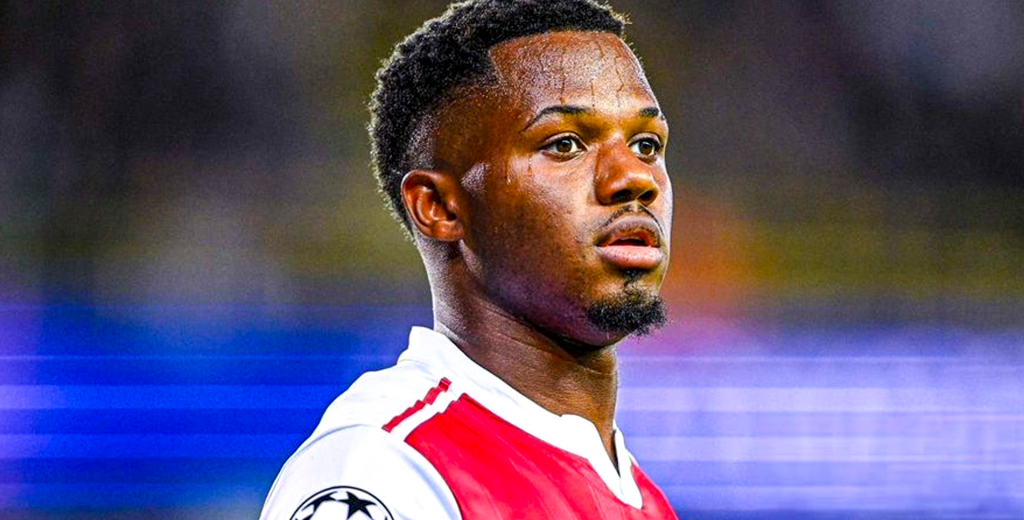
Ansu Fati busca consolidar una nueva etapa profesional entre el fútbol de élite, su paso por AS Monaco y el lanzamiento de su carrera musical.
Ansu Fati went from being one of FC Barcelona’s earliest breakthrough appearances to becoming a footballer forced to rebuild his career amid injuries, loan spells and intense media pressure. His path combines attacking talent, youth records, international experience with Spain, a recent spell at AS Monaco and the beginning of a musical career linked to Music Brokers, where he seeks to turn personal expression into an artistic project.
From Bissau to La Masia
Anssumane Fati Vieira was born on October 31, 2002, in Bissau, Guinea-Bissau, and developed as a footballer in Spain from a very young age. His arrival at La Masia in 2012 incorporated him into a structure known for working on technique, control of the game and tactical understanding. In that environment, Ansu Fati developed an attacking profile based on speed, finishing and spatial reading, qualities that would explain his rapid arrival in FC Barcelona’s first team.
A debut that changed his exposure
Ansu Fati’s debut with Barcelona’s first team came on August 25, 2019, against Real Betis, when he was only 16 years old. His appearance was not presented as a simple youth promotion, but as the arrival of an attacker capable of competing immediately at the elite level. In his first matches, he showed movement off the ball, composure in front of goal and a natural relationship with scoring, traits rarely seen in a footballer still in his formative stage.
Records of precocity at Barcelona
Ansu Fati’s first stage became associated with historic records. He was one of Barcelona’s youngest scorers in LaLiga and also became the youngest goalscorer in Champions League history when he scored against Inter Milan in December 2019. Those records built a powerful public image: that of a teenage forward with the resources to influence major matches without needing a long adaptation period.
Playing style and attacking reading
Ansu Fati can play as a left winger, second striker or inside forward. His main value is not only his speed, but the way he interprets spaces near the box. He often attacks the interval between full-back and centre-back, moves inside into finishing areas and finishes with few touches. That type of forward is useful for teams that need depth, mobility and scoring ability without relying only on crosses or long spells of possession.
Injuries, pressure and competitive reconstruction
Injuries were the most significant turning point in his career. The meniscus injury he suffered in 2020 interrupted a development that seemed to be progressing without pause and opened a stage of recoveries, setbacks and managed minutes. Added to that process was the pressure of receiving Barcelona’s number 10 shirt after Lionel Messi’s departure. More than a sporting controversy, that situation reflected the difficulty of growing under permanent comparison.
Brighton, AS Monaco and the search for continuity
The loan to Brighton & Hove Albion in the 2023/2024 season marked a necessary departure from the Barcelona environment. Later, in 2025, Ansu Fati was loaned to AS Monaco for the 2025/2026 season, with an option to buy. Both moves can be read as part of the same search: to recover minutes, confidence and stability. His challenge would no longer be to prove precocity, but to sustain performance in different competitive contexts.
Musical career and a new public identity
To date, Ansu Fati has also begun a musical stage with Music Brokers. His first single, “Sea Como Sea”, was announced for June 19, 2026, with global distribution by The Orchard, a company linked to Sony Music. The project is not presented as an occasional appearance by a famous footballer, but as an artistic career in development. Music reportedly took shape during his knee recovery in 2020, when he began writing as a form of personal expression.
A talent still in development
Ansu Fati remains a young footballer, with room to redefine his career beyond the label of early promise. His path makes it possible to understand that talent in today’s football does not depend only on technique, but also on physical management, competitive patience and the right environment. His entry into music adds another dimension to that reconstruction: a public identity that is no longer limited to the pitch, but also seeks creative continuity.