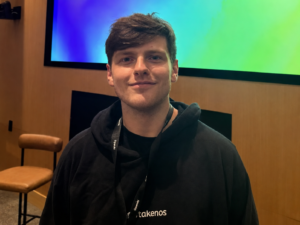
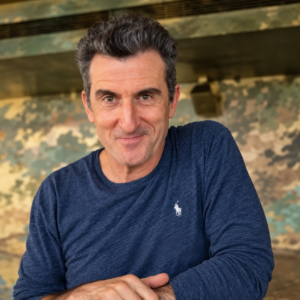
Bruno Ruyú left physics for AI and now sells in four countries
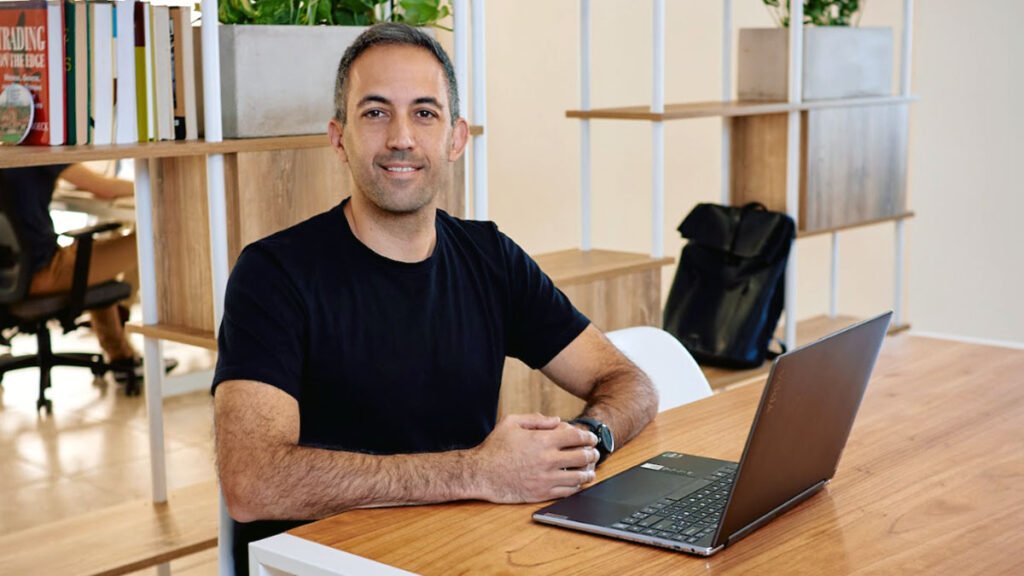
Bruno Ruyú pasó de la física a la inteligencia artificial y cofundó Teramot, una plataforma que automatiza la organización de datos empresariales mediante agentes de IA.
There is a scene that plays out in almost every large company in Argentina, yet few people think of it as a technology problem: someone asks for a report and the answer takes two weeks. Not because there is too little data, but because there is too much of it, scattered across an ERP, a CRM, three spreadsheets and a system nobody has wanted to touch since 2014.
Bruno Ruyú saw that problem from the inside, at YPF and later at an insurance company, after training as a physicist at one of Argentina’s leading institutions for technical education. Four years later, that observation had turned into a company with customers in four countries, a provisional patent in the United States and US$2.5 million in funding.
From Balseiro to the other side
The Balseiro Institute is highly selective. Students enter after completing two or three years of a science or engineering degree and passing a demanding examination. Those admitted receive a scholarship and an environment designed around one thing: studying. Ruyú came from there, as did the three partners with whom he would later build Teramot.
The most predictable path for a Balseiro graduate is research. Ruyú chose another one. He trained his first neural network in 2005, more than fifteen years before terms such as “LLM” and “agent” became part of everyday conversation. At some point in his career, he moved into the private sector because he wanted to see things actually working. He later added training in finance and business at Universidad de San Andrés and Stanford’s Executive Program, an unusual combination for a physicist.
Inside the corporations where he worked, he kept finding the same pattern. The information a CFO needs does not look like the information someone in marketing needs, yet both come from the same disorganized pool of data. Until recently, cleaning up that pool was essentially consulting work: seven or eight months of highly paid specialists manually reconstructing information the company already possessed.
Halley, the project that came first
In 2018, Ruyú reconnected with Lucas Uzal, a friend from his Balseiro years who was then a CONICET researcher working in artificial intelligence. The idea of starting a company together began there, although their first product had nothing to do with corporate data.
In early 2022, they launched Halley, a platform that applied deep learning to Twitter to measure how many predictions made by each guru, influencer or analyst had actually been correct. The first target was crypto for a simple reason: many people had invested based on predictions from popular accounts and had lost a significant part of their savings.
The logic behind the product was easy to understand and difficult to argue with. Someone who gets three out of four predictions right deserves more credibility than someone who gets one out of three right, and follower counts do not measure that.
Halley planned to expand to Reddit and eventually into the far more complicated territory of political promises. That never happened. In later coverage, the startup disappears from the story and the two founders’ attention shifts toward Teramot. Uzal eventually joined as cofounder and Chief Artificial Intelligence Officer.
What Teramot does and why it matters
The company was founded in January 2022 around a premise that now sounds obvious but was less so at the time: the bottleneck in enterprise AI is not the models, but the data. Any company can now gain access to some of the best models on the market. What ultimately differentiates them is the quality of the information those models work with.
The diagnosis has outside support. Harvard Business Review estimates that 74% of companies struggle with data-related problems, while an MIT study concluded that 95% of corporate AI projects fail to generate measurable financial impact.
Teramot targets that problem with an autonomous data engineering platform built around an ecosystem of more than fifty artificial intelligence agents. Those agents connect to a company’s databases, normalize the information and prepare it for use by other AI applications.
A user can ask for a ranking of sales by product and then request a chart by region, all in natural language and through an interface as ordinary as WhatsApp.
There is another, less visible benefit. When data is poorly structured, models can hallucinate. Not necessarily because the information itself is false, but because it is stored or connected incorrectly. A plausible but wrong answer about a contract or a financial figure is not a cosmetic problem for a company. It can become a legal liability.
Teramot says its technology can reduce implementation times by as much as 90%, turning work that previously took months into tasks that can be completed in less than an hour, at costs close to 10% of traditional integration services. The product is sold as SaaS on AWS infrastructure, where the company is a partner, and was designed from the beginning with a relatively low price point.
How the funding came together
The funding did not arrive all at once. CITES provided the first US$780,000, followed by US$100,000 from angel investor Ryta Zasiekina, founder of fintech project Concryt, who met Ruyú while both were attending Stanford’s Executive Program.
In October 2025, the company closed a US$1.1 million seed round with Natan VC —the corporate venture capital fund within the BIND ecosystem—, Addventure and a group of angel investors from the United States and Latin America, bringing total funding to more than US$2.1 million. By July 2026, the accumulated amount had reached US$2.5 million.
Sebastián Habif, Managing Partner at Natan VC, described the investment as aligned with the group’s integration projects. Micaela Bacher, a Principal at the same fund, pointed to the profile of the founding team as one of the decisive factors. Facundo Vázquez, cofounder and chairman of Poincenot, joined as an advisor.
Where the company stands today
Teramot operates in Argentina, Brazil, Colombia and Paraguay, with offices in Buenos Aires, Rosario and São Paulo. It works with consumer goods, manufacturing and insurance companies, including Fortune 500 firms. The company has 24 employees and expects to close 2026 with revenue of around US$2 million.
It also holds a provisional U.S. patent for its data infrastructure automation technology and was selected for Endeavor’s 2026 ScaleUp program, aimed at companies with the potential to expand globally.
The next markets on its radar are the United States and the Middle East.