Hugo Sigman: From Pharmaceuticals to Argentine Cinema
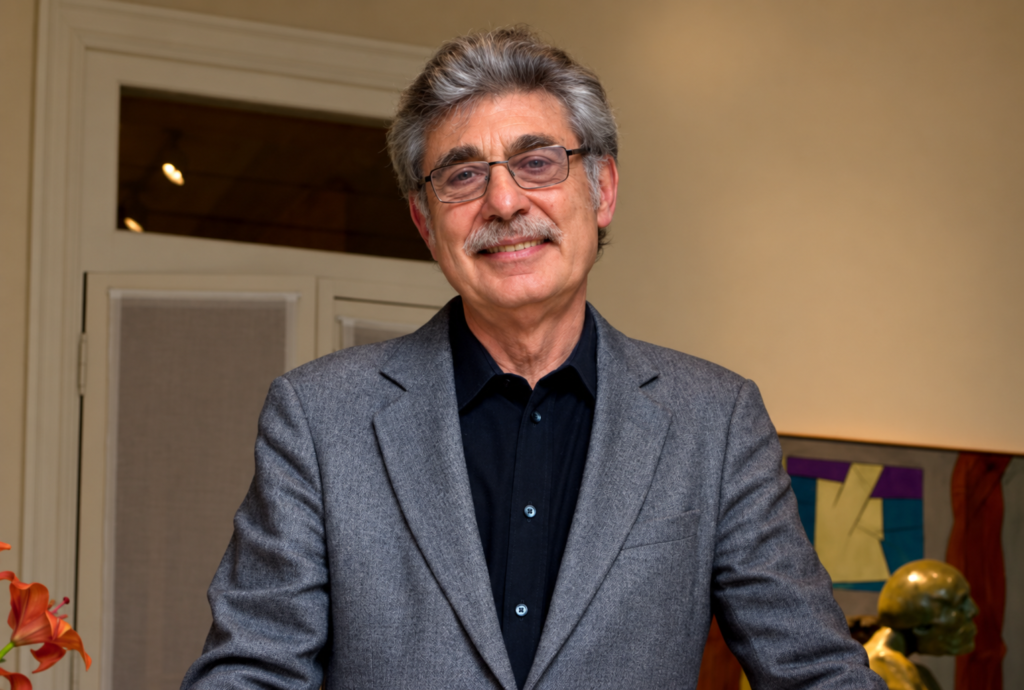
Hugo Sigman construyó junto a Silvia Gold un grupo empresarial que combina farmacéutica, biotecnología, agronegocios y producción audiovisual.
In 1977, a 32-year-old Argentine psychiatrist who had fled the dictatorship founded a small pharmaceutical active-ingredient company in Barcelona with his biochemist wife. Half a century later, that venture became Grupo Insud, a conglomerate present in around fifty countries, with approximately 18 industrial plants and 7,000 employees, which produced the active ingredient for the AstraZeneca vaccine for Latin America. As if that were not enough, the same group is behind Wild Tales, The Clan and The Eternaut. Hugo Sigman is now Argentina’s second-largest fortune and, at the same time, one of the country’s most low-profile major businessmen.
A Doctor Who Left the Country
Sigman was born in Buenos Aires in 1944 and studied Medicine at the University of Buenos Aires, specializing in Psychiatry. His professional career appeared destined for clinical practice, but the 1976 military coup changed everything: he went into exile in Spain.
There, together with his wife Silvia Gold, who holds a doctorate in Biochemistry, he founded in 1977 the first company of what would later become his group. They called it Chemo and began by marketing active pharmaceutical ingredients. Their objective was ambitious: to produce high-quality medicines at affordable prices.
That combination of backgrounds — a doctor and a biochemist — explains much of what followed. Sigman often says that what allowed them to grow was technical knowledge combined with passion.
Three Companies, One Complete Chain
The group’s pharmaceutical structure is built around three companies covering different stages of the same industry.
Chemo produces active pharmaceutical ingredients and finished dosage forms for more than a thousand laboratories worldwide. Exeltis specializes in women’s health products and operates in nearly forty countries. And mAbxience, created in 2008, develops biotechnology medicines, particularly biosimilars and monoclonal antibodies, with the stated goal of improving access to these products.
They are joined by Xiromed, the brand used to sell generic drugs in the United States and Europe; Maprimed, Argentina’s leading chemical plant manufacturing active ingredients; and equity stakes in Sinergium Biotech, focused on human vaccines; Elea Phoenix, the country’s second-largest pharmaceutical laboratory by sales; and Biogénesis Bagó, in animal health.
The group also maintains a basic research division with around 250 scientists working on new treatments for cancer and rare diseases.
Pharmaceuticals account for roughly 80% of Insud’s revenue. The remainder is distributed across agribusiness, cultural industries, nature and design, and renewable energy. The Insud name was created in 2010 to bring all of the couple’s businesses under a single brand.
August 2020
Sigman became widely known to the general public during the pandemic. In August 2020, AstraZeneca selected mAbxience to manufacture the active ingredient for the vaccine it was developing with the University of Oxford, intended to supply all of Latin America except Brazil.
Several factors were behind the agreement: the laboratory’s technological capacity, including a biological medicines plant in Escobar inaugurated that same year with a $40 million investment; financing involving Mexican businessman Carlos Slim; and coordination between the governments of Argentina and Mexico.
The Controversy Over Delays
During 2021, delays in the arrival of those vaccines generated intense public debate in several countries across the region. It was the moment of greatest exposure for a businessman who had always maintained a low profile.
Sigman responded with data. He argued that mAbxience had met the agreed production schedule for the active ingredient and explained that delays occurred in the later formulation and packaging stages carried out in Mexico, along with international supply difficulties affecting the entire industry at the time.
The episode highlighted something that often goes unnoticed: manufacturing a vaccine involves several plants in different countries, with each stage dependent on the one before it.
The Pork Project With China
The other episode that placed him at the center of public debate began in 2019 and intensified the following year. China had lost a large share of its pork production because of African swine fever and needed suppliers. Biogénesis Bagó, the animal-health company in which Insud owns a stake, acted as an intermediary and in January 2020 announced a memorandum of understanding between the Argentine Association of Pork Producers and a Chinese industrial promotion association. In July of that year, Argentina’s Foreign Ministry confirmed negotiations with China’s Ministry of Agriculture.
Media reports described plans to install around 25 mega-farms in Argentina to export close to 900,000 tons of pork, roughly ten times the country’s production at the time. Several reports identified Sigman as one of the project’s promoters.
The reaction was immediate. Environmental organizations, scientists, academics and Indigenous communities warned about health and environmental risks: the possibility of new animal-origin diseases, antibiotic-resistant bacteria, greenhouse gas emissions, soil contamination and intensive water use, as well as increased demand for soy and corn to feed the animals. Demonstrations took place in several cities and a specific coalition was formed to oppose the agreement.
Supporters responded by emphasizing standards. Argentina’s Foreign Ministry announced that the memorandum would include an article guaranteeing compliance with environmental protection laws, natural-resource safeguards and biosecurity. Then-president Alberto Fernández said the agreement would only be signed if environmental protection was preserved, including a renewable-energy program based on biodigesters using farm waste. Representatives of the productive sector also stressed that many Argentine farms already use such waste to generate biogas.
The agreement was never signed under the terms originally announced. Regardless of the outcome, the episode raised a broader question that remains relevant: how Argentina can reconcile its need to export with the environmental limits of intensive production.
From the Laboratory to the Screen
The other half of Sigman’s story is cinematic. In 2004, he partnered with producer Oscar Kramer to make the film El perro, and the following year they founded Kramer & Sigman Films, known as K&S Films. Kramer died in 2010, and Sigman has chaired the production company, part of Grupo Insud, ever since.
Its catalogue would be impressive in any industry: On Probation, Chronicle of an Escape, The Last Elvis, The Seventh Day, Wild Tales, which attracted more than 3.9 million viewers, The Clan, with more than 2.6 million, The Summit, Heroic Losers, and the series The Kingdom and Community Squad. The company has also provided production services for international films such as Alejandro González Iñárritu’s The Revenant.
Its biggest recent success came with The Eternaut, the adaptation of Héctor Oesterheld’s graphic novel directed by Bruno Stagnaro and starring Ricardo Darín. Released on Netflix in April 2025, it became a worldwide trend. In 2026, the series won the Platino Award for Best Ibero-American Miniseries and the Martín Fierro de Oro, while the film Belén won the Goya Award for Best Ibero-American Film.
Sigman’s definition of the business is simple: they look for popular cinema with a message — films that move people, make them think and entertain them at the same time.
The Rest of the Map
In agribusiness, the group operates forestry and agricultural companies such as Pomera Maderas and Garrucho. In culture, beyond cinema, it publishes the Southern Cone edition of Le Monde Diplomatique and supports the publishing houses Capital Intelectual and Clave Intelectual, the latter operating from Spain since 2011.
It also develops nature and design projects, including the Puerto Valle hotel in the Iberá Wetlands.
A separate chapter is Fundación Mundo Sano, dedicated to researching and combating neglected diseases, those affecting poorer populations that the pharmaceutical industry often overlooks because of limited profitability.
In 2011, Sigman joined other companies in creating the Argentine Chamber of Biotechnology, with the goal of strengthening public-private collaboration in the sector. He received two Konex Awards, in 2008 as an innovative entrepreneur and in 2018 in the industrial entrepreneurs category, and serves as a Goodwill Ambassador for the Inter-American Institute for Cooperation on Agriculture on sustainable-development issues.
The Reasons He Works
With an estimated family fortune of $6.3 billion, Sigman is Argentina’s second-richest person according to Forbes, behind Marcos Galperin. Even so, his public exposure is far lower than that of other businessmen of comparable scale. He is more often seen on the red carpets of Cannes, Venice or San Sebastián than at corporate events, frequently alongside Silvia Gold.
When asked about his motivation, he returns to the same idea: people should never lose sight of the reasons they work. In his case, those reasons are making medicines accessible to most of the population, promoting science and culture, and helping citizens improve their quality of life.
It is an idea that gives order to a biography that might otherwise seem scattered. The psychiatrist who had to leave Argentina ended up manufacturing medicines for fifty countries and telling Argentine stories now seen around the world. In both cases, the objective is the same: reaching as many people as possible.