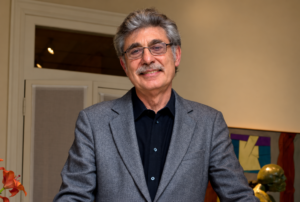
Jean-Michel Jarre
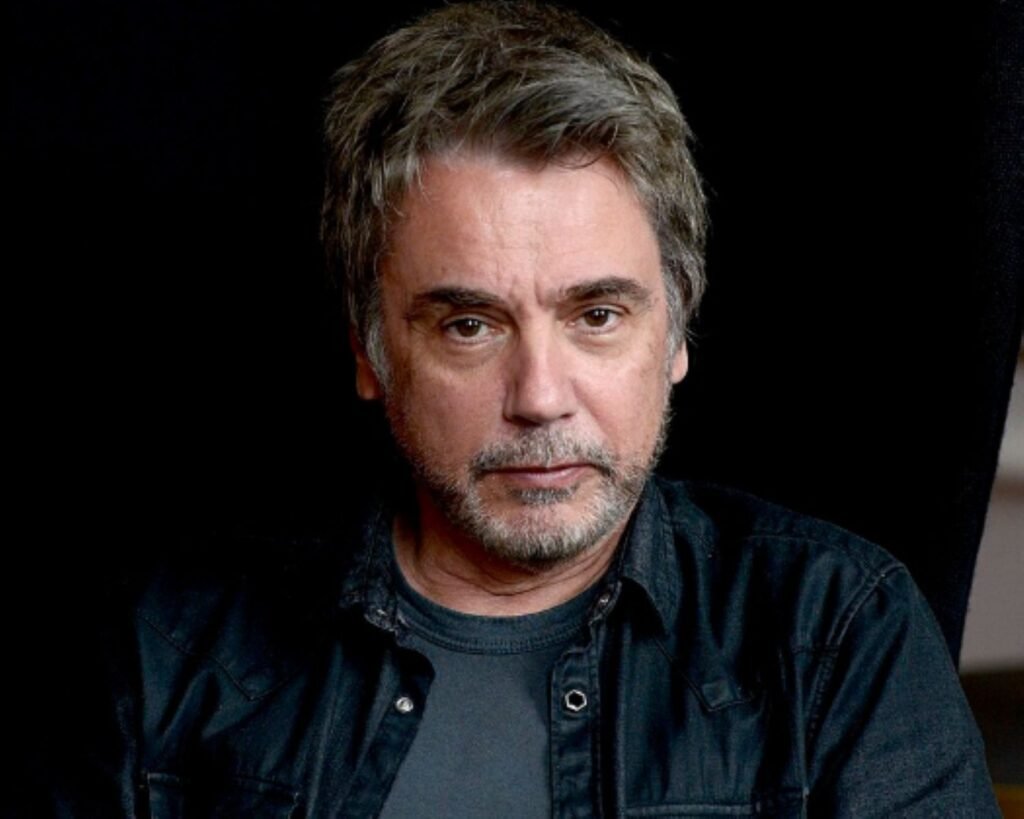
Jean-Michel Jarre llevó la música electrónica a audiencias multitudinarias con conciertos que combinan sonido, proyecciones y efectos visuales.
Jean-Michel Jarre has performed for larger crowds than anyone in history: 3.5 million people heard him in Moscow in 1997, the last of his four Guinness audience records. A pioneer of electronic music since Oxygène emerged from a home studio in 1976 and sold 12 million copies, the French musician has sold more than 80 million records, has an asteroid named after him and has spent half a century turning entire cities into stages. This profile explores the career, achievements and controversies of an artist who has always thought big.
The composer’s son who chose machines
Jarre was born in Lyon on August 24, 1948, the son of Maurice Jarre, the composer who would earn Hollywood acclaim for his scores for David Lean’s films. His father’s influence was defined more by absence than guidance: his parents separated when he was five, and distance shaped their relationship. His most formative training came elsewhere. In 1969, he joined Pierre Schaeffer’s Groupe de Recherches Musicales. Working with the father of musique concrète, he learned to think of sound as material before thinking of it as a score.
That laboratory led to the experiment that changed everything. In 1976, using a handful of synthesizers, he recorded Oxygène in a home studio. The record—instrumental, electronic and without songs in the conventional sense—seemed impossible to sell. It went on to sell 12 million copies, becoming the bestselling French album in history. Two years later, Équinoxe confirmed that its success had been no accident.
Entire cities as stages
His greatest invention was a format rather than a record: the city-wide concert, free and monumental, with buildings turned into screens and synchronized fireworks. On July 14, 1979, he brought together a million people at the Place de la Concorde and entered the Guinness record book for the first time. In April 1986, Rendez-vous Houston drew 1.5 million people to celebrate the city’s anniversary and NASA’s twenty-fifth anniversary. That same year, 800,000 people saw him perform in his hometown of Lyon. On July 14, 1990, he broke his own record again with 2.5 million people at La Défense. On September 6, 1997, he reached his largest audience: 3.5 million people celebrating Moscow’s 850th anniversary, making it the most heavily attended concert in history.
Between those records came equally iconic performances: 650,000 people in front of Mont Saint-Michel in 1993 and 1.25 million beneath the Eiffel Tower in 1995 for the Concert for Tolerance. Critics spent decades debating whether so much pyrotechnics amounted to music or spectacle. Time supplied a reassuring answer: the format he invented is now standard at major global events, from Olympic opening ceremonies to New Year’s celebrations.
A pioneer who keeps going
Institutional recognition caught up with him without taming him. He has been a UNESCO Goodwill Ambassador since 1993 and was appointed a Knight of the Legion of Honor in 1995. Even astronomy paid tribute: asteroid 4422 Jarre orbits under his surname. Meanwhile, he has continued exploring the technology of each era, from the analog synthesizers of the seventies to virtual reality concerts and the sonic experiments of recent decades. His argument has remained the same: electronic music is a territory rather than a genre.
His career has also weathered controversy: purists accused him of commercialism when electronic music still belonged to laboratories, while the cost and enormous scale of his free concerts remained subjects of debate. Half a century after Oxygène, others have written the assessment. Generations of electronic producers, from ambient musicians to stadium performers, cite him as the person who showed them that machines could move a crowd.