Philippe Jaenada: A Goncourt Prize Drawn from a Police File
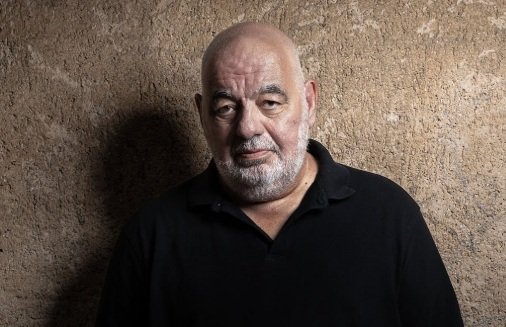
Philippe Jaenada recibió el Premio Goncourt 2026 por L’Inconnue du quai de Javel, una novela basada en un crimen de 1949.
Philippe Jaenada won the Prix Goncourt on November 3, 2026, for L’Inconnue du quai de Javel, published by Flammarion. The writer has spent more than a decade investigating forgotten crimes in police and judicial archives. The jury selected him by six votes to three over Sylvain Prudhomme. At 62, he received recognition for a body of work that turns the investigation of case files into novels. He described the award as a culmination and an honor.
An award-winning debut and twenty years of writing
Born in 1964 in Saint-Germain-en-Laye, outside Paris, Jaenada published his first novel after turning thirty. His debut, Le Chameau sauvage—Julliard, 1997—received the Prix de Flore and the Prix Alexandre-Vialatte.
He published regularly in the following years: La grande à bouche molle (2000), Le cosmonaute (2002), Vie et mort de la jeune fille blonde (2004), Plage de Manaccora, 16h30 (2009) and La femme et l’ours (2011). Those books already displayed several characteristics of his writing: first-person narration, humor and digressions that lead the story toward personal memories and observations.
He had loyal readers and critical recognition. He then found material in the archives that would take his work in another direction.
Turning to case files
With Sulak (2013), about the life of robber Bruno Sulak, Jaenada began using the method that distinguishes his later books: choosing a criminal case from France’s past, examining the files, visiting the locations and recounting the investigation in the first person. His doubts and the difficulties he encounters also become part of the narrative.
The book received the Prix d’une vie from Le Parisien Magazine and the Grand Prix des lycéennes from Elle.
Two of his best-known reexaminations followed. La Petite Femelle (2015) revisited the case of Pauline Dubuisson, convicted in the 1950s and portrayed with hostility by much of the contemporary press. La Serpe (2017), about the triple murder at the Château d’Escoire, earned him the Prix Femina.
In 2021, he published Au printemps des monstres, an extensive investigation into a case from the 1960s. It was followed by Sans preuve et sans aveu (2022) and La désinvolture est une bien belle chose (2024). In these works, examining documents allows him to reconsider accounts that had been accepted as fact for years.
L’Inconnue du quai de Javel: a murder from 1949
The winning novel revisits the murder of Louise Cansot, a 29-year-old woman from Brittany who had worked as a model in Paris. Her body was found beside the Seine at the quai de Javel in September 1949. The police investigation failed to solve the crime.
Jaenada recounts his search in the first person, drawing on the methods of Inspector Maigret, Georges Simenon’s fictional detective. He examines archives and visits the places where the victim lived to reconstruct her life and propose an explanation for the murder.
The distinction matters: the book presents the conclusion of a literary investigation, which does not in itself amount to a judicial resolution.
In the November 3 vote, the jury’s nine members gave six votes to Jaenada and three to Sylvain Prudhomme’s De l’autre côté du lac. Clémentine Mélois and Yannick Haenel had also reached the final. Jaenada succeeds Laurent Mauvignier, who won in 2025 with La Maison vide.
Returning to writing and the archives
Jaenada describes himself as an old-fashioned writer. He does not use a mobile phone and, after receiving the award, expressed his wish to return as soon as possible to a quiet, secluded life of writing. He also spoke about the pleasure he finds in searching for documents and spending time in archives.
The Goncourt honors a novel and follows years of work on lives shaped by crimes, convictions and incomplete accounts. Jaenada returns to those documents to reconstruct events, but also to understand the people who appear in them.
In L’Inconnue du quai de Javel, that person is Louise Cansot. Seventy-seven years after her death, her story is at the center of the Goncourt-winning novel.