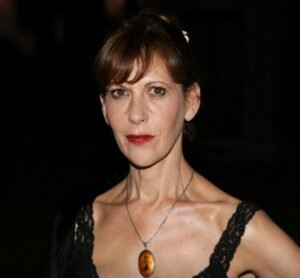
Amanda Peet: acting, writing, and creative control in Hollywood
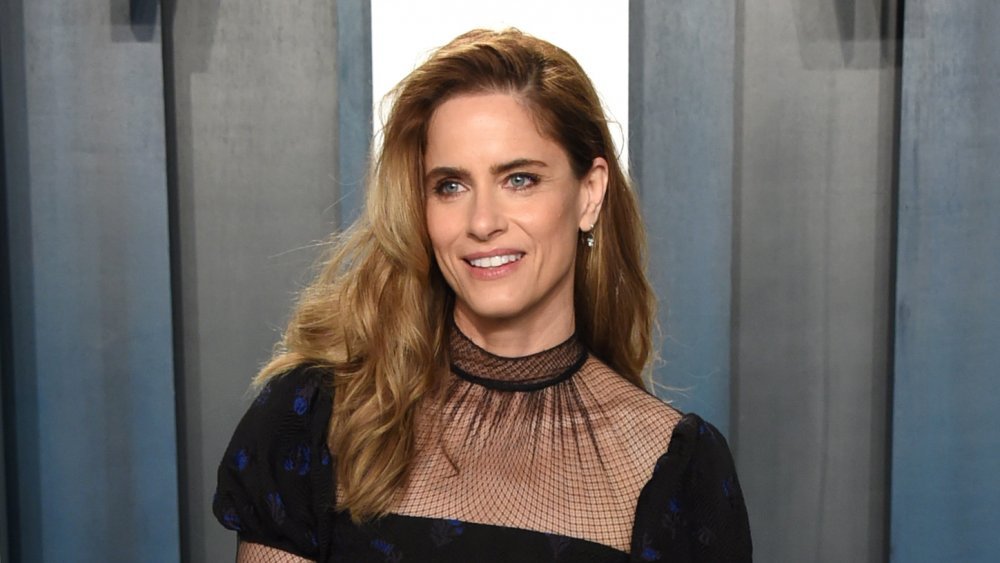
La actriz y creadora amplió su rol dentro de la industria hacia la escritura y producción.
The trajectory of Amanda Peet is shaped by a gradual evolution within the audiovisual industry, where acting serves as a starting point toward roles with greater creative control. Her path connects film, television, and production, integrating interpretive experience with narrative development. This shift toward authorial functions redefines her professional positioning in an environment that demands versatile profiles.
Education and interpretive foundation
The beginning of her professional path is linked to her studies in History at Columbia University, where interest in acting emerges as a parallel exploration. The influence of Uta Hagen introduces a methodology based on the psychological construction of character, prioritizing observation, technique, and stage discipline. This approach establishes a solid foundation for her later development.
Early work and initial consolidation
During the second half of the 1990s, Peet participates in television productions and independent films, consolidating experience in supporting roles. This period functions as an adaptation stage to industry dynamics, where visibility is limited but allows for the acquisition of technical tools. The progression toward larger-scale projects occurs gradually.
Expansion in film and diversification of roles
Recognition within the commercial circuit expands with The Whole Nine Yards, increasing her exposure in Hollywood. From that point, her filmography incorporates diverse genres, avoiding repetition of a single profile. Productions such as Something’s Gotta Give, Syriana, and 2012 demonstrate her ability to integrate into projects of different scales.
Development in television and narrative complexity
Work in television introduces a shift in interpretive logic, with characters that require sustained evolution. Series such as Studio 60 on the Sunset Strip and Dirty John demand greater psychological depth. This format enables the exploration of nuances that commercial cinema does not always allow, consolidating a more complex on-screen presence.
Transition to writing and production
The creation of The Chair marks a turning point in her career by incorporating writing and production roles. This move reflects a structural trend in the industry, where actors seek to intervene in content construction. Writing implies control over narrative, pacing, and character development, expanding her role beyond performance.
Activism and public positioning
Outside the artistic sphere, her participation in public health campaigns related to vaccination introduces an additional dimension. Her collaboration with specialized organizations is oriented toward disseminating information based on scientific evidence. This positioning generated public debate, leading to adjustments in messaging without altering the central approach.
Controversies and management of exposure
Controversies associated with her public image are primarily linked to her statements. In the case of vaccination, social reactions required recalibration of tone. This process reflects active management of media exposure, where the objective is to sustain a position without escalating communicational conflict.
Recent stage and adaptation to platforms
In recent years, her activity has shifted toward productions for streaming platforms, where acting and production converge. This environment demands adaptability to new formats, higher content volume, and audience segmentation. Her profile aligns with these transformations, integrating multiple functions within the creative process.
Personal dimension and resilience
On a personal level, she has faced a breast cancer diagnosis that was initially handled privately. The subsequent public communication introduces a narrative linked to resilience. Such experiences reshape the relationship with audiences, incorporating a closer dimension that complements her professional trajectory.
Positioning within the industry
Amanda Peet’s path is not defined solely by the accumulation of roles, but by her capacity to redefine her function within the audiovisual system. The transition toward writing and production consolidates a hybrid profile. This evolution sustains relevance in a competitive environment, where differentiation depends on versatility and creative control.