Rupert Everett, the British actor who turned elegance into character
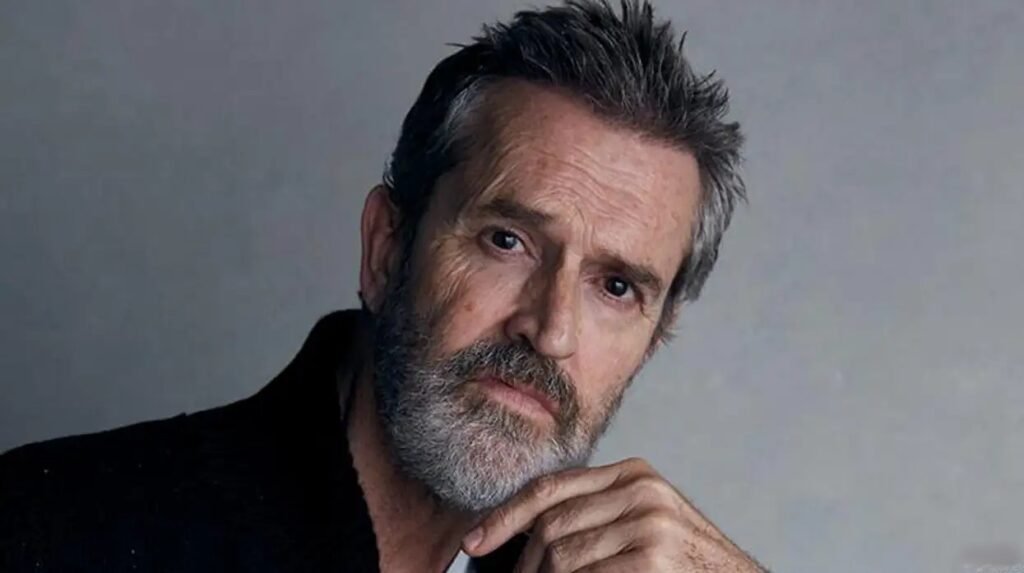
Rupert Everett construyó una carrera entre el cine británico, Hollywood, el teatro y la dirección cinematográfica.
Rupert Everett built a singular career across British cinema, Hollywood, theater, autobiographical literature and directing. His path combines stage presence, verbal sophistication, sharp humor and a personal reading of fame. From Another Country to My Best Friend’s Wedding and The Happy Prince, his figure became associated with characters shaped by identity, desire, irony and public exposure.
Rupert Everett and an acting identity of his own
Rupert Everett occupies a particular place in British and international cinema through a career built across acting, writing and directing. Born in Norfolk in 1959, he developed a recognizable presence through his precise diction, physical elegance and an irony that runs through many of his characters. His career moved across period dramas, romantic comedies, social satires and auteur projects, always with a personal mark linked to stage intelligence and artistic freedom.
Theater as a starting point
Rupert Everett’s first major visibility came with Another Country, Julian Mitchell’s stage play that was later adapted for film in 1984. There he played Guy Bennett, a gay student inside a British boarding school in the 1930s. That character placed him in a territory of social tension, identity and class conflict. The film expanded his international profile and allowed him to show a dramatic register supported by contained gestures, verbal precision and a sensitive reading of the historical context.
My Best Friend’s Wedding and global fame
Mass recognition arrived in 1997 with My Best Friend’s Wedding, where he played George Downes alongside Julia Roberts, Dermot Mulroney and Cameron Diaz. His character brought humor, affection and verbal sophistication to a romantic comedy with enormous international reach. The performance earned him Golden Globe and BAFTA nominations and brought him closer to a much wider audience. George Downes remains one of his most remembered roles, also because of the naturalness with which Everett turned a supporting part into a central presence.
Oscar Wilde as a creative mirror
Rupert Everett’s artistic relationship with Oscar Wilde runs through an important part of his professional maturity. He played him on stage in The Judas Kiss and later wrote, directed and starred in The Happy Prince, released in 2018. That project addressed Wilde’s final years, marked by exile, financial ruin and social persecution. Everett worked on a figure that dialogues with his own view of fame, public identity and the price some artists pay for living outside the norms of their time.
A voice of his own as a writer
In addition to acting, Rupert Everett developed a literary body of work with novels and autobiographical memoirs. Books such as Red Carpets and Other Banana Skins and Vanished Years show a sharp view of the entertainment world, celebrity, excess and the industry’s contradictions. His writing expands his public profile because it does not limit itself to recounting anecdotes: it observes theater, Hollywood and social life with acidic humor, cultural memory and a self-critical tone that turns personal experience into narrative material.
Controversies, exposure and public reading
Everett’s career was also shaped by controversial statements and debates about representation, sexuality and the industry. In several interviews, he said that being an openly gay actor may have limited certain opportunities in Hollywood, especially in roles associated with traditional models of masculinity. He also faced criticism for public opinions on same-sex marriage and gay parenthood. Read within his trajectory, those controversies show a complex figure: an artist who argued with his time, revisited personal tensions and exposed his own contradictions without reducing them to simple provocation.
A legacy built from risk
Rupert Everett left a mark sustained by artistic risk and permanence. He has been a stage actor, film leading man, character performer, voice actor in animated films such as Shrek 2 and Shrek the Third, memoirist and film director. His path allows one to read the tension between talent, industry and autonomy. In his case, elegance functions as a form of character: a tool for working with irony, fragility, the desire for recognition and the difficulty of sustaining a voice of one’s own within global entertainment.