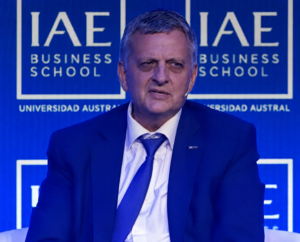
Marcos Bulgheroni and the alliance supporting Vaca Muerta gas exports
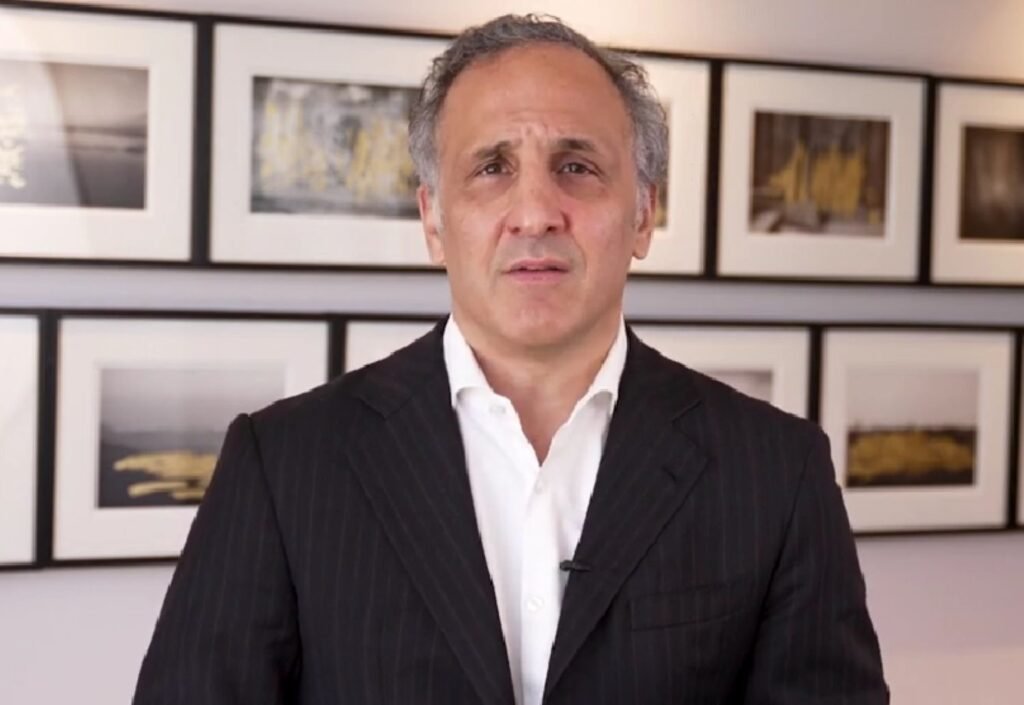
Marcos Bulgheroni destacó la coordinación entre Estado, provincias, empresas y sindicatos como base del proyecto Argentina LNG, que busca llevar gas de Vaca Muerta al mercado europeo.
Marcos Bulgheroni pointed to an unusual alignment — provinces, unions and rival oil companies — as the basis of the gas contract Argentina signed with Germany.
Behind the first major liquefied natural gas contract that Argentina closed with Europe, there is a distribution of roles that Marcos Bulgheroni, CEO of Pan American Energy (PAE), made explicit. He did not mention one company or one field in particular. He spoke of a network: the national State, the Patagonian provinces, a group of oil companies that compete with one another and the sector’s unions, all pulling the same project forward. That scheme, he said, is the basin’s most valuable asset, and the one that should not be touched.
He said this during the presentation of Vaca Muerta. Tesoro y faro para la Argentina, the book by Jorge Augusto Sapag, former governor of Neuquén, for which Bulgheroni wrote the foreword. “The greatest value we have is that a synergy was built among the State, provinces, companies and unions, and that must not be changed,” the businessman stated. The phrase organizes everything else: each of those names occupies a precise place in the chain that is now pushing Neuquén gas toward ships.
The structure that sealed the contract with Germany
The core of the export business is a consortium led by PAE that brings together direct competitors. It includes YPF, Pampa Energía, Harbour Energy and Golar LNG, and moves forward through Southern Energy S.A. (SESA), the company created to lead the project known as Argentina LNG. That group signed an agreement worth more than USD 7 billion to sell Argentine liquefied gas to Germany.
The counterparty is a state-owned company: Securing Energy for Europe (SEFE). The agreement establishes the delivery of 2 million tons per year for eight years starting in late 2027, a volume that covers around 80% of the operating capacity of the floating liquefaction vessel Hilli Episeyo, which will operate off the San Matías Gulf. Bulgheroni said the negotiation was tough and that, at one point, he thought the deal had fallen through. It ended the other way. Referring to the European officials who closed the purchase, he joked that they were given “a statue in Berlin” for having found gas far from the conflict.
The unions brought to the forefront
Where other executives often pass over the issue, Bulgheroni focused on the unions. The Private Oil Workers’ Union of Río Negro, Neuquén and La Pampa, led by Marcelo Rucci, appears as one of the pillars of the model, together with the union of senior oil workers. The Truck Drivers’ Union and UOCRA also carry weight, moving the logistics and construction work of a basin in full expansion. For the businessman, that fabric of cooperation between employers and unions was decisive in turning Vaca Muerta into an energy asset of global weight, at a time when demand is growing for sources outside unstable regions.
Provinces and the State at the same table
The third pillar is the jurisdictions. Neuquén and Río Negro concentrate the unconventional development and the route that will take the gas to the Atlantic; Chubut contributes the company’s mature operations. Bulgheroni insisted that the macroeconomic and regulatory stability ordered by the national government is essential to sustain activity in an increasingly competitive international scenario. He also recalled the starting point: an industry facing “existential problems” because of the depletion of traditional resources, which moved forward through decisions he described as innovative, risky and difficult.
The picture of partners does not end with the first shipment. The project’s second phase adds another floating liquefaction vessel, the MKII, and a dedicated gas pipeline linking Vaca Muerta with the Río Negro coast. With both units in operation, combined capacity would climb to around 6 million tons per year, the volume that defines how far this alliance can go.