Federico Lauría: the man who turned argentine trap into an industry
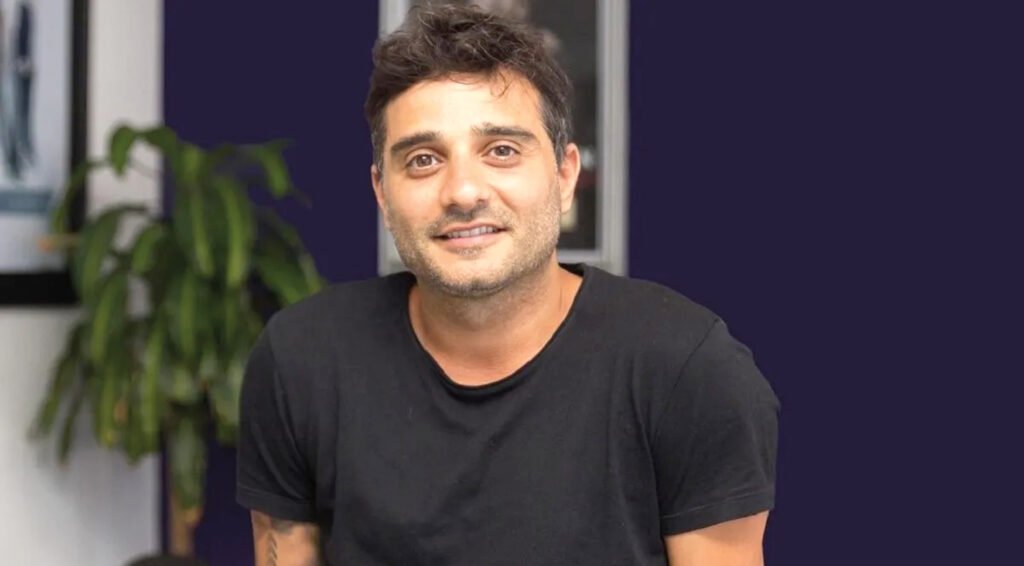
Federico Lauría convirtió a Dale Play en una compañía internacional dedicada al desarrollo de artistas, la producción de recitales y la edición musical, con figuras como Duki, Bizarrap, Nicki Nicole, Emilia y Milo J.
He began at the age of 18 selling shows to nightclubs in small towns and measuring Argentina in hours spent inside a van. Today, Federico Lauría is the founder and CEO of Dale Play, the company behind artists such as Duki, Bizarrap, Nicki Nicole, Emilia and Milo J.
His business later became the local partner chosen by Live Nation, the world’s largest live-entertainment company, to strengthen its presence in Argentina. This profile traces how Lauría built that journey, the figures behind its growth and the questions raised by the scale he eventually reached.
A street corner, a school and a question
The beginning of the best-known chapter of his career was almost domestic.
In 2017, the son of a friend mentioned Duki when Lauría asked what music he was listening to. On his way to the office, Lauría passed a public school every day and saw students gathering on a nearby corner. He asked them the same question and received the same answer.
From that point, he began searching for Duki until he managed to contact him.
Lauría does not claim to have invented Argentine trap. Freestyle, rap battles and El Quinto Escalón already existed. His insight was different: the phenomenon was visible to anyone willing to look, but it was still concentrated in public squares and street corners, without a commercial structure capable of supporting its growth.
From small towns to international stadiums
By then, Lauría had already spent nearly two decades in the entertainment business.
He began organizing performances in nightclubs in provincial towns at the age of 18. From 2013 onward, he directed his company toward bringing international artists to Argentina and developing their local audiences.
That work produced a fact that remains relatively unknown: Bad Bunny’s first major arena concert took place at Luna Park in Buenos Aires, with Lauría involved in its production. He also worked on early large-scale performances by Maluma and later produced shows involving artists such as J Balvin, Daddy Yankee, Luis Miguel and Alejandro Sanz.
When he encountered Argentina’s emerging urban scene, he relied on the skill he already possessed: connecting people.
He began telling his international contacts what was happening in Buenos Aires at a time when, as he recalls, some of them laughed at the idea that Argentine trap could become a global business.
Lauría created the Buenos Aires Trap festival to give the movement a larger stage, brought brands into the ecosystem so young performers could finance their careers and began organizing the commercial side of projects that had initially developed without conventional industry support.
Dale Play, a company with three divisions
Lauría founded Dale Play in 2018. The company grew around three principal areas: a record label, artist management and the production of live events.
By 2026, it operated in 18 countries, produced more than 400 shows each year across 87 cities and participated in the release of more than 1,000 songs annually. Its roster included Duki, Bizarrap, Emilia, Nicki Nicole, Milo J, Lali, Andrés Calamaro, Fito Páez and Tan Biónica.
The company established offices in Argentina, Mexico, Spain and the United States. Its independent model was combined with partnerships with larger international groups.
In 2020, Dale Play entered into an alliance with Sony Music and The Orchard. In March 2025, Rimas Entertainment, the Puerto Rican company associated with Bad Bunny, acquired a significant stake in Dale Play Records while Lauría remained its CEO.
The transactions provided international distribution and financial support without eliminating the identity of the Argentine company.
The moments that changed the scale
In April 2021, Nicki Nicole performed on The Tonight Show Starring Jimmy Fallon. Lauría later explained that the team had sent her material to the program and that Fallon himself selected the Argentine singer.
He celebrated the appearance less as an isolated achievement than as a door that might remain open for the artists who followed.
The next decisive moments came through Bizarrap.
The Bzrp Music Session with Quevedo became a global success and helped make Bizarrap the first Argentine artist to surpass one billion streams on Spotify with a single song. The track later won the Latin Grammy for Best Urban Song in 2023.
The session with Shakira reached the top of Billboard’s Hot Latin Songs chart shortly after its release and achieved about 50 million YouTube views during its first 24 hours, setting a record at the time for the strongest debut by a Latin song on the platform.
Billboard Español selected Lauría as Executive of the Month for his role in the success of the sessions with Quevedo and Shakira.
His personal recognition also grew. In 2021, he was the only Spanish-speaking executive included in Billboard’s 40 Under 40 list. He later appeared among Bloomberg Línea’s influential Latin American figures and was included in the 2025 edition of Los 75 published by Líderes Mexicanos.
In April 2026, EY Argentina named him the winner of the Master category of its Entrepreneur of the Year award, giving him the opportunity to represent the country at the international competition in Monaco.
Meanwhile, Duki became the first Argentine rapper to sell out Madrid’s Santiago Bernabéu Stadium, another sign that the local urban movement Lauría had encountered on street corners was now operating at the highest international level.
The Live Nation operation and the debate it opened
In January 2026, Live Nation, DF Entertainment and Dale Play Live signed a ten-year agreement with River Plate for the exclusive production of shows at the Mâs Monumental stadium beginning on January 1, 2027.
The agreement was valued at US$110 million plus taxes. It included a minimum of 120 event dates during the contract and commercial rights associated with the stadium’s name. DF Entertainment was assigned international shows, while Dale Play Live would focus on Latin and regional artists.
In June 2026, Live Nation announced that it would acquire a majority stake in Dale Play Live. Lauría remained responsible for the company’s creative and strategic direction.
The transaction generated debate within the music industry.
Live Nation also controls Ticketmaster and has a major presence in concert promotion, ticketing and venue management around the world. Its expansion has repeatedly raised questions about concentration and the balance of power between artists, promoters, venues and ticketing platforms.
In Argentina, the agreement also created questions about how Dale Play and DF Entertainment would divide a market in which the former had built its strength around national and Latin artists, while the latter had become one of the principal organizers of international concerts.
Lauría’s response has focused on infrastructure rather than defending the operation in abstract terms. He argues that Argentina’s main limitation is not a lack of talent but a shortage of venues capable of receiving productions that become larger and more technically demanding every year.
Building the places where the shows can happen
That diagnosis led Dale Play toward investments in physical infrastructure.
In Córdoba, the company joined Corporación América Inmobiliaria, En Vivo Producciones and producer Carli Jiménez in the development of a covered arena with capacity for 12,000 spectators.
The project involves an investment of approximately US$50 million and is designed to host concerts, sports competitions and large corporate productions.
Lauría has also participated in plans linked to a new entertainment venue in Rosario.
Seen from that perspective, the partnership with Live Nation is more than a financial transaction. It provides access to the capital, international circuits and operating experience required to build venues in a country where financing a large stadium solely with local private capital is extraordinarily difficult.
What he thinks about the business he helped create
Lauría repeats an argument he also presented at the IDEA Colloquium: there are roughly 600 million Spanish speakers in the world, yet the Argentine industry still struggles to understand the size of the market to which it belongs.
His description of the young artists he represents summarizes the change in scale: they were born global and without borders.
He remains optimistic about live entertainment in the age of artificial intelligence. Digital tools may transform music production, promotion and consumption, but he believes audiences will continue choosing the physical experience of sharing a venue with a human performer.
The most difficult challenge inside Dale Play, he admits, is preserving the company’s culture as its structure grows.
One principle has remained unchanged since the years when he carried equipment along provincial roads: the artist is the central figure, while his own place is behind the scenes.
When asked what he expects from Dale Play’s future, Lauría gave an answer consistent with that position. He hopes the company will eventually outlive and surpass him.